
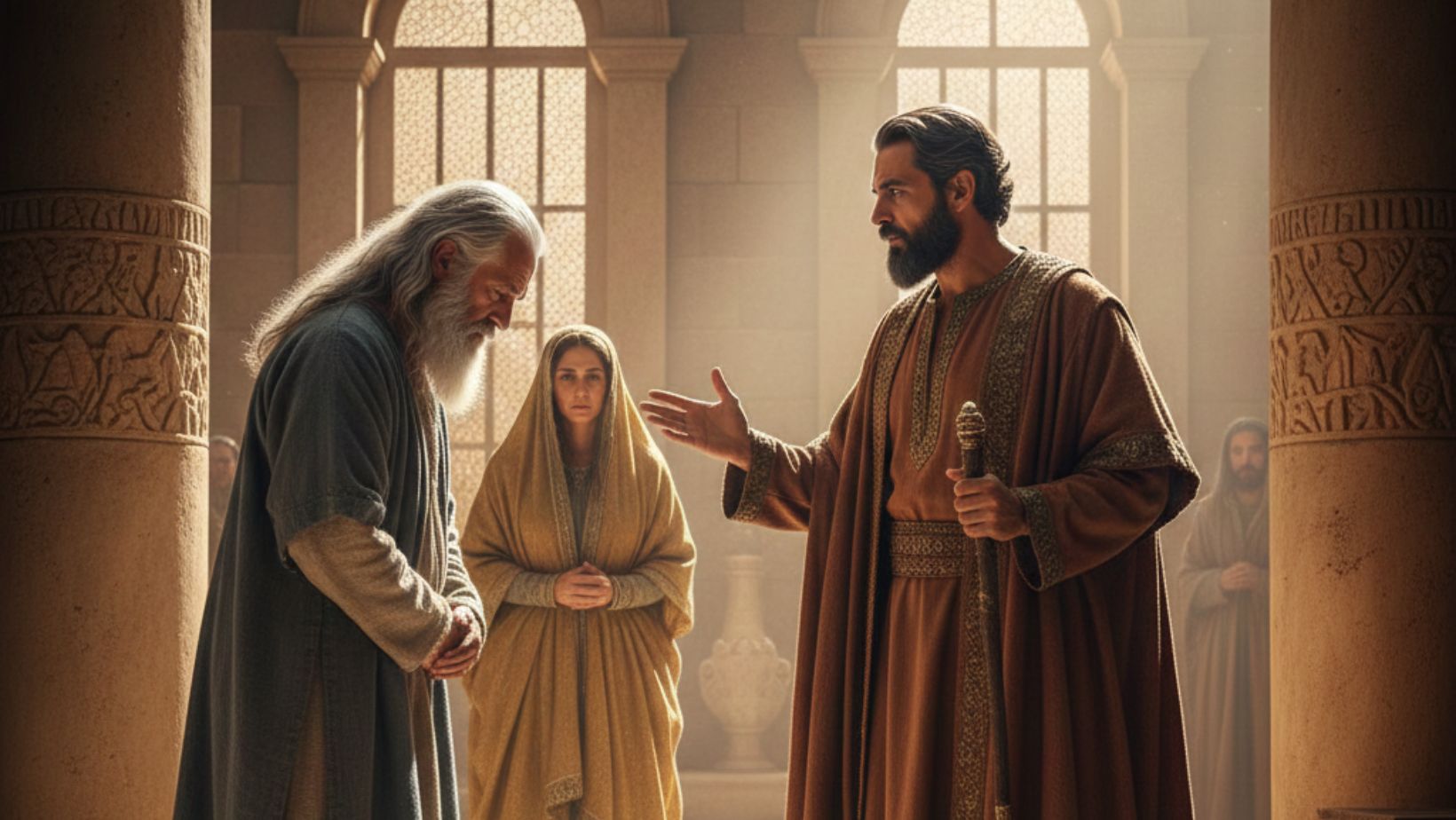
Genesis 20 provides a jarring account where the roles of the “righteous” and the “pagan” seem to flip. Abraham, the recipient of God’s covenant, falls into a pattern of compromise, while Abimelek, a Philistine king, displays a shocking level of integrity. This passage serves as a mirror for the modern church, questioning what happens when those who carry the Truth fail to live by it, resulting in a rebuke from the very world they are called to reach.
Main Scripture: Genesis 20
“Then Abimelek called Abraham in and said, ‘What have you done to us? How have I wronged you that you have brought such great guilt upon me and my kingdom? You have done things to me that should never be done.’”
— Genesis 20:9 (NIV)
1. The Subtle Shift from Faith to Strategy
The compromise began long before Abraham spoke a word to Abimelek. It started in the heart. Abraham looked at his surroundings, assessed the risks with human logic, and decided that God’s protection was insufficient for this specific geography.
“Abraham replied, ‘I said to myself, “There is surely no fear of God in this place, and they will kill me because of my wife.”‘”
— Genesis 20:11
When we conclude that “there is no fear of God” in our workplace, our city, or our culture, we often feel justified in using worldly tactics to survive. Compromise is the result of a “Trust Gap”—a space where we believe our cleverness is more reliable than God’s providence.
2. The High Cost of Moral Half-Truths
Abraham attempted to justify his deception by claiming Sarah was technically his half-sister (Genesis 20:12). However, a half-truth told with the intent to deceive is a whole lie.
“And Abimelek said, ‘What was your reason for doing this?’”
— Genesis 20:10
Compromise often wears the mask of “wisdom” or “technicality.” When the church uses the world’s methods of spin, PR, and blurred lines to protect its interests, it loses its prophetic edge. Abraham’s “strategy” didn’t protect his family; it nearly destroyed an entire kingdom and put his own wife at risk.
3. The Tragedy of a Secular Rebuke
There is perhaps no greater indictment than when a person without the Holy Spirit demonstrates more character than a person of the Word. Abimelek’s question in verse 9 is haunting: “You have done things to me that should never be done.”
The world may not know the intricacies of our theology, but they recognize the standard of common decency and honesty. When the church fails to meet even the basic moral expectations of society, our witness is not just dampened; it is disqualified. We cannot call the world to a higher standard if we are failing the fundamental ones.
4. Divine Grace as a Shield for the Innocent
In a stunning display of sovereignty, God intervenes not to congratulate Abraham, but to protect the integrity of His own plan and the life of the innocent Abimelek.
“Then God said to him in the dream, ‘Yes, I know you did this with a clear conscience, and so I have kept you from sinning against me. That is why I did not let you touch her.’”
— Genesis 20:6
God’s grace often works behind the scenes to mitigate the damage caused by our compromises. He is so committed to His glory that He will even speak to “Abimeleks” to prevent “Abrahams” from ruining everything. This is a humbling reminder that the church exists by God’s mercy, not our own merit.
5. Restoration Through Humble Intercession
The resolution of this crisis did not come through Abraham’s excuses, but through his return to his primary calling: being a blessing to the nations.
“Then Abraham prayed to God, and God healed Abimelek, his wife and his female slaves so they could have children again.”
— Genesis 20:17
Restoration begins with an apology and ends with intercession. To regain our witness, we must stop defending our compromises and start serving those we have misled or harmed. Abraham had to pray for the very man he had deceived. Our path back to influence is paved with the humility to admit where we were wrong.
Quick Insights
- Compromise is the byproduct of assuming God is absent in difficult places.
- A half-truth is often more dangerous than a direct lie because it pacifies the conscience of the speaker.
- The world’s greatest criticism of the church is not our message, but our inconsistency with that message.
- God’s sovereignty is the only thing that stands between our mistakes and total disaster.
- We regain our spiritual authority only when we prioritize integrity over self-preservation.







Leave a Reply