
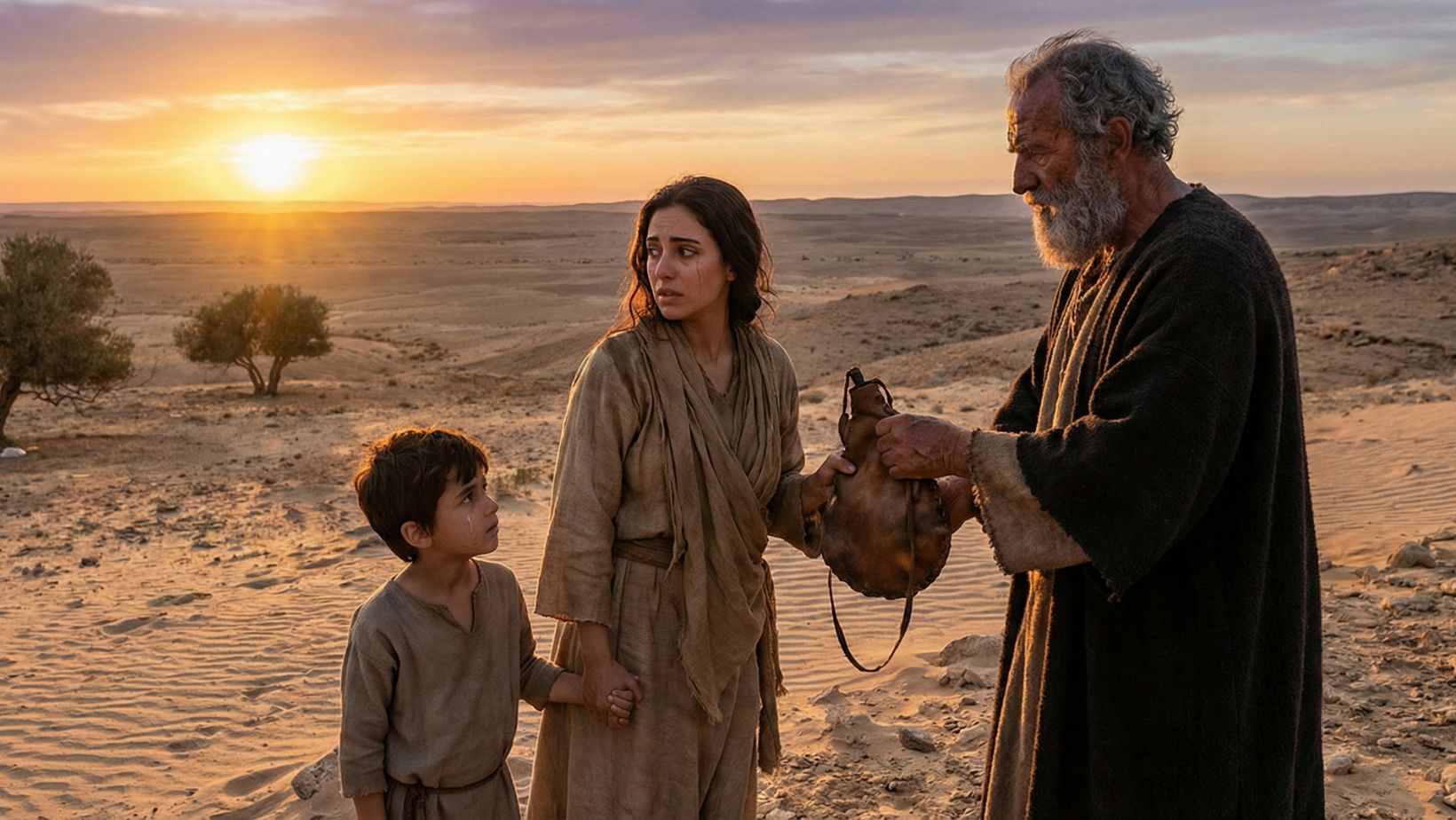
Genesis 21 presents one of the most painful moments in the life of Abraham. After years of waiting for a son, he is commanded by God to send away Ishmael, the son he produced through his own efforts and compromise. This story serves as a profound lesson on the necessity of releasing what we have built in our own strength to make full room for what God has promised in His power.
Main Scripture: Genesis 21
“Abraham rose early the next morning and took some food and a skin of water and gave them to Hagar. He set them on her shoulders and then sent her off with the boy.” — Genesis 21:14 (NIV)
Introduction
In Genesis 21, the joy of Isaac’s birth is met with the painful reality of Ishmael’s presence. Ishmael represents the “good” thing that was born out of human impatience rather than divine timing. To “Let Go of Ishmael” means to surrender the results of our self-reliance so that we can fully embrace God’s miraculous provision. This sermon explores the difficulty of walking away from what we have nurtured, the pain of spiritual transition, and the ultimate faithfulness of God to provide for both what we keep and what we are forced to release.
1. The Conflict Between the Flesh and the Promise
“But Sarah saw that the son whom Hagar the Egyptian had borne to Abraham was mocking, and she said to Abraham, ‘Get rid of that slave woman and her son…’” — Genesis 21:9-10
- The Presence of Mockery: Ishmael’s presence became a source of friction once the true promise (Isaac) arrived; our old ways often mock the new things God is doing.
- Incompatible Seasons: We cannot successfully carry the weight of our past compromises into the season of our divine fulfillment.
- The Cost of Impatience: Ishmael was a reminder of a time when Abraham tried to help God out; eventually, we must face the reality that our “hand-made” solutions cannot coexist with God’s “Heaven-sent” miracles.
2. The Pain of Releasing What We Love
“The matter distressed Abraham greatly because it concerned his son.” — Genesis 21:11
- A Father’s Heart: Abraham truly loved Ishmael; letting go is not easy just because something wasn’t “the promise”—it still carries the weight of our emotional investment.
- Spiritual Distress: Growth often requires us to do things that cause us internal pain, proving that our obedience is to God and not to our own comfort.
- The Struggle of Attachment: We often cling to “Ishmaels”—jobs, relationships, or habits—simply because we have spent years pouring our lives into them.
3. Obedience Requires Rising Early
“Early the next morning Abraham took some food and a skin of water… and sent her off.” — Genesis 21:14
- Decisive Action: Once God spoke, Abraham did not linger or argue; he rose early to settle the matter before his emotions could talk him out of it.
- Minimal Provision: A skin of water and some bread seemed insufficient for a desert journey, but it forced Hagar and Ishmael to depend on the God who hears.
- Trusting the Transition: Abraham had to trust that the same God who told him to let go was the same God who would watch over what was being sent away.
4. God’s Eyes Are Still on What We Let Go
“God heard the boy crying, and the angel of God called to Hagar from heaven… ‘Do not be afraid; God has heard the boy crying as he lies there.’” — Genesis 21:17
- Divine Compassion: Just because Ishmael was not the “son of the covenant” did not mean he was outside of God’s care.
- The Well in the Desert: When Hagar ran out of resources, God opened her eyes to see a well that was already there.
- Comfort for the Releaser: We can let go with confidence, knowing that God is big enough to take care of the people and projects we leave behind in obedience to Him.
5. Clearing the Path for the True Inheritance
“For the slave woman’s son will never share in the inheritance with my son Isaac.” — Genesis 21:10
- Protecting the Promise: God demanded the departure of Ishmael to ensure that Isaac’s inheritance was clear and uncontested.
- Removing Distractions: To reach the fullness of our calling, we must remove the distractions that compete for our time, energy, and focus.
- The Finality of Faith: Letting go of Ishmael is the final step in closing the door on our “self-effort” era so we can live entirely by the grace of God.
Quick Insights
- Letting go of Ishmael is not an act of cruelty, but an act of consecration to the promise of God.
- Your “Ishmael” might be a good thing, but it is not the “God thing” that carries your future inheritance.
- God’s provision for what you release is often found at the very moment you think all resources have run out.
- True spiritual maturity is found in the ability to say goodbye to your own creations to make room for God’s creators.







Leave a Reply