
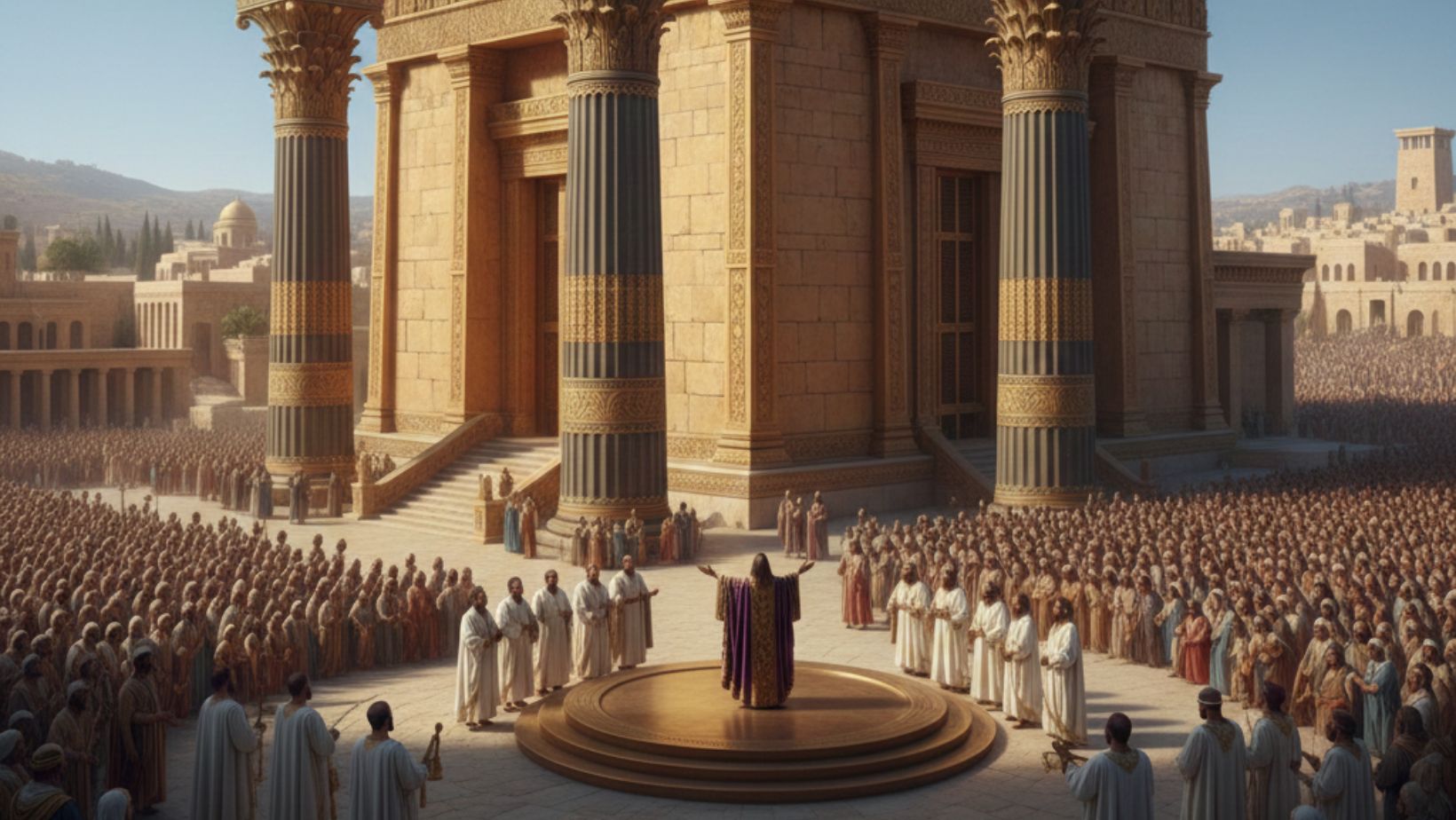
The First Book of Kings marks a critical transition in the history of Israel, beginning with the peak of the nation’s glory and ending with its tragic fragmentation. It chronicles the transition of power from the elderly King David to his son Solomon, whose wisdom and architectural achievements—most notably the construction of the Temple—became legendary. However, the narrative also serves as a sobering spiritual autopsy of the kingdom; it details how Solomon’s heart was led astray, resulting in the division of the nation into the Northern Kingdom (Israel) and the Southern Kingdom (Judah). Through the rise of the prophetic office, specifically the ministry of Elijah, the book emphasizes that the true success of a nation is measured by its fidelity to God’s covenant rather than its economic or military might.
Quick Facts
- Name: 1 Kings (originally united with 2 Kings as “The Book of Kings”)
- Author: Traditionally attributed to the prophet Jeremiah
- Main Characters: Solomon, Elijah, Rehoboam, Jeroboam, Ahab, Jezebel
- Key Figures: Adonijah, Nathan, The Queen of Sheba, Obadiah
- Era: The United Monarchy and the Divided Monarchy (~970–850 BCE)
- Core Themes: Wisdom, the Temple, idolatry vs. worship, prophetic authority
- Setting: Jerusalem, Shechem, Samaria, Mount Carmel
- Literary Style: Prophetic history focusing on the spiritual evaluation of monarchs
- Key Symbol: The Temple — symbolizing God’s dwelling place and the heart of Israelite worship
Name Meaning
The title reflects the book’s primary focus: the succession and reigns of the monarchs of Israel and Judah. In the Septuagint, it was referred to as “3rd Kingdoms,” following 1 and 2 Samuel. Its purpose is to explain why the people eventually went into exile—tracking the spiritual “kingship” of the nation.
Historical Context
Time: The book covers roughly 120 years, from the death of David to the reign of Ahaziah in the North and Jehoshaphat in the South. The Golden Age: Under Solomon, Israel reached its greatest territorial extent and economic prosperity, becoming a global hub for trade and wisdom. The Schism: Following Solomon’s death, heavy taxation and spiritual compromise led to a civil split, creating two distinct nations with two separate centers of worship.
Major Roles / Identity
Solomon the Wise: The builder of the Temple and the wealthiest man of his era, whose life serves as a cautionary tale of “half-hearted” devotion. The Prophets: Figures like Ahijah and Elijah emerge as the moral conscience of the nation, challenging kings who abandon the Law of Moses. The Divided Kings: The narrative alternates between the kings of Israel (all of whom are judged as “evil”) and the kings of Judah (some of whom are “good”). Elijah the Tishbite: A bold reformer who stands against the state-sponsored cult of Baal.
Key Character Traits
Wisdom: Initially requested by Solomon to govern justly, though later overshadowed by his many foreign marriages. Compromise: A recurring trait in the kings who tried to blend the worship of Yahweh with pagan rituals. Boldness: Characterized by Elijah, who confronted the royal house of Ahab at the risk of his own life. Rebellion: Seen in Jeroboam, who set up golden calves to prevent the North from traveling to Jerusalem to worship.
Main Events
The Succession Crisis: Adonijah attempts to seize the throne, but Solomon is anointed through the intervention of Nathan and Bathsheba. The Building of the Temple: A seven-year project that fulfilled the dream of David and centralized Israel’s worship. The Visit of the Queen of Sheba: An event showcasing Solomon’s global influence and the fulfillment of God’s promise to bless him. The Division of the Kingdom: Rehoboam’s harshness causes the ten northern tribes to break away under Jeroboam. The Contest on Mount Carmel: Elijah challenges 450 prophets of Baal, resulting in a miraculous fire from heaven that proves Yahweh is God. The Still Small Voice: God meets a discouraged Elijah at Mount Horeb, shifting the prophetic focus from spectacular signs to quiet obedience.
Major Relationships
Solomon and God: A relationship that began with humble prayer and ended with the “turning away” of Solomon’s heart. Rehoboam and Jeroboam: The political rivalry that permanently fractured the twelve tribes of Israel. Elijah and Ahab/Jezebel: An intense spiritual war between the prophet of God and the promoters of Phoenician idolatry. Elijah and Elisha: The beginning of a mentorship that would ensure the prophetic word continued into the next generation.
Notable Passages
1 Kings 3:9: Solomon’s prayer: “So give your servant a discerning heart to govern your people and to distinguish between right and wrong.” 1 Kings 8:27: Solomon’s prayer of dedication: “But will God really dwell on earth? The heavens… cannot contain you. How much less this temple I have built!” 1 Kings 18:21: Elijah’s challenge: “How long will you waver between two opinions? If the Lord is God, follow him; but if Baal is God, follow him.” 1 Kings 19:12: The epiphany at Horeb: “And after the fire came a gentle whisper.”
Legacy & Impact
1 Kings establishes the Temple as the focal point of biblical theology until its destruction. It provides the historical framework for understanding the “Good vs. Evil” evaluation of leaders. Furthermore, the book introduces Elijah, who becomes the prototypical prophet, mentioned throughout the New Testament and appearing with Jesus on the Mount of Transfiguration.
Symbolism / Typology
The Temple: A type of Christ, who is the true dwelling place of God, and later the Church (the body of believers). Solomon’s Peace: His name (from Shalom) and his peaceful reign foreshadow the “Prince of Peace.” The Golden Calves: Represent the perennial human temptation to create a “convenient” or “controllable” god. The Drought: Symbolizes spiritual barrenness resulting from the rejection of God’s word.







Leave a Reply