
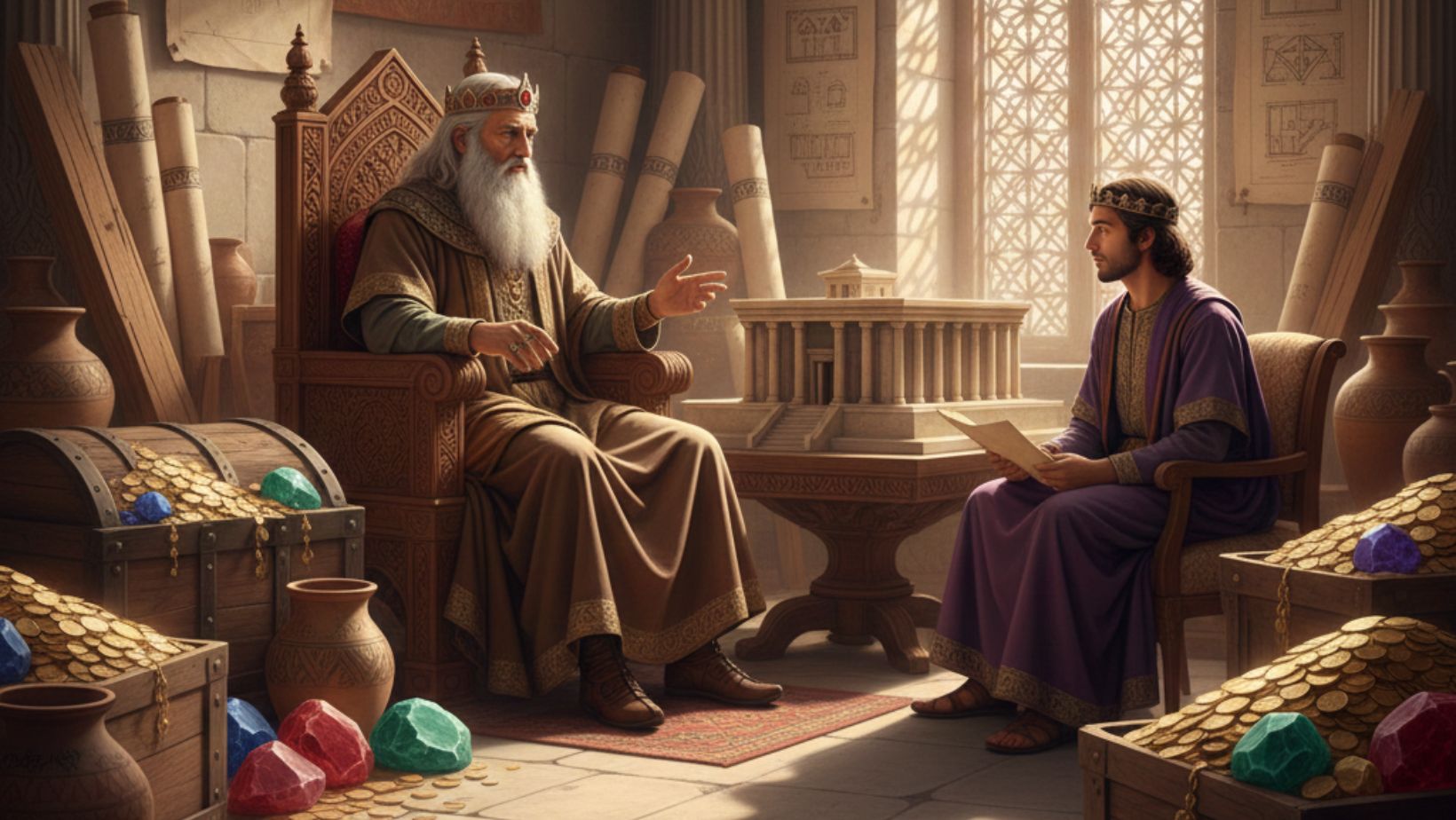
The First Book of Chronicles offers a unique, priestly perspective on Israel’s history, focusing primarily on the spiritual legacy of King David. While it covers much of the same chronological ground as the books of Samuel, it was written after the Babylonian exile to remind the returning remnant of their identity and God’s enduring promises. It skips David’s personal failures (such as the scandal with Bathsheba) to emphasize his role as the architect of Israel’s worship. By beginning with extensive genealogies and concluding with the preparations for the Temple, 1 Chronicles highlights that the true heart of the nation is not its military power, but its devotion to the service and presence of God.
Quick Facts
- Name: 1 Chronicles (Hebrew: Divrei Hayamim, meaning “The Words of the Days”)
- Author: Traditionally attributed to Ezra the Scribe
- Main Character: King David
- Key Figures: Saul, Solomon, Nathan, Zadok, The Mighty Men
- Era: From Adam to the death of David (~1010–970 BCE)
- Core Themes: Heritage, worship, the centrality of the Temple, the Davidic Covenant
- Setting: Primarily Jerusalem and the surrounding territories of Judah
- Literary Style: Genealogical records followed by sacred historical narrative
- Key Symbol: The Blueprint — symbolizing the divine patterns for the Temple and organized worship
Name Meaning
The Hebrew title, “The Matters of the Days,” suggests a formal diary or journal of the nation. The English name “Chronicles” was popularized by Jerome in the 4th century, who described the book as a “chronicle of the entire divine history.” It serves as a spiritual commentary on the past to provide hope for the future.
Historical Context
Time: Written during the post-exilic period (around 450–425 BCE) for those who had returned from Babylon to rebuild Jerusalem. Purpose: To legitimize the priesthood and the Davidic line, ensuring the returning exiles understood their continuity with the ancient covenant. Scope: It begins with the dawn of humanity (Adam) through genealogies and narrows its focus down to the tribe of Judah and the house of David.
Major Roles / Identity
The Chronicler: The voice of the author (likely Ezra), who interprets history through the lens of the Law and the Temple. David the Worship Leader: Unlike the “Warrior King” of Samuel, here David is portrayed as the one who organizes the Levites and singers. The Mighty Men: A detailed list of David’s elite warriors, emphasizing the communal support behind his reign. The Levites: Featured prominently as the essential keepers of the Ark and the facilitators of national repentance.
Key Character Traits
Devotion: David’s primary concern is “a house for the Lord,” showing a heart consumed with God’s glory. Generosity: Seen in the massive personal wealth David and the leaders donate for the future Temple. Accountability: The book emphasizes that “seeking the Lord” brings blessing, while “forsaking Him” brings immediate judgment. Inclusive Leadership: David gathers all Israel—priests, warriors, and tribal leaders—to participate in sacred work.
Main Events
The Genealogies: Nine chapters tracing the line from Adam to the returning exiles, proving God’s plan has never been interrupted. The Death of Saul: A brief account explaining that Saul died because he was unfaithful and did not consult the Lord. The Return of the Ark: A joyous, musical event that establishes Jerusalem as the spiritual center of the world. The Davidic Covenant: God’s promise to build David a “house” (dynasty) that will last forever (1 Chronicles 17). Temple Preparations: David gathers materials, recruits craftsmen, and organizes the priestly divisions for the Temple he will not live to see. The Handing of the Mantle: David publicly charges Solomon to build the Temple and follow God’s commands.
Major Relationships
David and the Levites: A strategic partnership to ensure that worship is conducted according to the “proper order.” David and Solomon: A father passing on a spiritual vision, providing his son with the resources and blueprints for success. God and Israel: Portrayed as a covenant relationship where the Temple serves as the primary meeting point. David and His Warriors: A bond of mutual loyalty that demonstrates how God’s chosen king is supported by a dedicated community.
Notable Passages
1 Chronicles 4:10: The Prayer of Jabez: “Oh, that you would bless me and enlarge my territory!” 1 Chronicles 16:29: A call to worship: “Ascribe to the Lord the glory due his name; bring an offering and come before him.” 1 Chronicles 17:11–12: The Messianic promise: “I will raise up your offspring… and I will establish his kingdom forever.” 1 Chronicles 29:14: David’s prayer of humility: “Everything comes from you, and we have given you only what comes from your hand.”
Legacy & Impact
1 Chronicles serves as a bridge between the Old and New Testaments, emphasizing the legal and spiritual lineage that leads to Jesus. It redefined the identity of a broken people, showing them that their value lay in their vocation as worshipers. It also provides the most detailed instructions for biblical liturgy and the role of music in the presence of God.
Symbolism / Typology
The Ark of the Covenant: Represents the physical manifestation of God’s throne on earth. The Genealogies: Symbolize that no individual is forgotten by God; every name has a place in His redemptive story. David’s Preparations: A type of Christ, who prepares a “place” for His people, even though the full realization (the Temple/New Jerusalem) comes later. The Altar on the Threshing Floor: Symbolizes the site where judgment is turned into mercy through sacrifice (the future site of the Temple).







Leave a Reply