
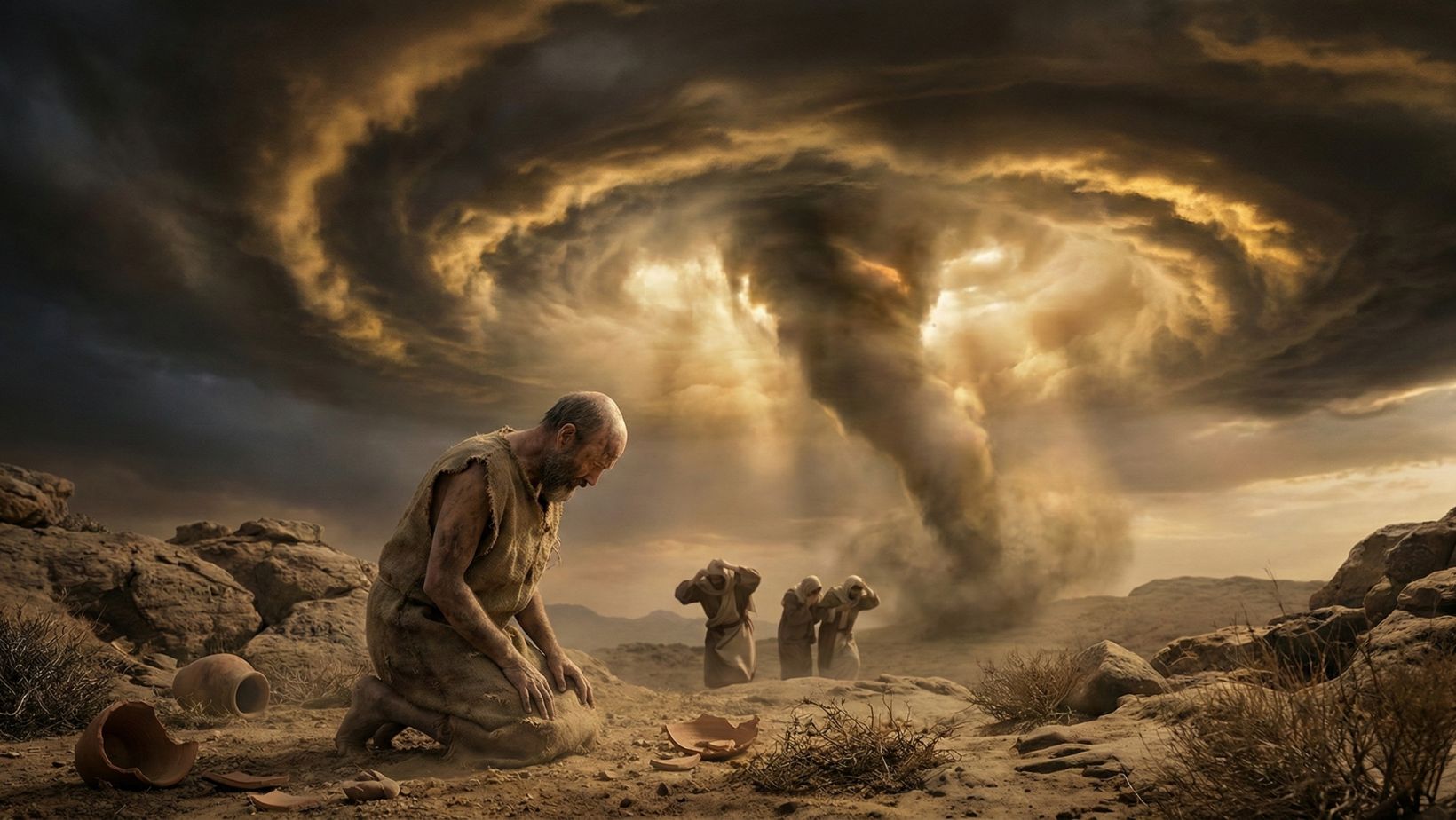
The Book of Job is a masterpiece of world literature and the first of the poetic “Wisdom Books” in the Bible. It fearlessly tackles one of the oldest and most difficult questions of the human experience: the problem of pain. Why do bad things happen to good people? Does God govern the world according to strict justice? The narrative strips away every comfort—wealth, family, health, and social standing—from a righteous man named Job to see if his faith is genuine. Unlike the simplistic “Retribution Theology” of his friends (who claim that suffering is always the result of sin), the book reveals a complex universe where God’s wisdom is beyond human comprehension, ultimately asserting that God is worthy of worship not for what He gives, but for who He is.
Quick Facts
- Name: Job (Hebrew: Iyov)
- Author: Unknown (Traditional candidates include Moses, Solomon, or Job himself)
- Main Characters: Job, God, The Satan (The Accuser), Eliphaz, Bildad, Zophar, Elihu
- Era: The Patriarchal Age (likely pre-Mosaic; ~2000–1800 BCE)
- Core Themes: Theodicy (justice of God), innocent suffering, sovereignty, the limits of human wisdom
- Setting: The Land of Uz (location debated, possibly Edom or Arabia)
- Literary Style: Epic poetry framed by prose narrative
- Key Symbol: The Whirlwind — representing the overwhelming, transcendent voice of God
Name Meaning
The name Job (Iyov) has two potential meanings. It may be derived from a root meaning “The Persecuted One” or “He who turns back” (to God). Another linguistic option translates it as “Where is the Father?”, reflecting the cry of a sufferer searching for God’s presence.
Historical Context
Time: Though the book was likely written down later, the events seem to take place in the time of Abraham. Job acts as the priest for his family (sacrificing for his children), wealth is measured in livestock rather than coins, and there is no mention of the Israelites, the Law of Moses, or the Temple. The Cosmic Court: The book opens with a glimpse behind the spiritual curtain, revealing a “divine council” where God and “The Accuser” discuss the integrity of humanity.
Major Roles / Identity
Job (The Righteous Sufferer): A man described by God Himself as “blameless and upright,” who becomes the battleground for a cosmic test of faith. The Three Friends (Eliphaz, Bildad, Zophar): They come to comfort Job but end up accusing him. They represent traditional religious dogma: “Good things happen to good people; therefore, you must have sinned.” The Satan (The Accuser): Not necessarily a proper name here, but a title (ha-satan). He challenges God’s policy of blessing the righteous, claiming Job only loves God because God pays him to. Elihu: A younger observer who speaks last, suggesting that suffering can be disciplinary and redemptive rather than just punitive.
Key Character Traits
Integrity: Job refuses to “curse God and die” or falsely confess to sins he didn’t commit, maintaining his innocence to the end. Honesty: Unlike his religious friends, Job is brutally honest with God. He complains, wails, and demands answers, showing that authentic faith allows for lament. Presumption: The friends display intellectual arrogance, believing they have God’s justice perfectly figured out. Sovereignty: God appears not to answer Job’s questions, but to enlarge his perspective, revealing Himself as the untameable Creator.
Main Events
The Wager: Satan claims Job serves God only for the benefits. God removes His protection to prove Job’s faith is genuine (Job 1–2). The Disaster: In a single day, Job loses his livestock, servants, and all ten children. Shortly after, he is afflicted with painful sores. The Silence: The friends sit with Job in silence for seven days—their only truly helpful act. The Cycles of Debate: Three rounds of speeches where the friends accuse Job of secret sin, and Job defends his innocence while questioning God’s justice. The Wisdom Hymn: Chapter 28 asks, “Where can wisdom be found?” and answers, “The fear of the Lord—that is wisdom.” The Whirlwind: God finally speaks out of a storm. Instead of explaining why Job suffered, God takes him on a tour of the universe (stars, weather, wild beasts), asking, “Where were you when I laid the earth’s foundation?” The Restoration: Job repents (not of sin, but of questioning God’s competence). God rebukes the friends and restores Job’s fortunes twofold.
Major Relationships
Job and God: The central tension. Job feels God has become his enemy, yet he never stops talking to God, while his friends only talk about God. Job and His Wife: A glimpse of shared grief. She breaks under the pressure (“Curse God and die!”), representing the voice of despair. Job and the Friends: A tragic devolution from comforters to prosecutors. God and Chaos: God describes two massive beasts, Behemoth and Leviathan, showing that He manages a world full of wild, dangerous power that humans cannot control.
Notable Passages
Job 1:21: The cry of worship: “The Lord gave and the Lord has taken away; may the name of the Lord be praised.” Job 13:15: The cry of resilience: “Though he slay me, yet will I hope in him.” Job 19:25: The cry of hope: “I know that my redeemer lives, and that in the end he will stand on the earth.” Job 38:4: The divine question: “Where were you when I laid the earth’s foundation? Tell me, if you understand.”
Legacy & Impact
The Book of Job deconstructs the “Prosperity Gospel” (the idea that faith guarantees financial/physical health). It validates lament as a form of worship. It teaches that the reason for suffering is often hidden in the counsel of God, and that trust is possible even without answers.
Symbolism / Typology
The Ash Heap: Symbolizes the complete loss of status and the reality of human mortality. Leviathan: A sea monster representing chaos and evil. God’s control over Leviathan shows His mastery over the forces that threaten the world. Job as a Type of Christ: A righteous sufferer who is falsely accused, feels forsaken by God (“Why have you hidden your face?”), but is ultimately vindicated and intercedes for his “friends” (forgiveness).







Leave a Reply