
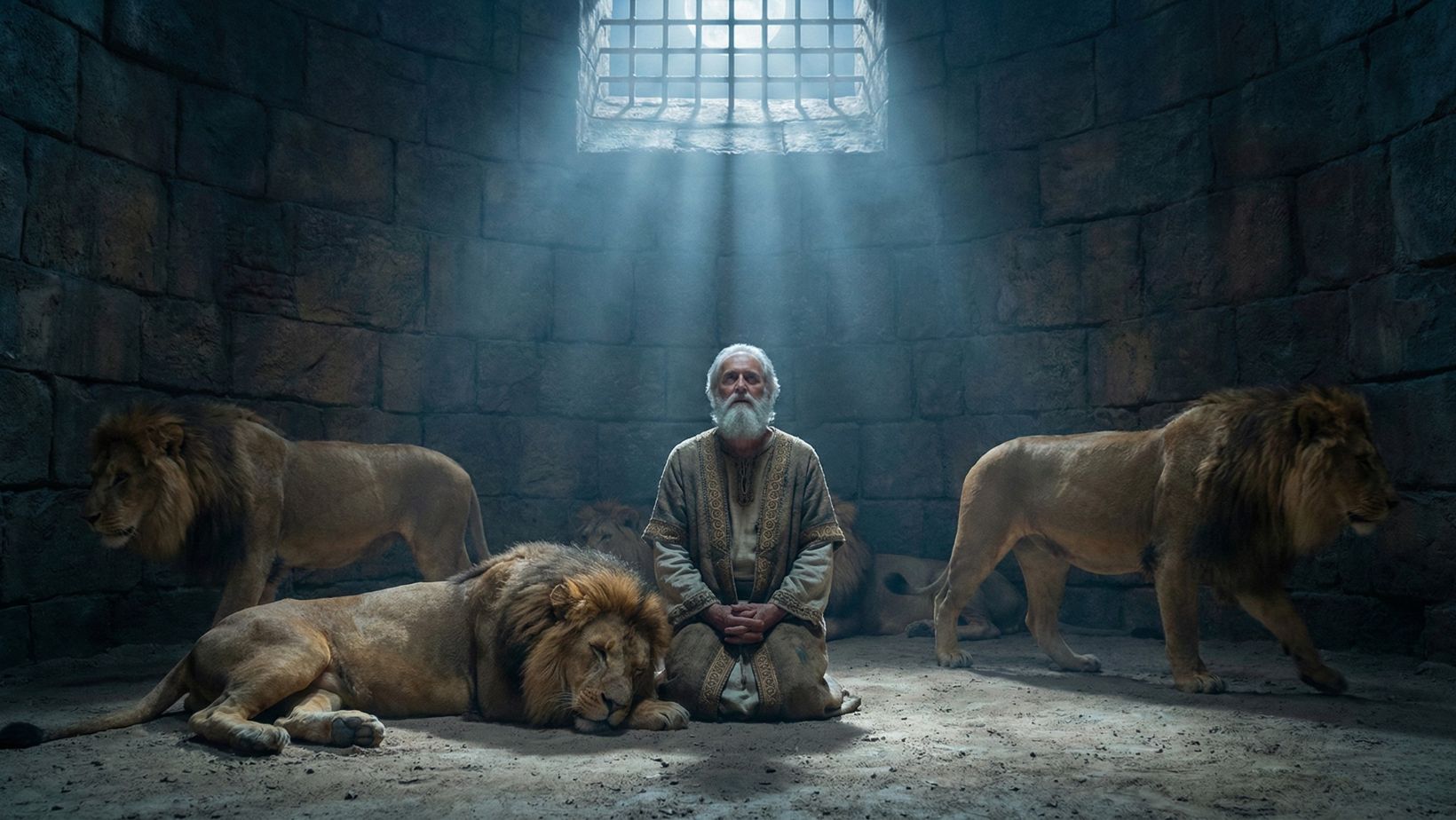
Daniel is one of the Bible’s most distinguished prophets and statesmen, renowned for his uncompromising integrity, profound wisdom, and gift of interpreting dreams. Taken into captivity as a youth during the first siege of Jerusalem by Babylon, he rose to high office in foreign courts without ever compromising his faith in Yahweh. The Book of Daniel records both his biography—marked by miraculous deliverances like the lions’ den—and his apocalyptic visions, which map out the future of world empires and the ultimate establishment of God’s Kingdom.
Quick Facts
- Name: Daniel (Hebrew: Daniyyel; Babylonian name: Belteshazzar)
- Tribe/Nation: Judah (of noble or royal descent)
- Era: The Babylonian Exile (late 7th to late 6th century BCE)
- Kings Served: Nebuchadnezzar, Belshazzar (Babylon); Darius the Mede, Cyrus (Persia)
- Home: Born in Jerusalem; lived the majority of his life in Babylon
- Book: The Book of Daniel (12 chapters)
- Key Virtues: Integrity, wisdom, prayerfulness, courage
- Legacy: A model of faithfulness in a secular culture; major apocalyptic prophet
- Symbol: The Lion — representing divine protection and courage
Name Meaning
“Daniel” means “God is my Judge.” This name reflects his reliance on God’s assessment rather than man’s judgment. Upon his arrival in Babylon, he was given the name Belteshazzar (meaning “Lady/Lord, protect the King’s life” or invoking the god Bel), an attempt to assimilate him into Babylonian culture, which he resisted in spirit.
Lineage / Family Background
Origin: Born into the nobility or royal family of the Kingdom of Judah.
Status: Taken to Babylon in 605 BCE as a teenager (during the reign of King Jehoiakim) to be trained for service in the king’s court.
Marital Status: The Bible does not mention a wife or children; some traditions suggest he was made a eunuch in service to the king (based on prophecies in Isaiah 39:7), though this is not explicitly confirmed.
Biblical Era / Context
Time: The 70-year Babylonian Captivity (approx. 605–536 BCE).
Setting: The royal courts of Babylon and Susa (Persia).
Cultural Context: Israel had been conquered due to idolatry. Daniel lived as an exile in a pagan superpower known for its astrology, idolatry, and military might, yet he maintained strict adherence to the Law of Moses.
Major Roles / Identity
Prophet: Received and recorded detailed visions regarding the future of Israel and Gentile nations.
Statesman/Administrator: Served as a high-ranking official and advisor under multiple successive empires (Babylonian and Medo-Persian).
Interpreter: Gifted by God to interpret dreams and mysterious signs that baffled the king’s magicians.
Intercessor: Prayed fervently for the restoration of Jerusalem and the forgiveness of his people.
Key Character Traits
Uncompromising Integrity: “Daniel resolved not to defile himself…” (Daniel 1:8).
Wisdom: Found to be ten times better than all the magicians and enchanters in the kingdom (Daniel 1:20).
Prayerfulness: Maintained a habit of praying three times a day towards Jerusalem, even under threat of death.
Humility: Always gave credit to God for his ability to interpret mysteries (Daniel 2:28).
Consistency: His enemies could find no corruption in him, only “grounds for complaint” regarding his God (Daniel 6:5).
Main Life Events
The King’s Food: As a youth, he refused the royal food and wine to avoid violating Jewish dietary laws, thriving instead on vegetables and water (Daniel 1).
Nebuchadnezzar’s Dream: Interpreted the King’s dream of a giant statue representing four future world empires, saving the wise men of Babylon from execution (Daniel 2).
The Tree Dream: Interpreted Nebuchadnezzar’s second dream, predicting the King’s seven-year madness and subsequent restoration (Daniel 4).
The Writing on the Wall: Interpreted the supernatural handwriting (Mene, Mene, Tekel, Parsin) at Belshazzar’s feast, predicting the immediate fall of Babylon to the Medes and Persians (Daniel 5).
The Lions’ Den: Thrown into a den of lions for praying to God against the decree of King Darius; miraculously preserved by an angel (Daniel 6).
The Seventy Weeks: Received the prophecy of the “Seventy Weeks,” predicting the timing of the Messiah’s coming and atonement (Daniel 9).
Major Relationships
Hananiah, Mishael, and Azariah: His three close friends (Shadrach, Meshach, and Abednego) who stood with him in faith.
Nebuchadnezzar: The powerful Babylonian king whom Daniel served and eventually led to acknowledge the Most High God.
Darius the Mede: The ruler who held Daniel in high esteem and was distressed when forced to throw him into the lions’ den.
Gabriel: The archangel who appeared to Daniel to explain his visions and deliver God’s messages.
Notable Passages
Daniel 1:8: “But Daniel resolved not to defile himself with the royal food and wine…”
Daniel 2:20–22: His prayer of praise — “Praise be to the name of God for ever and ever; wisdom and power are his.”
Daniel 6:26: Darius’ decree — “For he is the living God and he endures forever; his kingdom will not be destroyed…”
Daniel 12:3: “Those who are wise will shine like the brightness of the heavens, and those who lead many to righteousness, like the stars for ever and ever.”
Legacy & Impact
Apocalyptic Literature: The Book of Daniel is the foundational Old Testament apocalyptic text, heavily influencing the Book of Revelation.
Messianic Prophecy: Provided the specific timeline for the arrival of the Messiah (the “Anointed One”) in Daniel 9.
Sovereignty of God: His life proved that God rules over the kingdoms of men and can sustain His people even in a hostile, pagan environment.
Resurrection: Contains one of the clearest Old Testament references to the resurrection of the dead (Daniel 12:2).
Symbolism / Typology
The Stone: In Nebuchadnezzar’s dream, the “stone cut out without hands” that destroys the statue represents the Kingdom of God/Christ shattering worldly empires.
The Lions’ Den: A type of death and resurrection; Daniel is placed in the pit and brought out alive, vindicated by God.
The Son of Man: Daniel 7 introduces the “one like a son of man” approaching the Ancient of Days—a title Jesus frequently used for Himself.
Extra-Biblical References
Ezekiel: The prophet Ezekiel, a contemporary, mentions Daniel three times (Ezekiel 14:14, 14:20, 28:3) as a standard of righteousness and wisdom, alongside Noah and Job.
Jesus Christ: Jesus explicitly quotes Daniel regarding the “abomination of desolation” in His discourse on the end times (Matthew 24:15).
Historical Accounts: Josephus records traditions that Daniel built a famous tower in Ecbatana and that Alexander the Great was shown the Book of Daniel upon entering Jerusalem.







Leave a Reply