
Zechariah is the visionary counterpart to the practical Haggai. While Haggai motivated the people to build the Temple with rebuke and logic, Zechariah encouraged them with spectacular apocalyptic visions of the future glory of God’s Kingdom. He is often called the “Prophet of Hope.” His book is the longest and most complex of the Minor Prophets, containing a series of eight bizarre night visions that resemble the imagery found in Daniel and Revelation. Zechariah is also profoundly significant for Christians, as he provides some of the most specific and recognizable Messianic prophecies in the Old Testament, detailing Christ’s entry on a donkey, his betrayal for thirty pieces of silver, and his crucifixion.
Quick Facts
- Name: Zechariah (Hebrew: Zekharyah)
- Tribe/Nation: Tribe of Levi (Priest and Prophet)
- Era: Persian Period (520–518 BCE and likely later)
- Father: Berechiah (Grandson of Iddo)
- Contemporary: Haggai, Zerubbabel, Joshua
- Book: The Book of Zechariah (14 chapters)
- Key Virtues: Vision, spiritual depth, anticipation of the Messiah
- Legacy: The most “Messianic” of the Minor Prophets; heavily influenced the Book of Revelation
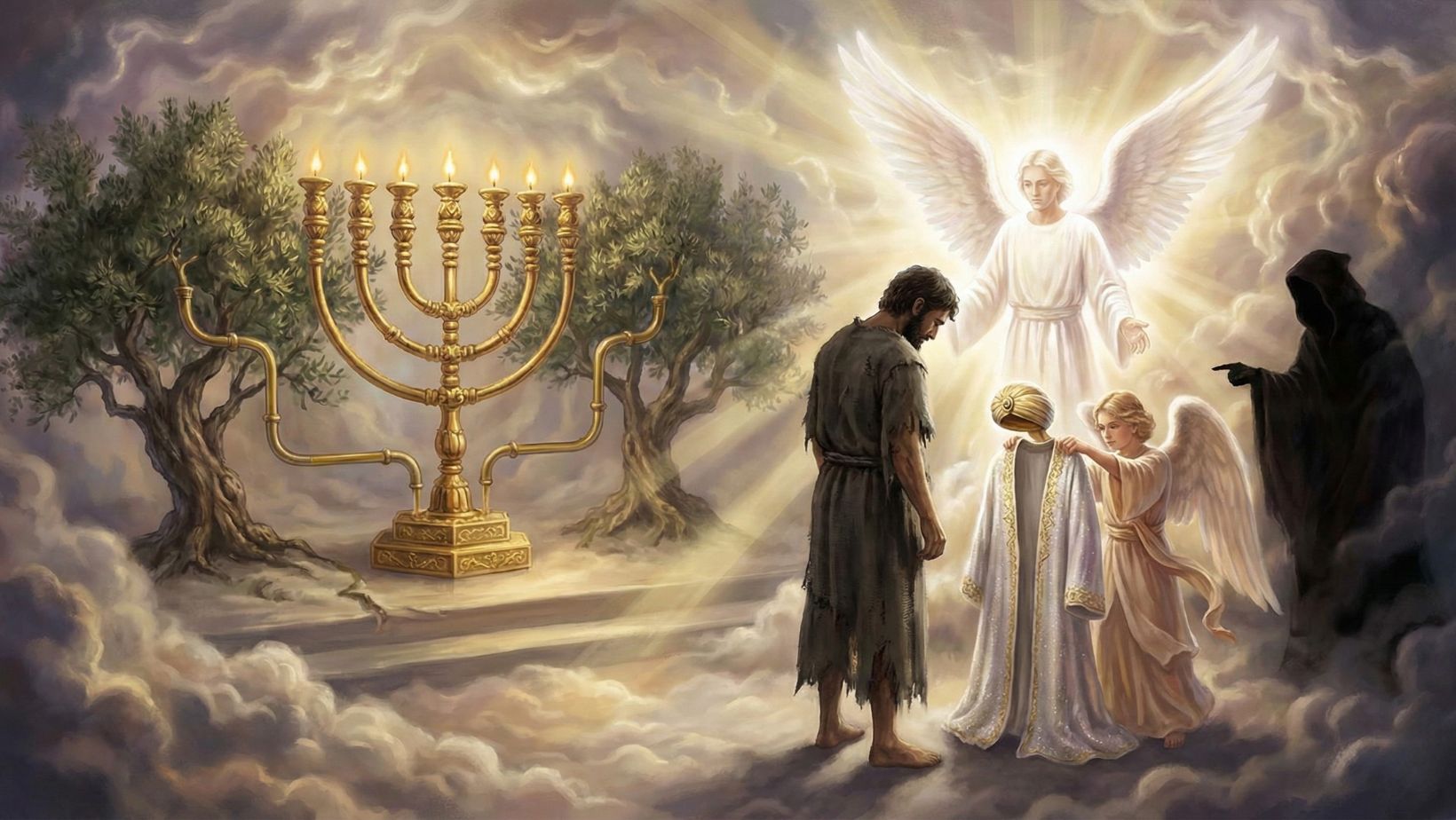
- Symbol: The Golden Lampstand with Two Olive Trees — representing the Spirit-empowered work of God
Name Meaning
“Zechariah” means “Yahweh Remembers.” This name was the essence of his message to the discouraged exiles: God had not forgotten His covenant with Israel, nor had He forgotten His promise to send a King, despite the current humble state of the nation.
Lineage / Family Background
Priestly Heritage: Zechariah was born in Babylon and returned to Jerusalem with his grandfather, Iddo, who was the head of a priestly family (Nehemiah 12:4, 16). Dual Office: Like Jeremiah and Ezekiel, Zechariah was both a priest (by birth) and a prophet (by calling). This gave him authority in both religious rituals and spiritual ethics.
Biblical Era / Context
Time: His ministry began in October/November 520 BCE, two months after Haggai began preaching. Setting: The reconstruction of the Temple had just restarted. The people were fragile. They needed to know that this small, physical building had a massive, cosmic significance. Shift in Tone: Where Haggai focused on the present (get the stones in place), Zechariah focused on the future (what this temple represents for the end of time).
Major Roles / Identity
The Seer: Zechariah received “Night Visions”—surreal, dream-like sequences involving colored horses, flying scrolls, and angelic interpreters.
The Apocalypticist: Chapters 9–14 move far beyond his own time to describe the final siege of Jerusalem, the judgment of the nations, and the ultimate establishment of God’s Kingdom on earth.
The Messianic Herald: He provided the specific “identification papers” for the coming Messiah so that Israel would recognize Him when He appeared.
Key Character Traits
Symbolic: He thought and communicated in complex imagery. He understood that spiritual realities (like the removal of sin) often need visual metaphors (like filthy clothes being changed) to be understood.
Encouraging: His central message was “Do not be afraid,” reminding the small remnant that God was a wall of fire around them.
Spirit-Reliant: He famously declared that God’s work is accomplished “Not by might nor by power, but by my Spirit” (Zechariah 4:6).
Main Life Events
The Eight Night Visions: In a single night, Zechariah experienced eight distinct visions that outlined God’s plan for Israel and the nations.
- The Man Among the Myrtle Trees: God is watching the earth; He is jealous for Jerusalem.
- Four Horns and Four Craftsmen: Judgment on the nations that scattered Judah.
- The Man with a Measuring Line: Jerusalem will be so full of people it will not need walls; God will be its glory.
- The Cleansing of Joshua: The High Priest is cleansed of “filthy garments” (sin) and given clean robes (righteousness)—a picture of justification.
- The Lampstand and Olive Trees: Zerubbabel and Joshua are empowered by the Holy Spirit.
- The Flying Scroll: Judgment on thieves and liars.
- The Woman in the Basket: Wickedness is removed from the land and sent to Babylon.
- The Four Chariots: God’s spirits patrolling the earth to bring rest.
The Crowning of Joshua: Zechariah is commanded to make a crown of silver and gold and place it on the head of Joshua the High Priest, prophesying a future figure (the Branch) who will be both King and Priest (Zechariah 6).
The Question of Fasting: When the people asked if they should continue mourning the destruction of the temple now that it was being rebuilt, Zechariah pivoted the conversation to justice, mercy, and truth rather than empty ritual (Zechariah 7–8).
Major Relationships
Haggai: The older, pragmatic prophet. They were a team: Haggai built the structure; Zechariah built the morale.
The Angel of the LORD: A recurring figure in Zechariah’s visions who intercedes for Jerusalem and is identified with divine authority (often viewed as a pre-incarnate appearance of Christ).
Satan (The Accuser): Zechariah 3 contains a rare Old Testament scene of a courtroom drama where Satan stands to accuse the High Priest, but the LORD rebukes Satan.
Notable Passages
Zechariah 4:6: “So he said to me, ‘This is the word of the LORD to Zerubbabel: Not by might nor by power, but by my Spirit,’ says the LORD Almighty.”
Zechariah 9:9: “Rejoice greatly, Daughter Zion! …See, your king comes to you, righteous and victorious, lowly and riding on a donkey, on a colt, the foal of a donkey.” (Fulfilled in Matthew 21).
Zechariah 11:12–13: “So they paid me thirty pieces of silver… And the LORD said to me, ‘Throw it to the potter’—the handsome price at which they valued me!” (Fulfilled in Matthew 27).
Zechariah 12:10: “They will look on me, the one they have pierced, and they will mourn for him as one mourns for an only child…” (Fulfilled in John 19:37).
Legacy & Impact
The Passion Narrative: The Gospel writers quote Zechariah extensively during the final week of Jesus’ life (Palm Sunday, the betrayal, the striking of the Shepherd, the crucifixion).
Apocalyptic Literature: Zechariah’s style of using interpreting angels and bizarre symbolism paved the way for the Book of Revelation. The “Four Horsemen” of Revelation 6 are adapted from Zechariah’s chariot visions.
Symbolism / Typology
The Branch: A title for the Messiah. He will “branch out” and build the true Temple of the Lord.
The Two Shepherds: In Chapter 11, Zechariah acts out a parable of two shepherds—one good (rejected by the flock) and one foolish (who destroys the flock)—foreshadowing the rejection of Jesus and the embrace of false leaders.
The Living Waters: Zechariah 14 predicts living waters flowing from Jerusalem, a symbol of the life-giving power of the Gospel going out to the nations.







Leave a Reply