
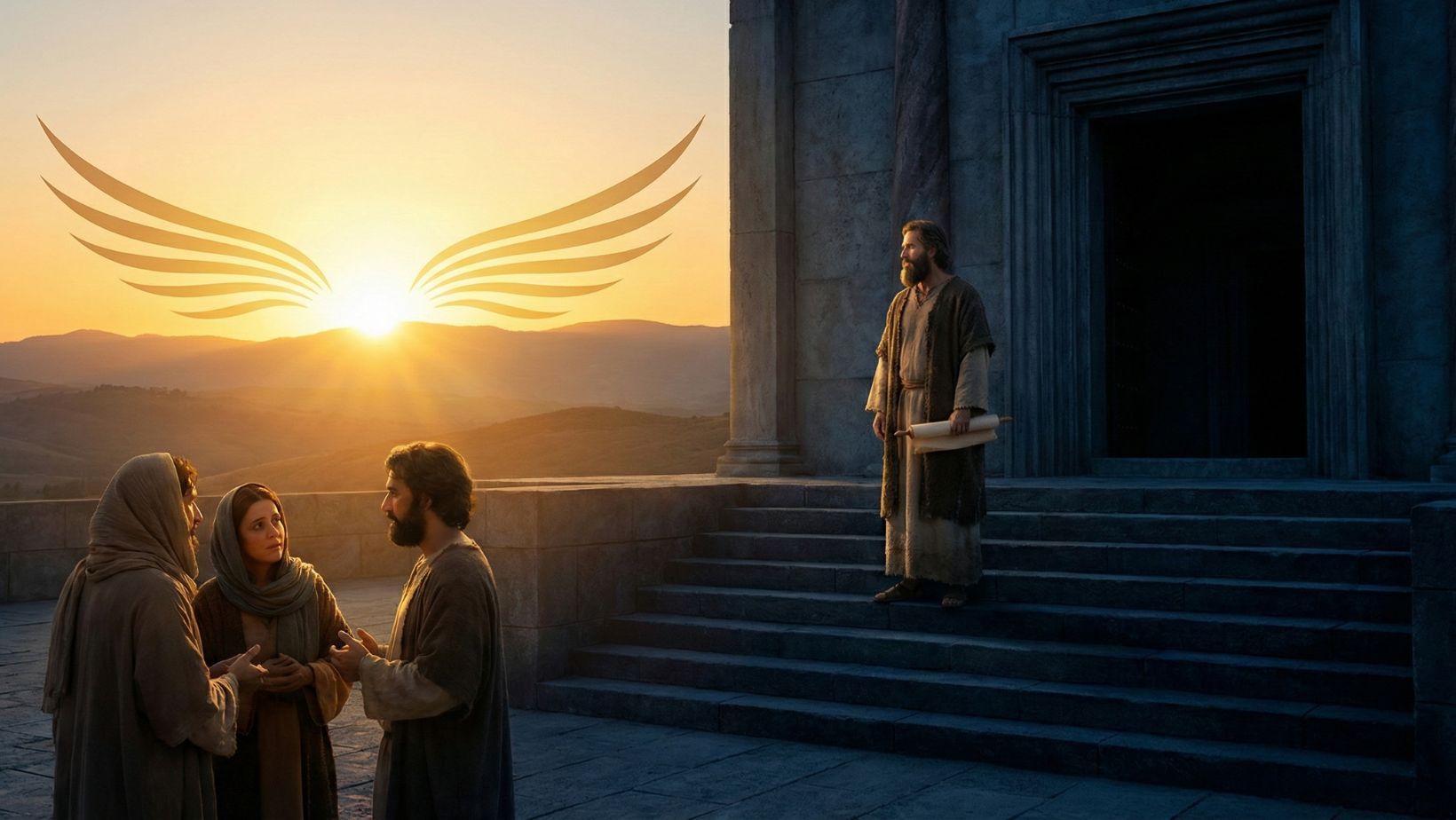
Malachi is the final voice of the Old Testament, the “seal” of the prophets. Appearing roughly 100 years after Haggai and Zechariah, he spoke to a generation that had lost its fire. The Temple was rebuilt, but the Messiah hadn’t come, and the people had drifted into spiritual apathy, cynicism, and boredom. They didn’t worship idols of wood and stone; instead, they worshipped the idol of convenience—bringing sick animals for sacrifice, divorcing the wives of their youth for foreign women, and withholding their tithes. Malachi’s message is unique in its style: a series of six intense “disputations” or arguments where he voices the people’s sarcastic complaints against God and then dismantles them. He concludes the Hebrew Bible not with a period, but with a comma—pointing forward to a “messenger” who would prepare the way for the Lord.
Quick Facts
- Name: Malachi (Hebrew: Mal’akhi)
- Tribe/Nation: Judah (Post-Exilic Community)
- Era: Persian Period (approx. 430–420 BCE)
- Contemporary: Nehemiah (likely)
- Home: Jerusalem
- Book: The Book of Malachi (4 chapters)
- Key Virtues: Zeal for God’s honor, courage, covenant faithfulness
- Legacy: The final prophet before the “400 Years of Silence”
- Symbol: The Sun of Righteousness / The Refiner’s Fire
Name Meaning
“Malachi” means “My Messenger” or “Messenger of Yahweh.”
- Some ancient scholars (like the writers of the Targum) believed “Malachi” was actually a title for Ezra the Scribe, as the name could be a description rather than a proper noun. However, most modern scholars view him as a distinct historical prophet whose name perfectly described his role: delivering the final message before the Great Silence.
Lineage / Family Background
Mystery: The text gives absolutely no information about his father, his hometown, or his background. Significance: This anonymity emphasizes that the message is far more important than the messenger. He is simply a voice crying out for the honor of God.
Biblical Era / Context
Time: Approx. 432–425 BCE. Political Context: The Jews were a small province under Persian rule. The initial excitement of the return from exile had evaporated. Reality had set in: they were poor, weak, and politically insignificant. Spiritual Context: This was the era of “dead orthodoxy.” The people were going through the motions. The priests were bored (“What a burden!” they said of the sacrifices in 1:13), and the people felt that serving God didn’t pay off financially (3:14).
Major Roles / Identity
The Prosecuting Attorney: Malachi uses a “Socratic” or disputational style. He quotes the people’s cynical thoughts (“How have you loved us?” “How have we robbed you?”) and then provides God’s rebuttal.
The Reformer: The issues he attacks—corruption in the priesthood, mixed marriages with pagans, and failure to tithe—are the exact same issues Nehemiah dealt with (Nehemiah 13), suggesting they worked in the same era to clean up the community.
The Bridge-Builder: He stands at the very edge of the Old Testament, pointing directly to the New. He is the first to explicitly link the “Messenger of the Covenant” with the return of Elijah (John the Baptist).
Key Character Traits
Confrontational: He did not sugarcoat. He told the priests that because they dishonored God, God would spread the dung of their sacrifices on their faces (Malachi 2:3).
High View of God: The phrase “The LORD of Hosts” (Yahweh Sabaoth) appears roughly 24 times in these 55 verses. Malachi was obsessed with the greatness of God’s name among the nations (1:11).
Defender of Marriage: Malachi provides the strongest Old Testament defense of the permanence of marriage, declaring that God is the witness between a man and the “wife of his youth” and that God hates divorce (Malachi 2:14–16).
Main Life Events
The Six Disputations: Malachi’s entire ministry is structured around six arguments:
- God’s Love: The people question God’s love; Malachi points to His election of Jacob over Esau.
- Polluted Offerings: The priests are offering blind and crippled animals. Malachi sarcastically suggests they try offering that trash to their Persian governor.
- Faithlessness: Condemnation of divorce and marrying foreign idolaters.
- Divine Justice: The people complain that evil men prosper.
- Tithing: The people are robbing God. Malachi challenges them to “test God” by bringing the full tithe to see if He won’t open the floodgates of heaven.
- The Day of Judgment: The distinction between the wicked and the righteous will finally be made clear.
The Promise of Elijah: In the final verses of the Old Testament, Malachi predicts that the prophet Elijah will return before the great and dreadful day of the LORD to turn the hearts of the fathers to the children.
Major Relationships
The Corrupt Priests: The primary target of his anger. They were “despising God’s name” by accepting sub-par sacrifices just to keep the people happy.
The “Messenger”: Malachi foresees a mysterious figure who will “prepare the way.” This is the baton pass to the Gospels.
God: Malachi presents God as a loving Father and Master who is deeply hurt by the casual disrespect of His “son” (Israel).
Notable Passages
Malachi 1:10: “Oh, that one of you would shut the temple doors, so that you would not light useless fires on my altar! I am not pleased with you…”
Malachi 3:8, 10: “Will a mere mortal rob God? Yet you rob me… Bring the whole tithe into the storehouse… Test me in this… and see if I will not throw open the floodgates of heaven.”
Malachi 3:16: “Then those who feared the LORD talked with each other, and the LORD listened and heard. A scroll of remembrance was written in his presence…”
Malachi 4:2: “But for you who revere my name, the sun of righteousness will rise with healing in its rays. And you will go out and frolic like well-fed calves.”
Legacy & Impact
John the Baptist: Jesus explicitly identifies John the Baptist as the “Elijah” that Malachi promised (Matthew 11:14), making Malachi the scriptural basis for John’s ministry.
The 400 Silent Years: After Malachi spoke, the prophetic voice ceased in Israel for four centuries until the angel Gabriel appeared to Zechariah (the priest) in the temple. Malachi’s words echoed in that silence for generations.
Christian Marriage: His declaration that “the LORD is the witness between you and the wife of your youth” remains a foundational text for the sanctity of the marriage covenant.
Symbolism / Typology
The Sun of Righteousness: A beautiful Messianic title. Just as the sunrise drives away the cold and dark, the Messiah will bring light and healing (spiritual wholeness) to those who fear Him.
The Refiner’s Fire: Malachi describes the coming Messiah not as a military conqueror, but as a metallurgist who uses fire and lye soap to burn away the impurities (sin) from His people.
The Book of Remembrance: A symbol of God’s attention to the faithful few who remain loyal when the rest of the culture is compromising.







Leave a Reply