
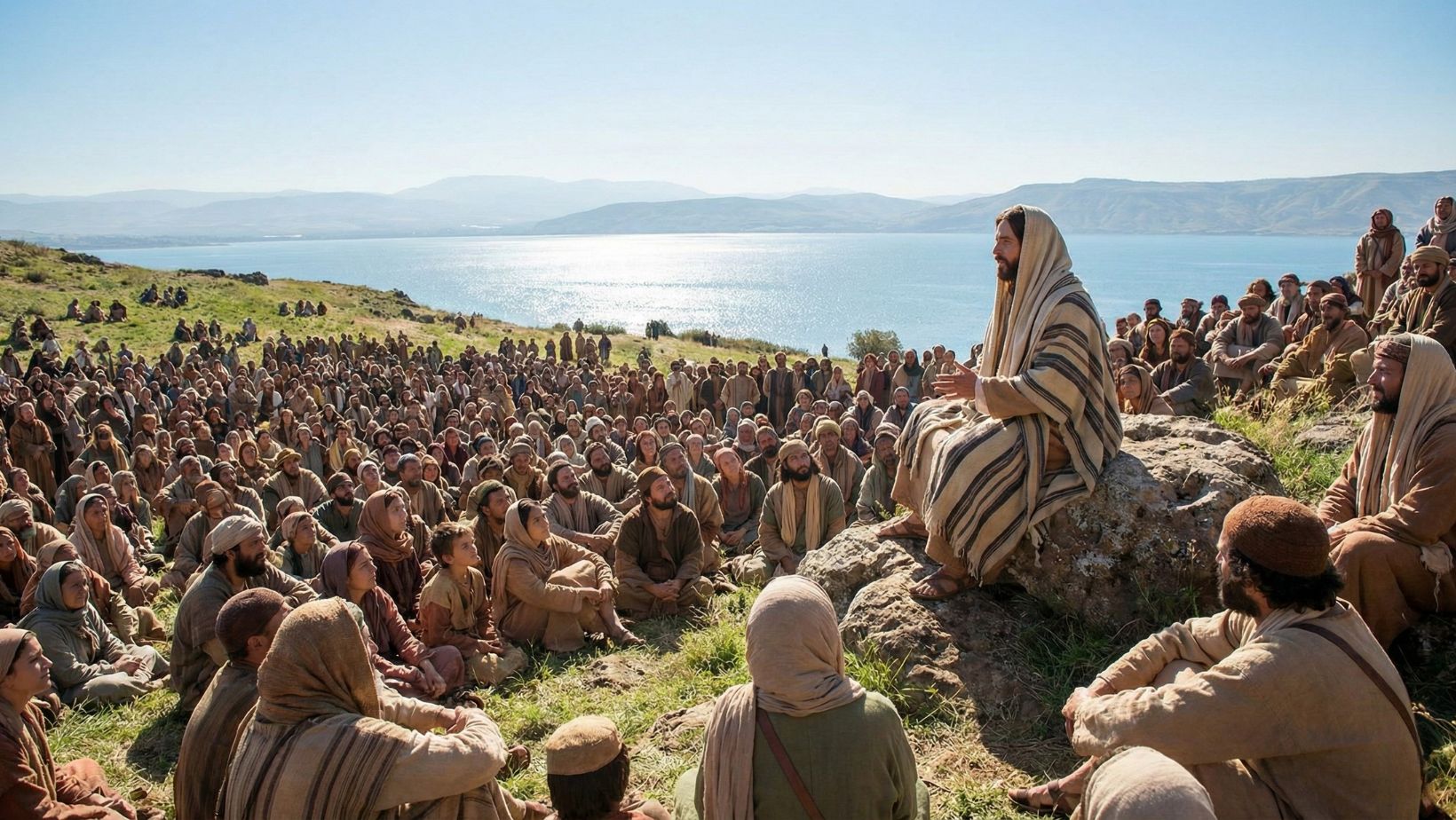
The Gospel of Matthew is the first book of the New Testament, serving as the essential bridge between the Old Covenant and the New. Written primarily for a Jewish audience, it meticulously establishes Jesus of Nazareth as the long-awaited Messiah, the Son of David, and the King of the Jews. Unlike the other Gospels, Matthew focuses heavily on the fulfillment of Old Testament prophecy, citing the Hebrew scriptures more than any other New Testament writer. It presents Jesus not only as the Savior but as the New Moses—the supreme Lawgiver who inaugurates the Kingdom of Heaven and commissions His followers to take this message to all nations.
Quick Facts
- Author: Matthew (Levi), the Apostle and former tax collector
- Date Written: Likely between 50–70 AD (before the destruction of the Temple)
- Audience: primarily Jewish Christians
- Theme: Jesus is the Messiah and King who fulfills the Law
- Key Word: “Fulfilled” (used roughly 15 times regarding prophecy)
- Key Phrase: “Kingdom of Heaven” (appears 32 times)
- Structure: Five major discourses mirroring the five books of Moses (Pentateuch)
- Symbol: The Winged Man (emphasizing Christ’s humanity and lineage)
Title / Purpose
Title: The Gospel According to Matthew (Greek: Kata Matthaion).
Purpose: To provide apologetic proof to Jewish readers that Jesus is the promised Messiah of the Old Testament and to serve as a manual for discipleship (catechism) for the early church.
Authorship & Context
The Author: Matthew (Levi) was a tax collector, making him a meticulous record keeper. This is reflected in the Gospel’s orderly arrangement of teachings and genealogy.
The Audience: The frequent lack of explanation for Jewish customs (unlike Mark) and the emphasis on the Law suggests the readers were intimately familiar with Judaism.
Historical Context: Written at a time when the early church was separating from the synagogue. Matthew argues that following Jesus is not a rejection of Judaism, but its ultimate fulfillment.
Structure / Narrative Arc
Matthew organizes the life of Jesus around Five Major Discourses, deliberately paralleling the five books of the Torah (Genesis–Deuteronomy), presenting Jesus as the new and greater Moses.
1. The Sermon on the Mount (Chapters 5–7): The Ethics of the Kingdom.
2. The Missional Discourse (Chapter 10): The Mission of the Kingdom.
3. The Parabolic Discourse (Chapter 13): The Mysteries of the Kingdom.
4. The Community Discourse (Chapter 18): Life within the Kingdom (The Church).
5. The Olivet Discourse (Chapters 24–25): The Future of the Kingdom (Eschatology).
Major Themes
Fulfillment of Prophecy: Matthew repeatedly uses the formula, “This took place to fulfill what was spoken by the prophet…” He links Jesus to Abraham (the covenant) and David (the kingship).
The Kingdom of Heaven: Matthew prefers this term over “Kingdom of God” (likely out of Jewish reverence to avoid speaking the name of God), describing a spiritual realm that has invaded the present world.
Jesus as the New Moses: Just as Moses narrowly escaped death as an infant, went into Egypt, passed through the waters, and gave the Law on a mountain, Jesus survives Herod, returns from Egypt, is baptized, and delivers the Sermon on the Mount.
The Church: Matthew is the only Gospel to use the specific word ekklesia (church), notably in Peter’s confession (Matthew 16:18).
Key Characters
Jesus the King: Portrayed with royal authority.
The Disciples: Often shown as “of little faith,” yet they are the recipients of Jesus’ detailed teaching.
The Pharisees: The primary antagonists, representing legalistic hypocrisy which Jesus harshly condemns (Matthew 23).
Peter: Given special prominence in Matthew (walking on water, receiving the keys to the Kingdom).
Notable Passages
The Beatitudes (5:3–12): The opening of the Sermon on the Mount, defining the character of the Kingdom citizens.
The Lord’s Prayer (6:9–13): The model prayer given to the disciples.
Peter’s Confession (16:16–19): “You are the Messiah, the Son of the living God.” Jesus responds by promising to build His church on this rock.
The Great Commission (28:18–20): The final instruction to “go and make disciples of all nations,” framing the mission of Christianity.
Legacy & Impact
Liturgical Use: Because of its organized teaching blocks (especially the Sermon on the Mount), Matthew became the most quoted Gospel in the early church and the primary text for teaching new converts.
Christian Ethics: The Sermon on the Mount remains the cornerstone of Christian ethics, influencing figures from Augustine to Bonhoeffer to MLK Jr.
The Great Commission: This single passage has driven the global missionary movement for two thousand years.
Symbolism / Typology
The Genealogy (Chapter 1): Mentions four women (Tamar, Rahab, Ruth, Bathsheba)—all Gentiles or associated with scandal—foreshadowing that the Messiah is for all people, not just the “righteous” Jews.
The Star of Bethlehem: Symbolizes the cosmic significance of Jesus’ birth, drawing the Gentile Magi to the Jewish King.
The Tearing of the Temple Curtain: Recorded in Matthew 27:51, symbolizing that through Jesus’ death, the barrier between God and humanity is removed.







Leave a Reply