
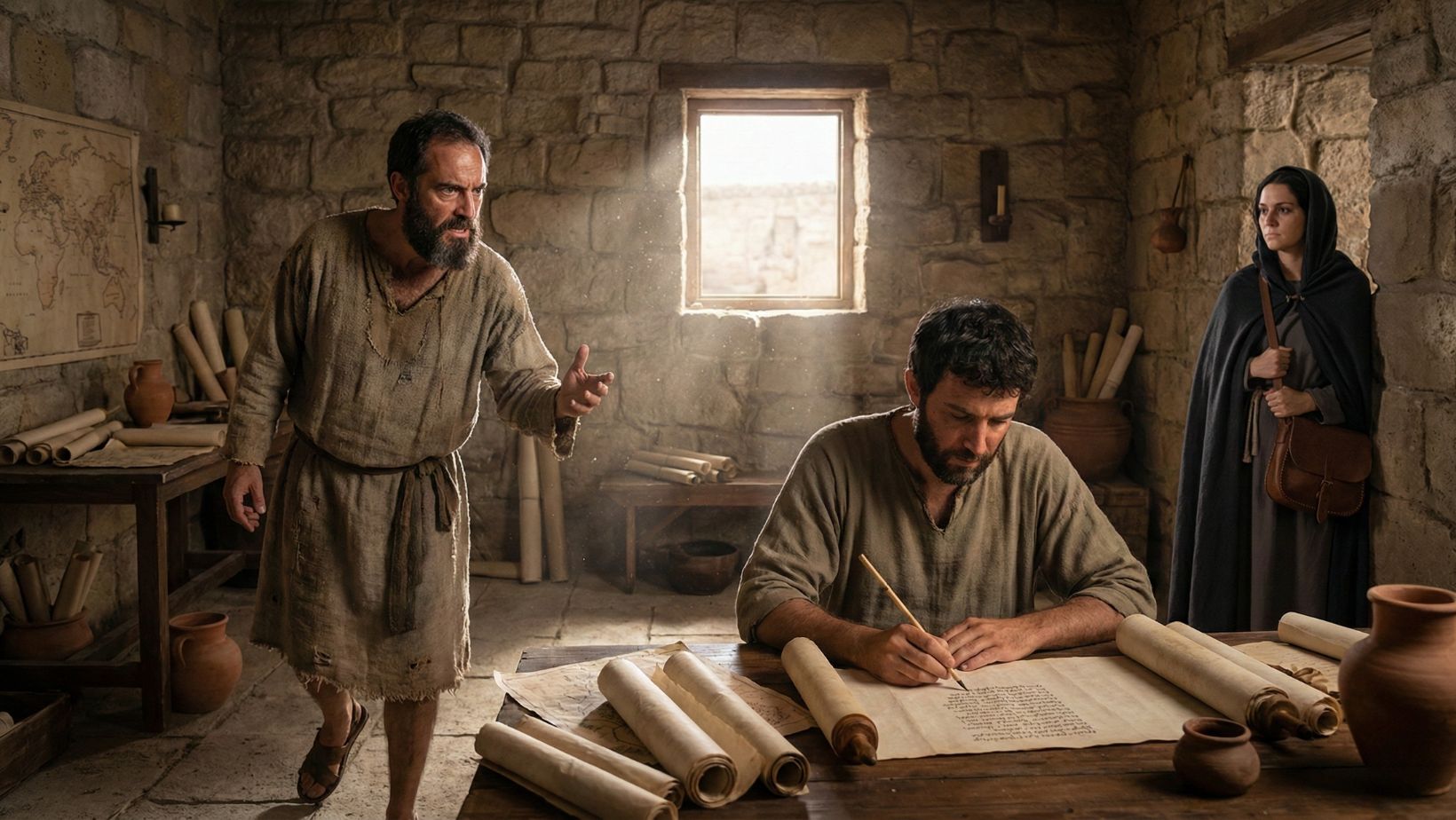
The Epistle to the Romans is widely regarded as the masterpiece of the Apostle Paul and the most systematic presentation of Christian theology in the Bible. Unlike his other letters, which were often written to correct specific errors in churches he founded, Romans was written to a church he had not yet visited. It serves as a comprehensive explanation of the Gospel, detailing how the righteousness of God is revealed through Jesus Christ. It moves logically from the universal problem of human sin to the solution of justification by faith, the process of sanctification, the mystery of Israel’s election, and finally, the practical duties of a Christian life. It has been described as “The Cathedral of the Christian Faith.”
Quick Facts
- Author: The Apostle Paul (dictated to Tertius, the scribe)
- Date Written: ~57 AD (likely from Corinth)
- Audience: The Church in Rome (mixed Jewish and Gentile believers)
- Courier: Phoebe (Deaconess from Cenchreae, Romans 16:1)
- Theme: The Righteousness of God / Justification by Faith
- Key Word: “Righteousness” (Greek: dikaiosyne, used over 60 times)
- Key Verse: Romans 1:16–17 (“The righteous will live by faith.”)
- Structure: Doctrinal (Ch 1–11) followed by Practical (Ch 12–16)
- Symbol: The Roman Road — a metaphor for the path of salvation derived from its verses
Title / Purpose
Title: The Epistle of Paul to the Romans.
Purpose:
- Theological: To provide a full exposition of the Gospel Paul preached.
- Pastoral: To heal divisions between Jewish and Gentile Christians in Rome (tensions had risen after Jews returned following the expulsion by Emperor Claudius).
- Missional: To introduce himself to the Roman church and garner support for his planned missionary journey to Spain.
Authorship & Context
The Author: Paul writes at the height of his theological maturity, likely staying in the home of Gaius in Corinth.
The Scribe: Romans 16:22 identifies Tertius as the scribe who physically wrote the letter (“I, Tertius, who wrote down this letter, greet you in the Lord”).
The Audience: Rome was the center of the Empire. The church there was not founded by an apostle but likely by converts from Pentecost. It was a diverse mix of Jews (who prioritized the Law) and Gentiles (who reveled in freedom), causing internal conflict.
Structure / Narrative Arc
Romans is famous for its logical, courtroom-like progression of arguments.
1. The Universal Problem (Chapters 1–3): The prosecution argues that all humanity is under indictment. Gentiles are guilty of idolatry; Jews are guilty of hypocrisy. “All have sinned and fall short of the glory of God.”
2. The Divine Solution: Justification (Chapters 3–5): God provides righteousness through faith in Jesus Christ. Paul uses Abraham as the prime example that faith, not works, has always been God’s method. Peace with God is established.
3. The Transformed Life: Sanctification (Chapters 6–8): How do we live now? We are dead to sin and alive in Christ. The Spirit empowers believers to overcome the flesh. Chapter 8 creates a crescendo of assurance: “There is now no condemnation.”
4. The Mystery of History: Israel (Chapters 9–11): Paul addresses the question: “Has God’s promise to Israel failed?” He explains the concept of election and the “grafting in” of the Gentiles, ending with a doxology of God’s wisdom.
5. The Practical Application (Chapters 12–16): In light of all this theology, how should we live? “Offer your bodies as a living sacrifice.” Instructions on gifts, government, conflict, and unity.
Major Themes
Justification by Faith: The core doctrine that a sinner is declared righteous before God not by doing good works, but by trusting in the finished work of Christ.
The Wrath and Grace of God: Paul does not shy away from God’s anger toward sin (Romans 1) but balances it perfectly with the “gift of God” which is eternal life (Romans 6).
The Flesh vs. The Spirit: The internal battle of the believer. The Law reveals sin but cannot cure it; only the Holy Spirit allows the believer to fulfill the righteous requirement of the law.
Unity in Diversity: Paul argues that since all are equally sinners and all are saved by the same grace, there is no room for arrogance between Jew and Gentile.
Key Characters
Paul: The theologian and apostle.
Adam: The representative of the old humanity (bringing death).
Christ: The “Second Adam” representing the new humanity (bringing life).
Abraham: The father of faith, used to prove that justification predates the Law of Moses.
Phoebe: The woman entrusted to carry this weighty theological document to Rome.
Notable Passages
The Thesis (1:16–17): “For I am not ashamed of the gospel, because it is the power of God that brings salvation to everyone who believes…”
The Roman Road (Evangelism Script):
- 3:23: “For all have sinned…”
- 6:23: “For the wages of sin is death, but the gift of God is eternal life…”
- 5:8: “But God demonstrates his own love for us in this: While we were still sinners, Christ died for us.”
- 10:9: “If you declare with your mouth, ‘Jesus is Lord,’ and believe in your heart that God raised him from the dead, you will be saved.”
The Golden Chain (8:28–30): “And we know that in all things God works for the good of those who love him…”
Living Sacrifice (12:1–2): “Do not conform to the pattern of this world, but be transformed by the renewing of your mind.”
Legacy & Impact
The Reformer’s Book: Martin Luther’s reading of Romans (“The just shall live by faith”) sparked the Protestant Reformation. He called it “the chief part of the New Testament.”
Augustine’s Conversion: Reading Romans 13:13–14 is what finally convicted St. Augustine to abandon his hedonistic life and follow Christ.
John Wesley’s Awakening: While hearing Luther’s preface to Romans read, Wesley felt his heart “strangely warmed.”
Symbolism / Typology
The Olive Tree (Chapter 11): Represents the people of God. The wild olive shoots (Gentiles) are grafted into the cultivated tree (Israel), nourished by the root (the Patriarchs/Promise). It warns against arrogance—if God cut off the natural branches for unbelief, He can cut off the wild ones too.
Baptism as Burial (Chapter 6): Paul uses baptism to symbolize going into the grave with Christ and rising to a new life, arguing that continuing in sin is logically impossible for a dead man.







Leave a Reply