
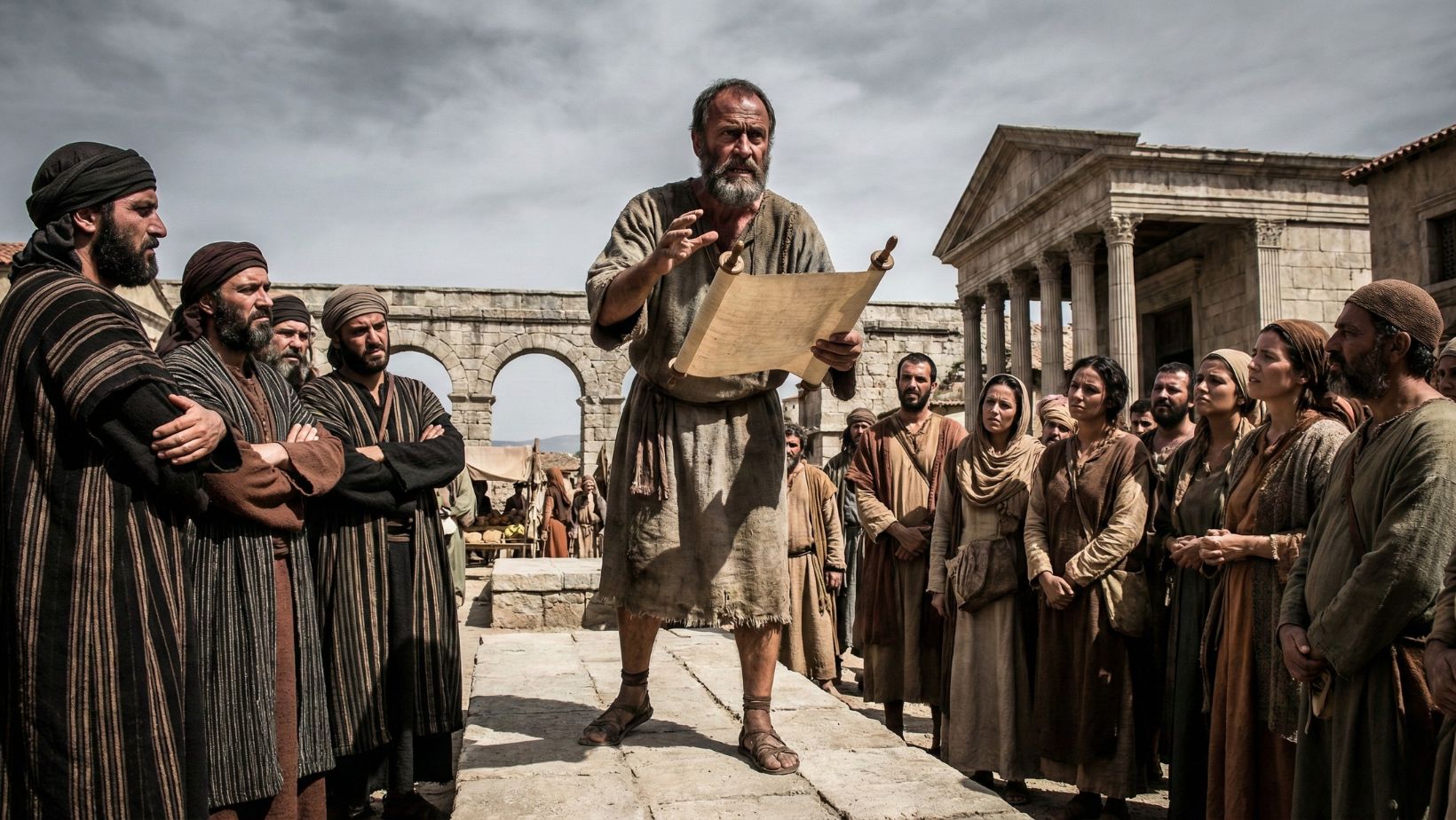
The Epistle to the Galatians is often called the “Magna Carta of Christian Liberty.” It is Paul’s most passionate, urgent, and fiery letter, written to a group of churches in the Roman province of Galatia (modern-day Turkey). These believers were being seduced by false teachers (“Judaizers”) who claimed that to be truly saved, Gentiles must not only believe in Jesus but also follow the Law of Moses—specifically circumcision. Paul writes to vigorously defend the true Gospel: that salvation comes by faith alone (sola fide) in Christ alone, and that adding any human requirement to the Gospel is to destroy it entirely. It is a battle cry for freedom from legalism.
Quick Facts
- Author: The Apostle Paul
- Date Written: ~48–49 AD (Likely the earliest of Paul’s letters)
- Audience: The Churches of Galatia (likely South Galatia: Iconium, Lystra, Derbe)
- Theme: Justification by Faith Alone / Freedom from the Law
- Key Word: “Law” (nomos) and “Flesh” (sarx) vs. “Spirit” (pneuma)
- Key Verse: Galatians 2:20 (“I have been crucified with Christ and I no longer live, but Christ lives in me.”)
- Structure: Personal Defense (1–2) → Doctrinal Defense (3–4) → Practical Application (5–6)
- Symbol: The Broken Yoke — representing freedom from the slavery of the Law
Title / Purpose
Title: The Epistle of Paul to the Galatians.
Purpose:
- To Defend the Gospel: To refute the heresy that Gentiles must be circumcised to be saved.
- To Defend Paul’s Authority: To prove that Paul’s message came directly from Jesus Christ, not from the other apostles in Jerusalem.
- To Define Christian Living: To explain that freedom from the Law does not mean a license to sin, but life in the Spirit.
Authorship & Context
The Author: Paul writes with intense emotion. Unlike other letters, he skips the typical opening prayer of thanksgiving and goes straight to rebuking them: “I am astonished that you are so quickly deserting the one who called you…” (1:6).
The Audience: These were likely the churches Paul planted on his first missionary journey (Acts 13–14). They were Gentiles who had enthusiastically received the Gospel but were now confused by Jewish agitators.
The Crisis: The “Judaizers” were teaching “Jesus + Law = Salvation.” Paul argues that “Jesus + Anything = Nothing.”
Structure / Narrative Arc
Galatians follows a logical progression from history to theology to ethics.
1. Personal: The Source of the Gospel (Chapters 1–2): Paul defends his apostleship. He clarifies that he didn’t learn the Gospel from men (like Peter) but by direct revelation from Jesus. He recounts confronting Peter to his face in Antioch for hypocrisy regarding Jewish/Gentile table fellowship.
2. Doctrinal: The Defense of the Gospel (Chapters 3–4): Paul uses the Old Testament to disprove the legalists.
- Abraham: He was justified by faith before the Law existed.
- The Law: It was a temporary “guardian” or “tutor” intended to lead us to Christ, not a permanent master.
- Sons vs. Slaves: Why go back to slavery when you have been adopted as sons and heirs?
3. Practical: The Life of the Gospel (Chapters 5–6): Freedom is not a license for immorality.
- Walk by the Spirit: The alternative to the Law is not lawlessness, but being led by the Spirit.
- Fruit of the Spirit: The Spirit produces character that the Law could never enforce (Love, joy, peace…).
Major Themes
Justification by Faith: A person is declared righteous before God only by trusting in Jesus, not by observing the law.
Adoption: We are not merely acquitted criminals; we are adopted children who can cry out “Abba, Father” (4:6).
The Flesh vs. The Spirit: The internal war of the Christian. The “flesh” (sinful nature) desires what is contrary to the Spirit. Victory comes not by trying harder to keep rules, but by “keeping in step with the Spirit.”
Unity: “There is neither Jew nor Gentile, neither slave nor free, nor is there male and female, for you are all one in Christ Jesus” (3:28). The Gospel levels all social hierarchies.
Key Characters
Paul: The fierce defender of grace. Peter (Cephas): Used as a negative example (hypocrisy) and a positive example (fellow apostle). Abraham: The prototype of faith; the father of those who believe. Hagar and Sarah: Used in an allegory to represent the two covenants (Slavery/Law vs. Freedom/Promise).
Notable Passages
No Other Gospel (1:8): “But even if we or an angel from heaven should preach a gospel other than the one we preached to you, let them be under God’s curse!”
Crucified with Christ (2:20): “I have been crucified with Christ and I no longer live, but Christ lives in me.”
One in Christ (3:28): The foundational text for Christian equality.
Fruit of the Spirit (5:22–23): “But the fruit of the Spirit is love, joy, peace, forbearance, kindness, goodness, faithfulness, gentleness and self-control.”
Mocking God (6:7): “Do not be deceived: God cannot be mocked. A man reaps what he sows.”
Legacy & Impact
The Reformation: Martin Luther loved this book so much he said, “The Epistle to the Galatians is my epistle. To it I am betrothed. It is my Catherine von Bora” (his wife). It was the foundational text for the doctrine of Justification by Faith.
Christian Freedom: It remains the primary check against legalism in the church—the tendency to judge spirituality by external rules (clothing, diet, rituals) rather than heart transformation.
Symbolism / Typology
The Tutor (Pedagogue): In Chapter 3, Paul compares the Law to a strict Roman guardian (pedagogue) assigned to watch over a minor child. The guardian disciplines and restrains the child until they come of age. Once Christ comes, we are adult heirs and no longer need the guardian.
- Hagar (Slave woman): Represents Mount Sinai (The Law) and present-day Jerusalem (bondage).
- Sarah (Free woman): Represents the Promise and the Jerusalem above (freedom).







Leave a Reply