
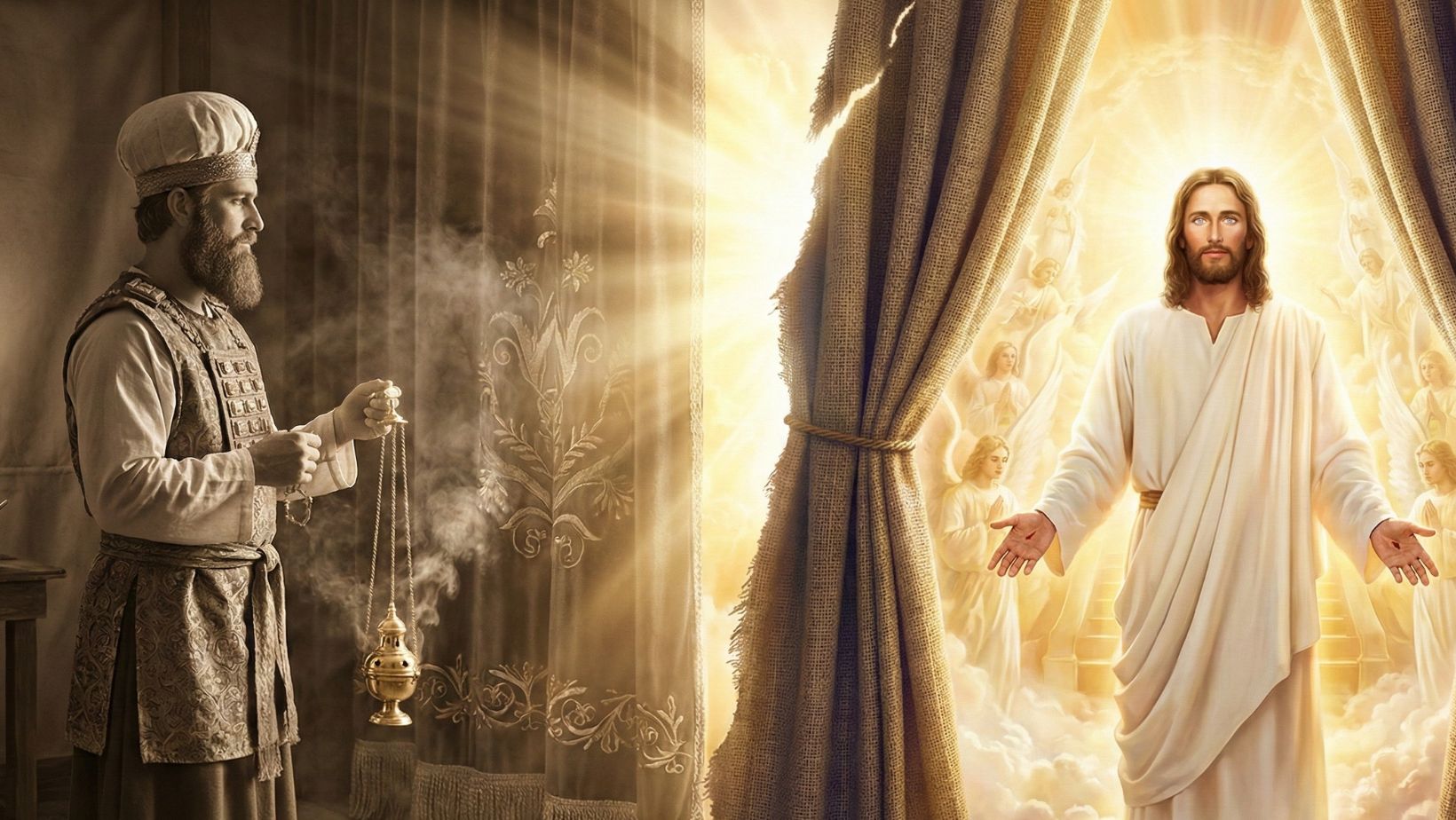
The Epistle to the Hebrews is the most majestic and sophisticated theological treatise in the New Testament. It is less of a letter and more of a written sermon, crafted to warn Jewish Christians who were facing persecution and considering abandoning Christ to return to the safety of Judaism. The author argues with breathtaking logic that Jesus is “Better”—He is superior to angels, to Moses, to Joshua, and to the entire Levitical priesthood. Hebrews serves as the essential commentary on the Old Testament, explaining how the rituals, sacrifices, and tabernacle were merely “shadows” that found their ultimate substance in Jesus, the Great High Priest.
Quick Facts
- Author: Unknown (Suggested: Paul, Barnabas, Apollos, or Priscilla; Origen famously said, “Only God knows.”)
- Date Written: ~60–69 AD (Before the destruction of the Temple in 70 AD)
- Audience: Jewish Christians (likely in Rome or Jerusalem)
- Theme: The Supremacy of Christ / The New Covenant
- Key Word: “Better” (used 13 times) and “Perfect”
- Key Verse: Hebrews 4:14 (“Therefore, since we have a great high priest who has ascended into heaven, Jesus the Son of God, let us hold firmly to the faith we profess.”)
- Structure: Superiority of Person (1–4) → Superiority of Priesthood (5–10) → Superiority of Life (11–13)
- Symbol: The Veil — torn open to allow access to God
Title / Purpose
Title: The Epistle to the Hebrews.
Purpose:
- To Exalt Christ: To prove that Jesus is the final revelation of God, superior to all Old Testament figures and institutions.
- To Prevent Apostasy: To warn believers that going back to the Old Covenant sacrifices is useless because those sacrifices can no longer take away sin.
- To Encourage Endurance: To urge weary Christians to run their race with perseverance, looking to Jesus.
Authorship & Context
The Mystery: The book does not name its author. The style is polished Greek (unlike Paul’s rugged style) and quotes the Septuagint (Greek OT). Martin Luther guessed Apollos (an eloquent speaker); others suggest Barnabas (a Levite).
The Audience: These believers were tired. They had endured persecution and were tempted to drift back to the synagogue, where worship was legal and safe under Roman law.
The Argument: The author doesn’t mock the Old Testament; he reveres it. But he argues that you don’t go back to the shadow when the reality has arrived. You don’t look at the photo of your spouse when your spouse is standing in the room.
Structure / Narrative Arc
The book is structured around comparisons, proving Jesus is “better” than the pillars of Judaism.
1. A Better Person: The Superiority of Christ (Chapters 1–4):
- Better than Prophets: God spoke through prophets in the past, but now through His Son.
- Better than Angels: Angels are servants; Jesus is the Son and Creator.
- Better than Moses: Moses was a faithful servant in God’s house; Jesus is the Son over the house.
- Better than Joshua: Joshua gave Israel rest in Canaan; Jesus gives the true, eternal Sabbath rest.
2. A Better Priesthood: The Ministry of Christ (Chapters 5–10):
- The Order of Melchizedek: Jesus is not a Levite (like Aaron) but a priest forever in the order of Melchizedek—a mysterious king-priest who predates the Law.
- The Better Covenant: The Old Covenant was flawed and obsolete; the New Covenant writes God’s laws on hearts, not stone.
- The Better Sacrifice: Old priests stood daily offering the same sacrifices that could never clear the conscience. Jesus sat down after offering one sacrifice for all time.
3. A Better Life: The Walk of Faith (Chapters 11–13):
- The Hall of Faith: A roll call of OT heroes (Abraham, Moses, Rahab) who lived by faith, not sight.
- The Discipline of God: Hardship is not rejection; it is the discipline of a loving Father.
- Mount Zion: You have not come to a terrifying mountain (Sinai) but to a joyful assembly (Zion).
Major Themes
Christ as High Priest: This is the unique contribution of Hebrews. Jesus is the Mediator who sympathizes with our weaknesses because He was tempted in every way, yet was without sin.
Shadow vs. Reality: The concept that the Tabernacle, the priesthood, and the sacrifices were mere “types” or “copies” of heavenly things. Jesus is the true substance.
The Warning Passages: Hebrews contains five terrifying warnings against drifting away, hardening hearts, or “trampling the Son of God underfoot” (e.g., Hebrews 6 and 10).
Faith: Defined not as mental assent, but as “confidence in what we hope for and assurance about what we do not see” (11:1).
Key Characters
Jesus: The Great High Priest and the Author/Finisher of faith. Melchizedek: The King of Salem (Genesis 14) used as a prototype for Christ’s eternal priesthood. Moses: Revered as a servant but surpassed by the Son. The “Cloud of Witnesses”: The collective group of saints from Chapter 11 cheering us on.
Notable Passages
God Has Spoken (1:1–3): “The Son is the radiance of God’s glory and the exact representation of his being.”
The Double-Edged Sword (4:12): “For the word of God is alive and active. Sharper than any double-edged sword…”
Sympathetic Priest (4:15–16): “Let us then approach God’s throne of grace with confidence…”
Definition of Faith (11:1): “Now faith is confidence in what we hope for and assurance about what we do not see.”
The Race (12:1–2): “Let us run with perseverance the race marked out for us, fixing our eyes on Jesus, the pioneer and perfecter of faith.”
Legacy & Impact
Theology of Atonement: Hebrews provides the clearest explanation of why Jesus had to die—to be the ultimate sacrificial lamb and the priest who offers it.
Liturgical Impact: The imagery of the “Throne of Grace” and the “blood of the eternal covenant” shapes much of Christian prayer and worship.
Symbolism / Typology
Melchizedek: Represents a priesthood based on endless life, not ancestry. The Veil: Represents the barrier between holy God and sinful man. Hebrews 10:20 says the veil is Christ’s body; when His body was torn on the cross, the way to God was opened. Mount Sinai vs. Mount Zion: Sinai represents the Law (fear, fire, distance); Zion represents Grace (celebration, access, community).







Leave a Reply