
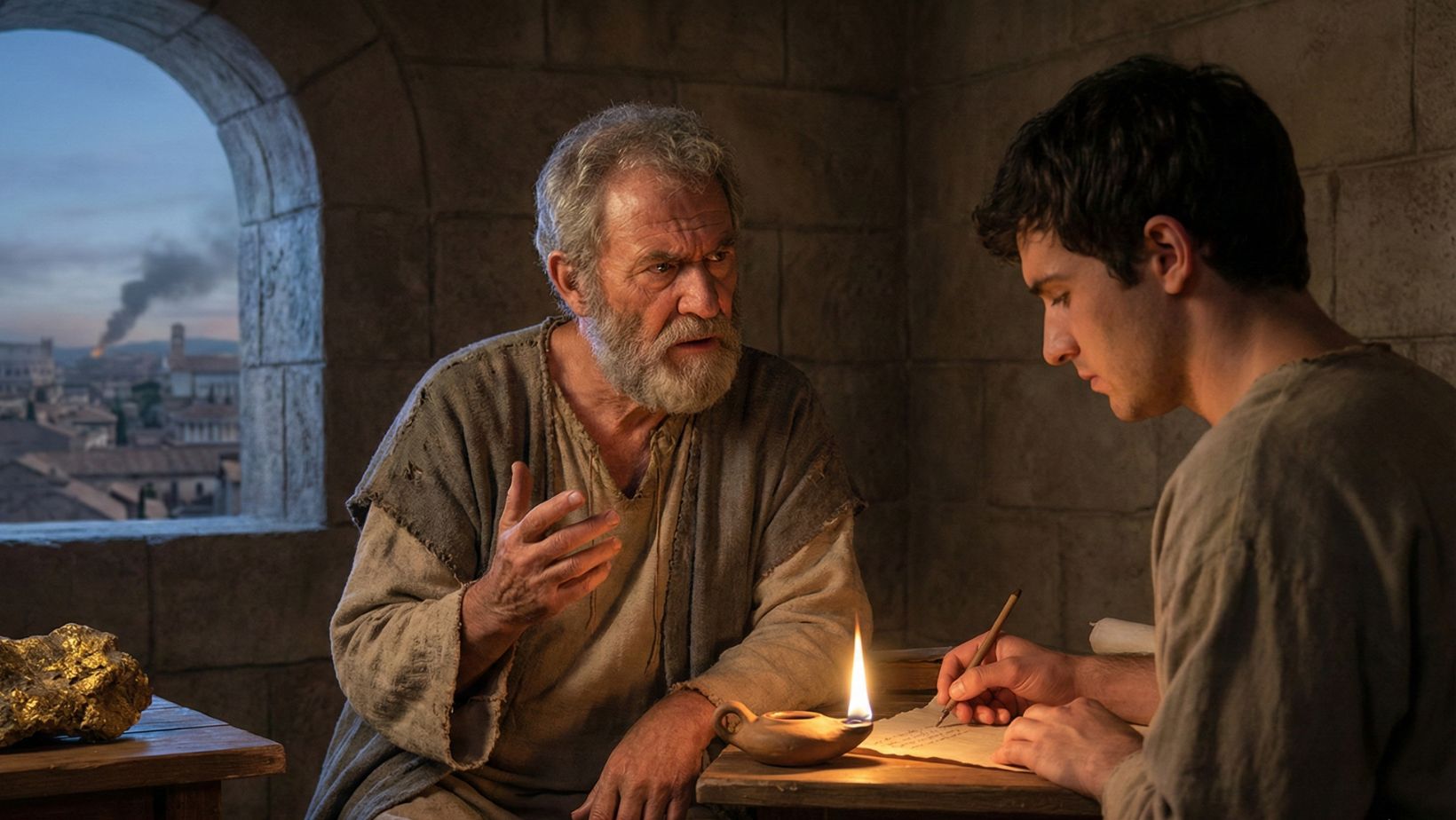
The First Epistle of Peter is a “survival guide” for Christians living in a hostile culture. Written by the Apostle Peter—the former fisherman who once denied Christ out of fear but became the bold “Rock” of the early church—it addresses believers who are being socially ostracized and persecuted for their faith. Peter calls them “elect exiles,” reminding them that this world is not their home. The letter is rich with hope, describing the Christian life as a journey through a “fiery trial” that refines faith like gold. It balances deep theology about the “precious blood of Christ” with practical instructions on how to interact with government, masters, and spouses while suffering unjustly.
Quick Facts
- Author: The Apostle Peter (with the help of Silas/Silvanus)
- Date Written: ~62–64 AD (Likely just before or during Nero’s persecution)
- Location: Written from “Babylon” (a code name for Rome)
- Audience: Exiles scattered throughout Asia Minor (modern Turkey)
- Theme: Hope in the midst of Suffering / Holiness
- Key Word: “Suffering” (used 16 times) and “Glory” (used 10 times)
- Key Verse: 1 Peter 1:3 (“In his great mercy he has given us new birth into a living hope through the resurrection of Jesus Christ…”)
- Structure: Identity (1–2) → Submission (2–3) → Suffering (4–5)
- Symbol: Gold refined by fire
Title / Purpose
Title: The First Epistle of Peter.
Purpose:
- To Encourage: To comfort Christians who were confused by the “fiery ordeal” they were facing, assuring them it was not a sign of God’s absence but a sharing in Christ’s sufferings.
- To Define Identity: To remind socially marginalized believers that they are actually God’s “chosen people, a royal priesthood, a holy nation.”
- To Instruct: To teach them how to live as “resident aliens”—respecting authority and doing good so that their lives would silence the ignorant talk of foolish people.
Authorship & Context
The Author: Peter writes with the authority of an eyewitness to Christ’s sufferings (5:1). The Greek is surprisingly polished, which Peter attributes to Silvanus (Silas), a faithful brother who likely served as his scribe (5:12).
The Setting: Peter writes from “Babylon” (5:13). This is almost certainly a cryptic reference to Rome, the new center of idolatry and empire, just as ancient Babylon was the place of Jewish exile.
The Atmosphere: The church is under pressure. While state-sponsored execution (martyrdom) was looming, the primary suffering described here involves slander, social exclusion, and malicious gossip from pagan neighbors who were suspicious of this new “atheistic” sect that refused to worship Roman gods.
Structure / Narrative Arc
The letter moves from theological privilege to practical submission, ending with pastoral care.
1. The Great Salvation (Chapter 1:1–2:10):
- A Living Hope: We are born again to an inheritance that can never perish, spoil, or fade.
- The Refining Fire: Trials are necessary to prove the genuineness of faith, which is more precious than gold.
- Holiness: “Be holy, because I am holy.”
- Identity: You are living stones being built into a spiritual house; you are a chosen race and a royal priesthood.
2. The Christian Life as Exiles (Chapters 2:11–3:22):
- Submission: Submit to emperors and governors, not because they are perfect, but to show that freedom in Christ looks like service, not rebellion.
- Slaves and Masters: A call to follow the example of Christ, who suffered unjustly without retaliating.
- Wives and Husbands: Wives are to win unbelieving husbands through purity and reverence; husbands are to treat wives with honor as “weaker vessels” (physically/socially) but spiritual equals.
- Apologetics: “Always be prepared to give an answer to everyone who asks you to give the reason for the hope that is in you” (3:15).
3. The Fiery Trial (Chapters 4–5):
- Suffering: Don’t be surprised by pain. If you suffer as a Christian, praise God that you bear that name.
- Shepherding: Elders must shepherd the flock willingly, not for money or power.
- Spiritual Warfare: Be alert; the devil prowls like a roaring lion looking for someone to devour.
Major Themes
Strangers and Exiles: Peter redefines their sociology. They may be outcasts in Rome, but they are citizens of Heaven. This “exile” mindset frees them from the need to be popular or comfortable in this world.
Suffering as a Witness: Peter argues that suffering is an opportunity. When Christians suffer unjustly yet respond with kindness and respect, it confuses and convicts their accusers. This is “suffering for doing good” rather than for doing evil.
The Example of Christ: Jesus is the template. “He committed no sin, and no deceit was found in his mouth… When they hurled their insults at him, he did not retaliate” (2:22–23).
The Word of God: Peter emphasizes the enduring nature of Scripture: “The grass withers and the flowers fall, but the word of the Lord endures forever” (1:24–25).
Key Characters
Peter: The elder and witness. Silvanus (Silas): The trusted courier and likely amanuensis (secretary) who helped polish the Greek text. Mark: Peter refers to him as “my son” (5:13), confirming the close relationship that led to the Gospel of Mark being based on Peter’s testimony. The “Elect Exiles”: The recipients of the letter, scattered across Pontus, Galatia, Cappadocia, Asia, and Bithynia.
Notable Passages
The Living Hope (1:3): “In his great mercy he has given us new birth into a living hope through the resurrection of Jesus Christ from the dead.”
Royal Priesthood (2:9): “But you are a chosen people, a royal priesthood, a holy nation, God’s special possession…”
Defending the Faith (3:15): “Always be prepared to give an answer to everyone who asks you to give the reason for the hope that is in you. But do this with gentleness and respect.”
Spirits in Prison (3:19): A mysterious passage where Christ “went and proclaimed to the spirits in prison,” often interpreted as a victory proclamation over fallen angels or the dead from Noah’s day.
Cast Your Cares (5:7): “Cast all your anxiety on him because he cares for you.”
The Roaring Lion (5:8): “Be alert and of sober mind. Your enemy the devil prowls around like a roaring lion looking for someone to devour.”
Legacy & Impact
The Priesthood of All Believers: 1 Peter 2:9 became a central pillar of the Protestant Reformation. Luther and Calvin used it to argue that every Christian has direct access to God and a ministry to perform, dismantling the medieval wall between “clergy” and “laity.”
Christian Apologetics: 1 Peter 3:15 is the “charter verse” for the field of apologetics (the defense of the faith), emphasizing that defense must be rational (“give a reason”) and relational (“with gentleness”).
Symbolism / Typology
Noah’s Ark: Peter uses the Ark as a type of Baptism (3:20–21). Just as Noah was brought safely through the waters of judgment, believers are saved through the water of baptism—not by physical washing, but by the pledge of a clear conscience toward God.
Living Stones: Believers are individual stones being mortared together by the Spirit to build a new Temple where God dwells.
The Chief Shepherd: Pastors are merely “under-shepherds”; Jesus is the owner of the flock who will award the crown of glory.







Leave a Reply