
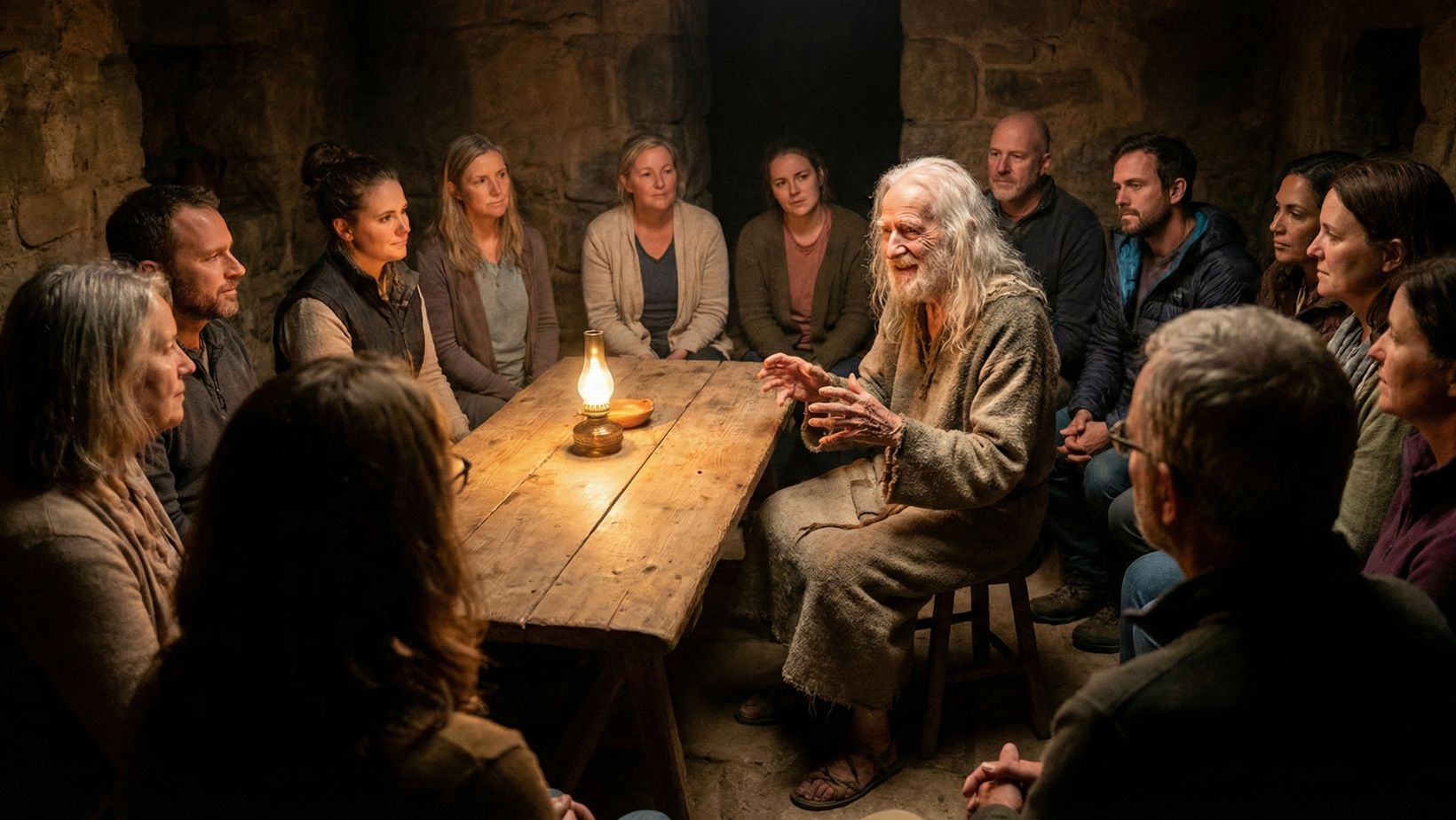
The First Epistle of John is a warm, pastoral letter written by the last surviving apostle, John the Beloved. Unlike the logical arguments of Paul, John writes in a cyclical, spiral style, weaving together three major themes: truth, obedience, and love. Written to believers who were shaken by a split in the church caused by false teachers (early Gnostics who denied Jesus’ physical body), John writes to provide assurance. He wants his “little children” to know, beyond a shadow of a doubt, that they have eternal life. It is a letter of black-and-white contrasts—light vs. darkness, love vs. hate, truth vs. lies—offering a series of “tests” by which a Christian can verify the genuineness of their faith.
Quick Facts
- Author: The Apostle John (the “Elder”)
- Date Written: ~85–95 AD (Late first century)
- Location: Likely Ephesus
- Audience: Churches in Asia Minor (modern Turkey)
- Theme: Fellowship with God / Assurance of Salvation
- Key Words: “Know” (used ~40 times), “Love” (agape), “Light,” “Fellowship”
- Key Verse: 1 John 5:13 (“I write these things to you who believe in the name of the Son of God so that you may know that you have eternal life.”)
- Structure: A “Spiral” amplification of three tests: Moral, Social, and Doctrinal
- Symbol: The Light — representing God’s purity and truth
Title / Purpose
Title: The First Epistle of John.
Purpose:
- To Promote Fellowship: “We proclaim to you what we have seen and heard, so that you also may have fellowship with us… and with the Father” (1:3).
- To Create Full Joy: “We write this to make our joy complete” (1:4).
- To Prevent Sin: “I write this to you so that you will not sin” (2:1).
- To Combat Heresy: To refute the “antichrists” who were leaving the church and denying that Jesus had come in the flesh.
- To Provide Assurance: “So that you may know that you have eternal life” (5:13).
Authorship & Context
The Author: John is an old man now, likely the only apostle not yet martyred. He writes with the tender authority of a grandfather, repeatedly addressing his readers as “my dear children” or “beloved.”
The Heresy (Proto-Gnosticism/Docetism): The false teachers (secessionists) claimed to have higher knowledge (gnosis) and were “perfectionists” who claimed to be without sin. They also believed matter was evil, and therefore denied that the Messiah could have had a physical body. John attacks this by opening the letter emphasizing that he heard, saw, and touched Jesus.
Structure / Narrative Arc
1 John does not follow a linear outline. Instead, it acts like a spiral staircase, revisiting the same three topics at deeper levels: Right Belief (Doctrine), Right Living (Ethics), and Right Loving (Social).
1. God is Light (Chapters 1–2):
- The Moral Test: If God is light, we cannot walk in darkness. If we claim to be without sin, we are liars.
- The Social Test: Anyone who claims to be in the light but hates a brother or sister is still in the darkness.
- The Doctrinal Test: The “antichrist” is the one who denies the Father and the Son.
2. God is Love (Chapters 3–4):
- Identity: “See what great love the Father has lavished on us, that we should be called children of God!”
- Action: Love is not just words; it is laying down one’s life for others, just as Cain is the prototype of hate.
- Testing Spirits: Do not believe every spirit. The test is: Do they acknowledge that Jesus Christ has come in the flesh?
- Definition: “God is love.” Therefore, the one who does not love does not know God.
3. God is Life (Chapter 5):
- Overcoming: Faith is the victory that overcomes the world.
- The Witness: The Spirit, the water (baptism), and the blood (crucifixion) all testify to who Jesus is.
- Assurance: We can have confidence in prayer and certainty of life.
Major Themes
Assurance of Salvation: John wants believers to stop doubting. He provides diagnostic tests: Do you believe in the true Jesus? Do you obey His commands? Do you love other Christians? If yes, you are born of God.
God is Love: This is the most famous theological definition in the letter. It means that love is not just an attribute of God, but His very essence. Consequently, a hateful Christian is an oxymoron.
Sin and the Christian: John strikes a delicate balance. He says Christians do not continue in sin (practice it as a lifestyle, 3:9), yet he acknowledges that we do sin (1:8). The mark of a believer is not sinlessness, but confession and advocacy through Christ (2:1).
The Incarnation: John is militant about the physical reality of Jesus. To deny that Jesus came in the flesh is the “spirit of the antichrist.”
Key Characters
John: The Elder, writing with deep affection. The “Antichrists”: Those who went out from the church because they never really belonged to it (2:19). Cain: Used as the archetype of the world—one who murders his brother because his own deeds are evil. The Advocate (Paraclete): Jesus, who speaks to the Father in our defense when we sin.
Notable Passages
Confession (1:9): “If we confess our sins, he is faithful and just and will forgive us our sins and purify us from all unrighteousness.”
The Advocate (2:1): “But if anybody does sin, we have an advocate with the Father—Jesus Christ, the Righteous One.”
The World (2:15): “Do not love the world or anything in the world.”
Children of God (3:1): “See what great love the Father has lavished on us, that we should be called children of God!”
Perfect Love (4:18): “There is no fear in love. But perfect love drives out fear, because fear has to do with punishment.”
Assurance (5:13): “I write these things… that you may know that you have eternal life.”
Legacy & Impact
Theology of Love: 1 John provides the deepest theological grounding for Christian benevolence. We love because He first loved us.
The “Sin unto Death”: 1 John 5:16 mentions a “sin that leads to death,” a difficult passage that has generated centuries of debate regarding apostasy and church discipline.
Assurance: It remains the “go-to” book for pastors counseling believers who lack confidence in their salvation.
Symbolism / Typology
Light and Darkness: A dualistic symbol John uses (similar to his Gospel) to represent the realm of God/Truth vs. the realm of Satan/Lies.
Seed of God: In 3:9, John says God’s “seed” remains in the believer. This agricultural metaphor refers to the Holy Spirit or the new nature, which makes a lifestyle of habitual sin impossible for a true child of God.







Leave a Reply