
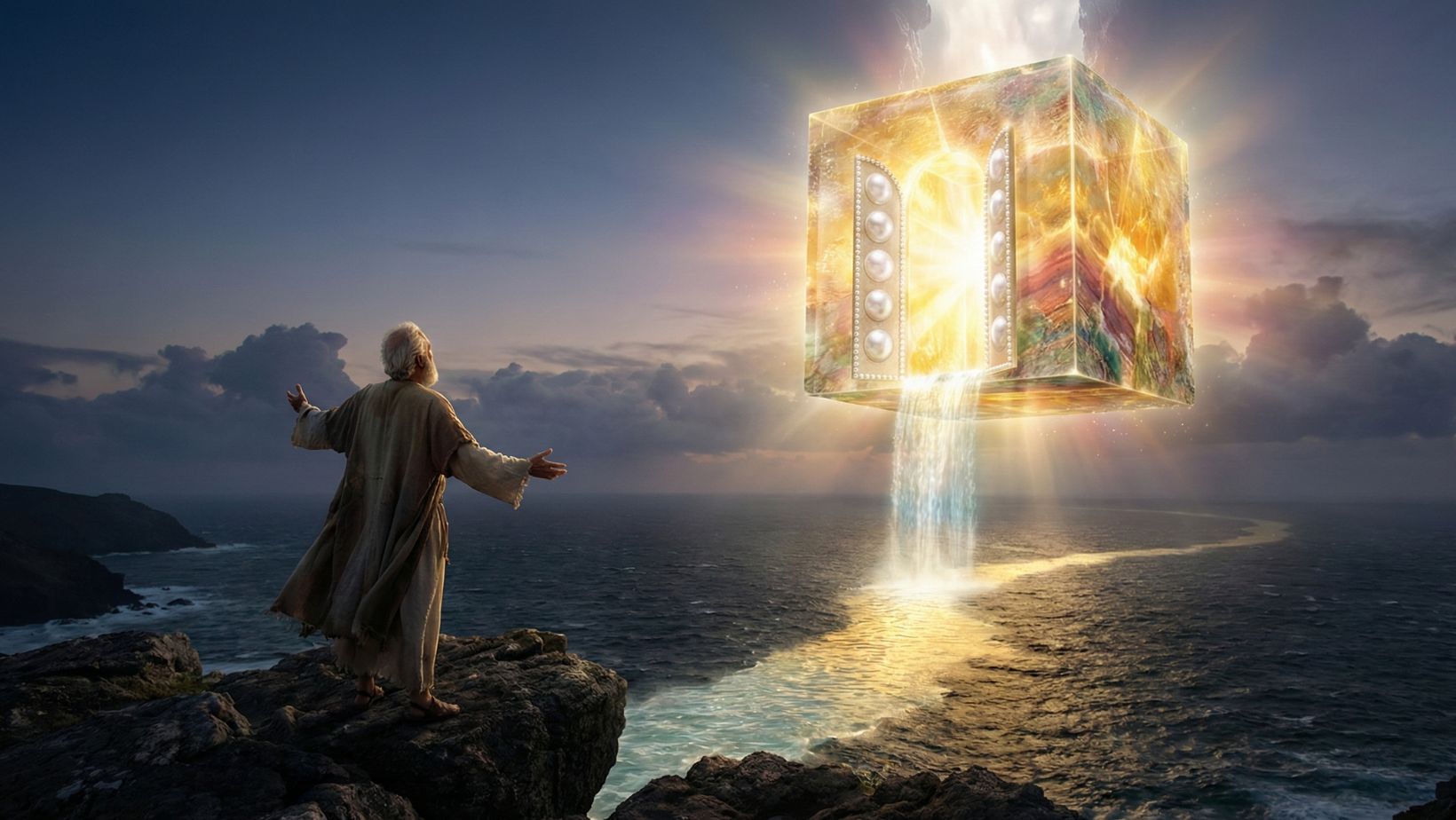
The Book of Revelation (singular, not “Revelations”) is the spectacular finale of the biblical canon. It is the only book of the New Testament dedicated entirely to apocalyptic prophecy. Written by the Apostle John while exiled on the island of Patmos, it is a dazzling, complex, and often terrifying vision of the “end of the story.” Its Greek title, Apokalypsis, means “unveiling” or “revealing”—specifically, the revealing of Jesus Christ in His glory. While it contains frightening imagery of dragons, beasts, and plagues, its primary message is one of ultimate hope: God is on the throne, evil will be defeated, and the King is coming to make all things new.
Quick Facts
- Author: The Apostle John (calling himself a “servant”)
- Date Written: ~95 AD (During the reign of Emperor Domitian)
- Location: The Island of Patmos (a Roman penal colony)
- Audience: The Seven Churches of Asia Minor
- Genre: Apocalyptic / Prophecy / Epistle
- Theme: The Sovereignty of God and the Ultimate Victory of Christ
- Key Word: “Throne” (used 46 times) and “Lamb” (used 29 times)
- Key Verse: Revelation 21:5 (“He who was seated on the throne said, ‘I am making everything new!’”)
- Structure: Four major visions organized by the number Seven (Churches, Seals, Trumpets, Bowls)
- Symbol: The Alpha and Omega — the Beginning and the End
Title / Purpose
Title: The Revelation to John (The Apocalypse).
Purpose:
- To Reveal Jesus: The book is not primarily a puzzle about timelines; it is a portrait of Jesus—not as the suffering carpenter, but as the ruling Lion of Judah and the slain Lamb.
- To Comfort the Persecuted: Written to Christians facing martyrdom under Rome, it pulls back the curtain to show that their persecutors (The Beast) have already been defeated in heaven.
- To Warn the Complacent: To shake lukewarm churches (like Laodicea) awake before the judgment comes.
Authorship & Context
The Author: John, the “disciple whom Jesus loved,” is now an old man exiled for preaching the Gospel. He writes as a “brother and companion in the suffering.”
The Setting: The Roman Emperor Domitian was demanding to be worshiped as “Lord and God.” Christians who refused were facing death. Revelation uses coded language and vivid symbolism to speak truth to power without instantly incriminating its readers, while portraying the Roman Empire as a “Beast” waging war against God.
Structure / Narrative Arc
The book is famously structured around the number seven, symbolizing completion and perfection. It moves from the church on earth to the throne in heaven, then through cycles of judgment, ending in the New Creation.
1. The Vision of the Son of Man (Chapter 1): John sees the glorified Jesus standing among seven lampstands (the churches), holding seven stars. He falls as though dead, but Jesus says, “Do not be afraid. I am the First and the Last.”
2. The Letters to the Seven Churches (Chapters 2–3): Specific messages to seven real churches in Asia Minor (Ephesus, Smyrna, Pergamum, Thyatira, Sardis, Philadelphia, Laodicea), commending their faith or rebuking their compromise.
3. The Throne Room of Heaven (Chapters 4–5): The camera pans up to heaven. God is on the throne, surrounded by emerald rainbows and living creatures. No one is found worthy to open the scroll of history except the Lion of Judah, who appears as a Lamb looking as if it had been slain.
4. The Seven Seals, Trumpets, and Bowls (Chapters 6–18):
- The Seals: War, famine, and death (The Four Horsemen).
- The Trumpets: Ecological disasters and demonic plagues warning the earth to repent.
- The Interludes: Scenes of the cosmic war behind the scenes—the Woman (Israel/Church) vs. the Dragon (Satan), and the two Beasts (political and religious power).
- The Bowls: The final, undiluted wrath of God poured out.
- The Fall of Babylon: The destruction of the great harlot city (representing the seductive world system/Rome).
5. The Return and New Creation (Chapters 19–22):
- The Rider on the White Horse: Jesus returns to defeat the Beast and lock Satan in the Abyss.
- The Millennium: A thousand-year reign of peace.
- The Great White Throne Judgment: The final judgment of the dead.
- New Jerusalem: Heaven comes down to earth. No more tears, death, or pain. The Garden of Eden is restored, but better—it is now a Garden City.
Major Themes
The Sovereignty of God: Despite the chaos on earth, the word “Throne” appears constantly. God has never lost control. History is moving toward His appointed end.
The Paradox of the Lion and the Lamb: Revelation presents power redefined. Jesus conquers not by shedding the blood of his enemies, but by shedding His own. He is the Lion because He is the Lamb.
Worship as Warfare: The scenes of judgment on earth are interspersed with scenes of worship in heaven (“Holy, Holy, Holy”). Worship is the believer’s primary weapon and political allegiance.
The Beast vs. The Lamb: The book presents a choice between two kingdoms. The Way of the Beast is power, violence, and economics (buying/selling). The Way of the Lamb is sacrifice, witness, and love.
Key Characters
The Lamb: Jesus Christ, the center of the book. The Dragon: Satan, the ancient serpent. The Beast: The political/military power that demands worship (anti-Christ figure). The False Prophet: The religious/ideological power that promotes the Beast. The Harlot (Babylon): The seductive economic and cultural system of the world. The Bride: The Church, prepared for her Husband.
Notable Passages
The Holy God (4:8): “Holy, holy, holy is the Lord God Almighty, who was, and is, and is to come.”
The Laodicean Rebuke (3:16): “So, because you are lukewarm—neither hot nor cold—I am about to spit you out of my mouth.”
The War in Heaven (12:11): “They triumphed over him by the blood of the Lamb and by the word of their testimony.”
The Mark of the Beast (13:18): “That number is 666.”
The Wedding Feast (19:7): “Let us rejoice and be glad and give him glory! For the wedding of the Lamb has come…”
No More Tears (21:4): “He will wipe every tear from their eyes. There will be no more death or mourning or crying or pain, for the old order of things has passed away.”
Legacy & Impact
Art and Culture: Revelation has inspired masterpieces like The Adoration of the Mystic Lamb (Van Eyck), Dürer’s woodcuts, and Handel’s Messiah (“Hallelujah! For the Lord God Omnipotent reigneth”).
Eschatology: It is the source of all major end-times views (Premillennialism, Amillennialism, Postmillennialism), shaping how Christians view the future and the nature of the Kingdom.
Symbolism / Typology
The Number 7: Represents perfection or completion (7 seals, 7 trumpets, 7 spirits). The Number 666: Represents the number of man (created on the 6th day) falling short of perfection (777). A trinity of imperfection. Babylon: Represents the archetypal city of man in rebellion against God (tower of Babel), contrasted with the New Jerusalem (city of God). White Robes: Symbolize the righteousness of the saints and victory.







Leave a Reply