
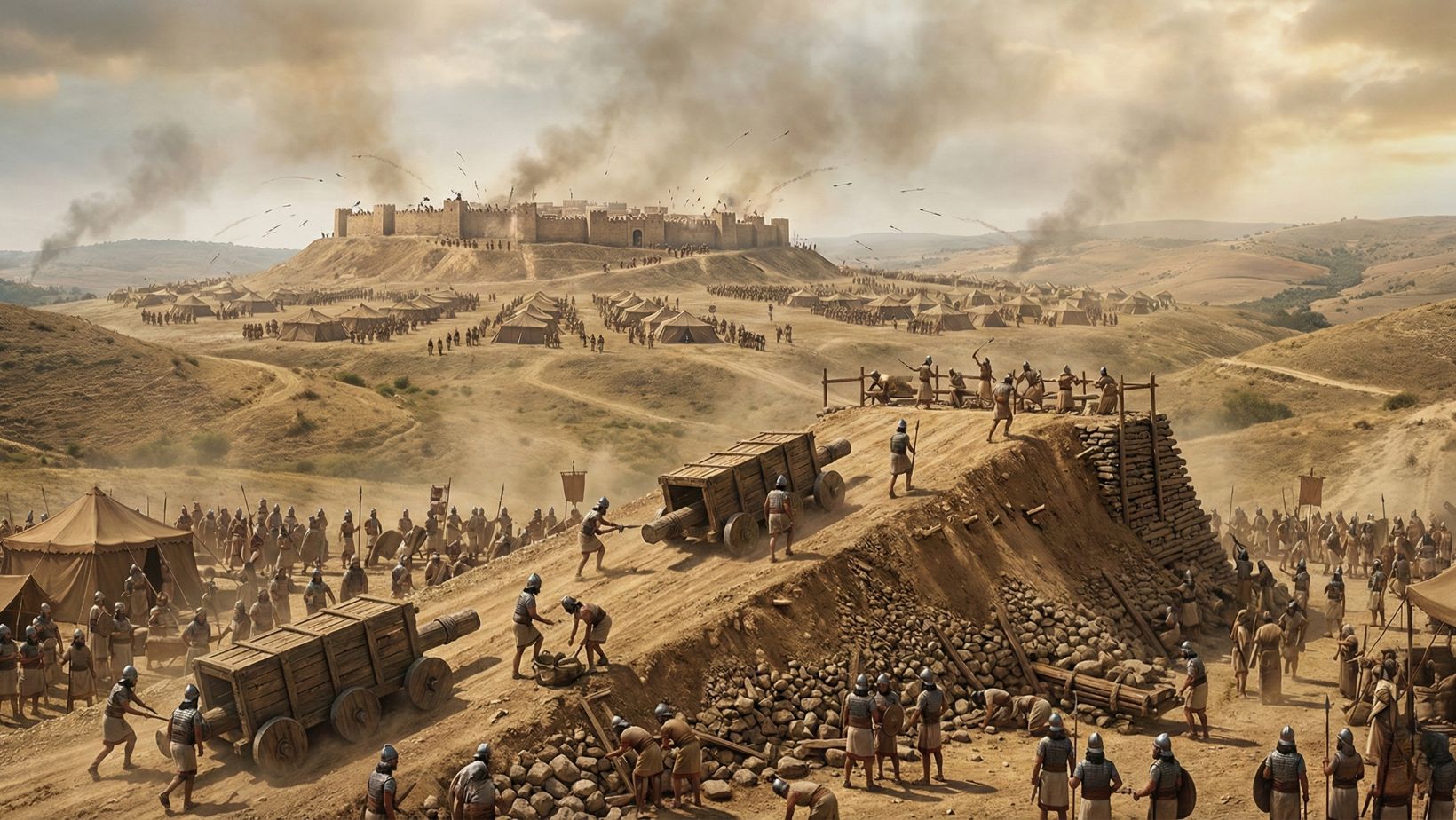
Lachish was one of the most significant cities in the ancient Kingdom of Judah, second only to Jerusalem in importance, size, and strategic value. Situated in the Shephelah (foothills) southwest of Jerusalem, it served as a formidable military fortress guarding the main route from the coastal plain to the Judean hill country. Its history is marked by dramatic battles, including a massive siege by the Assyrian Empire and its eventual destruction by the Babylonians. Today, the archaeological site (Tel Lachish) provides some of the most vivid confirmations of biblical history, including the famous Lachish Letters and the Assyrian siege reliefs.
Quick Facts
- Name: Lachish (Hebrew: Lakhish)
- Location: The Shephelah (foothills of Judah), roughly 25 miles SW of Jerusalem
- Modern Site: Tel Lachish (Tell ed-Duweir)
- Era: Bronze Age (Canaanite) through Iron Age (Israelite/Judean)
- Key Role: Principal fortress city protecting the approach to Jerusalem
- Destroyers: Sennacherib (Assyria, 701 BCE), Nebuchadnezzar II (Babylon, 586 BCE)
- Key Biblical Figures: Joshua, Rehoboam, Amaziah, Hezekiah, Jeremiah
- Famous Artifacts: The Lachish Reliefs, The Lachish Letters (Ostraca)
Name Meaning
Lachish: The etymology is uncertain, though some scholars suggest it may relate to a root meaning “obstinate” or “invincible,” fitting its reputation as a hard-to-conquer fortress. In the Amarna Letters (14th century BCE), it is referred to as Lakisha.
Geography / Strategic Context
Location: Situated in the fertile Shephelah region, acting as a buffer zone between the Philistines on the coast and the Israelites in the mountains.
Strategic Value: It controlled the main trade and military highway leading up to Jerusalem and Hebron. Any invading army from Egypt or the coast had to neutralize Lachish before attacking Jerusalem.
Water Supply: The city possessed a deep well (over 140 feet deep), ensuring survival during prolonged sieges.
Biblical Era / Context
Time: Prominent from the time of the Conquest (Joshua) through the Divided Kingdom, until the Babylonian Exile.
Setting: A fortified royal city often used as a treasury or military command center.
Political Context: As the “watchdog of Judah,” Lachish was often the first major casualty during foreign invasions, signaling that the capital, Jerusalem, was next in line for attack.
Major Roles / Identity
Canaanite Royal City: A powerful city-state before the Israelite conquest, mentioned in the Amarna Letters.
Judean Fortress: Fortified by King Rehoboam as part of his defense line (2 Chronicles 11:9).
City of Refuge (Political): King Amaziah fled here from Jerusalem to escape conspirators, though he was ultimately assassinated in Lachish (2 Kings 14:19).
Final Stand: One of the last three cities fighting against Babylon (Jeremiah 34:7).
Key Characteristics
Military Might: Features a massive double wall system, a six-chambered gate (typical of Solomon/Ahab era construction), and a massive siege ramp.
Wealth: Archaeology suggests it was a wealthy administrative hub, likely housing royal officials and substantial stores of oil and wine (indicated by “LMLK” seals found there).
Resilience: It was rebuilt multiple times after destruction, evidencing its crucial importance to the survival of the nation.
Main Historical Events
Conquest by Joshua: The King of Lachish joined the Amorite coalition against Gibeon. Joshua defeated them, laid siege to Lachish, and took it on the second day (Joshua 10:31–32).
Fortification by Rehoboam: After the kingdom split, Rehoboam strengthened Lachish as a key defensive garrison (2 Chronicles 11:5–12).
Assassination of Amaziah: King Amaziah fled to Lachish to escape a conspiracy in Jerusalem, but his pursuers killed him there (2 Chronicles 25:27).
The Assyrian Siege (701 BCE): King Sennacherib of Assyria laid a devastating siege against Lachish while Hezekiah reigned in Jerusalem. This is one of the most well-documented events in antiquity (2 Kings 18:13–17).
The Babylonian Destruction (586 BCE): Nebuchadnezzar II attacked Judah. Jeremiah records that only Lachish and Azekah remained fighting before Jerusalem finally fell (Jeremiah 34:7).
Major Figures Associated
Japhia: The Amorite King of Lachish defeated by Joshua.
Rehoboam: The King of Judah who established Lachish as a fortress city.
Sennacherib: The Assyrian Emperor who made Lachish his headquarters during his invasion of Judah.
Hezekiah: King of Judah who sent tribute to Sennacherib at Lachish in a failed attempt to buy peace (2 Kings 18:14).
Hoshaiah: The likely author of the “Lachish Letters,” a military officer reporting on the desperate situation during the Babylonian invasion.
Notable Passages
Joshua 10:31–32: The conquest narrative — “Joshua… laid siege to [Lachish] and fought against it. The LORD gave Lachish into the hand of Israel.”
2 Chronicles 11:9: Lists Lachish among the cities Rehoboam built for defense.
2 Kings 18:14: Hezekiah’s plea — “King Hezekiah of Judah sent this message to the king of Assyria at Lachish: ‘I have done wrong. Withdraw from me, and I will pay whatever you demand of me.’”
2 Kings 19:8: Sennacherib leaves Lachish to fight against Libnah.
Jeremiah 34:7: The final days — “While the army of the king of Babylon was fighting against Jerusalem and the other cities of Judah that were still holding out—Lachish and Azekah.”
Legacy & Impact
Archaeological Treasure: Tel Lachish is one of the most important excavations in Israel. It yielded the “Lachish Letters” (writing on pottery shards) which describe the final days of Judah with chilling immediacy: “We are watching for the fire signals of Lachish…”
Historical Verification: The “Lachish Reliefs,” found in Sennacherib’s palace in Nineveh (now in the British Museum), depict the siege in graphic detail, perfectly corroborating the biblical account of the city’s destruction.
The Siege Ramp: The only known Assyrian siege ramp discovered in the Near East is located at Lachish, a physical testament to the ferocity of the battle described in 2 Kings and Isaiah.
Symbolism / Typology
Human Vulnerability: Despite its massive walls and “invincible” name, Lachish fell to superior powers, illustrating that military might cannot save without God.
Judgment: The destruction of Lachish served as a severe warning (and eventual reality) to Jerusalem regarding the consequences of turning away from Yahweh.
Prophetic Warning: Micah 1:13 calls Lachish the “beginning of sin to the daughter of Zion,” possibly referring to the importation of foreign idolatry (chariots/horses) from Egypt through Lachish.
Extra-Biblical References
The Lachish Reliefs: Massive stone carvings from Nineveh showing Judean captives, the siege ramp, battering rams, and Sennacherib on his throne receiving spoils from Lachish.
The Taylor Prism: An Assyrian text where Sennacherib boasts of shutting Hezekiah up “like a bird in a cage” after devastating the fortified cities of Judah (including Lachish).
The Lachish Letters: Hebrew inscriptions from the time of Jeremiah (c. 586 BCE) documenting the communication between military outposts as the Babylonians advanced.







Leave a Reply