
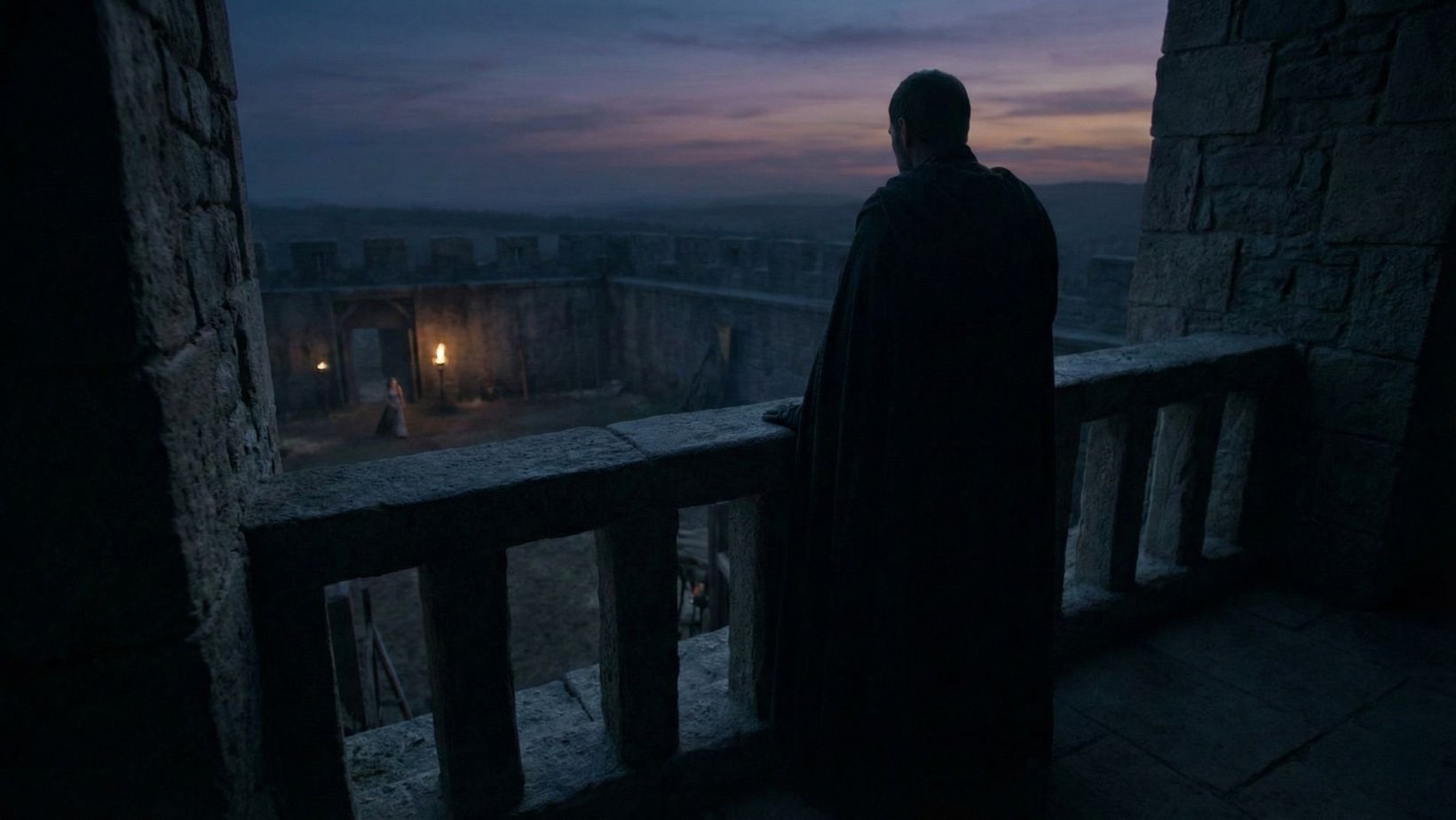
2 Samuel 11 is the tragic turning point of David’s life and reign. The man who defeated Goliath, spared Saul, and united Israel is defeated not by an army, but by his own lust. The chapter details a downward spiral of sin: it begins with spiritual lethargy (staying home from war), leads to adultery with Bathsheba, evolves into a conspiracy to deceive her husband Uriah, and culminates in state-sponsored murder. While David thinks he has successfully covered his tracks, the chapter ends with an ominous sentence that sets the stage for divine judgment: “But the thing David had done displeased the Lord.”
1. The Look and the Act (2 Samuel 11:1–5 NLT)
1 In the spring of the year, when kings normally go out to war, David sent Joab and the Israelite army to fight the Ammonites. They destroyed the Ammonite army and laid siege to the city of Rabbah. But David stayed behind in Jerusalem. 2 Late one afternoon, after his midday rest, David got out of bed and was walking on the roof of the palace. As he looked out over the city, he noticed a woman of unusual beauty taking a bath. 3 He sent someone to find out who she was, and he was told, “She is Bathsheba daughter of Eliam and the wife of Uriah the Hittite.” 4 Then David sent messengers to get her; and when she came to the palace, he slept with her. (She had just completed the purification rites after having her menstrual period.) Then she returned home. 5 Later, when Bathsheba discovered that she was pregnant, she sent David a message, saying, “I am pregnant.”
Commentary:
- The Context of Lethargy (v. 1): The chapter opens with a damning contrast. “When kings go out to war… David stayed behind.”
- The Vantage Point (v. 2): The palace was built on the highest point of the City of David (Zion). From his roof, David could look down into the courtyards of the lower city where the common people lived.
- The Progression of Sin (v. 2–4):
- He Saw: Accidental temptation.
- He Sought: “Sent someone to find out.” He entertained the thought.
- He Took: “Sent messengers to get her.” This was an abuse of royal power. Bathsheba, as a subject, likely felt she could not refuse the King’s summons.
- The Identity of Bathsheba (v. 3): The report should have stopped David cold.
- Daughter of Eliam: Eliam was one of David’s “Thirty” elite warriors (2 Samuel 23:34).
- Granddaughter of Ahithophel: Eliam was the son of Ahithophel, David’s most trusted counselor (2 Samuel 16:23). This betrayal would later cause Ahithophel to join Absalom’s rebellion.
- Wife of Uriah: One of David’s mighty men.
- The Pregnancy (v. 5): The mention of “purification rites” (v. 4) is crucial. It proves legally that the child could not belong to Uriah (who had been at war) and that she was fertile. The message “I am pregnant” forces David into crisis management.
Insight: Sin rarely happens in a vacuum. It usually follows a pattern of neglecting duty (staying home) and ignoring warning signs (her identity).
2. The Cover-Up: Uriah’s Integrity (2 Samuel 11:6–13 NLT)
6 Then David sent word to Joab: “Send me Uriah the Hittite.” So Joab sent him to David. 7 When Uriah arrived, David asked him how Joab and the army were getting along and how the war was going. 8 Then he told Uriah, “Go on home and relax.” David even sent a gift to Uriah after he had left the palace. 9 But Uriah didn’t go home. He slept that night at the palace entrance with the king’s palace guard. 10 When David heard that Uriah had not gone home, he summoned him and asked, “What’s the matter? You didn’t go home last night after your long journey?” 11 Uriah stated, “The Ark and the armies of Israel and Judah are living in tents, and Joab and my master’s men are camping in the open fields. How could I go home to wine and dine and sleep with my wife? I swear that I would never do such a thing.” 12 “Well, stay here today,” David told him, “and tomorrow you may return to the army.” So Uriah stayed in Jerusalem that day and the next. 13 Then David invited him to dinner and got him drunk. But even then he couldn’t get Uriah to go home to his wife. Again he slept at the palace entrance with the king’s palace guard.
Commentary:
- The Plan (v. 6–8): David recalls Uriah from the front lines on the pretext of an intelligence briefing. His goal is simple: get Uriah to sleep with his wife so the baby will appear to be his. The “gift” (likely food/wine) was to encourage festivity.
- Uriah the Hittite: Though ethnically a Hittite, Uriah’s name means “Yahweh is my Light.” He is a convert who behaves more like a righteous Israelite than the King does.
- The Contrast (v. 11): This verse is a stinging rebuke to David.
- Solidarity: Uriah refuses comfort while the Ark and the army are in “open fields.”
- Discipline: He refuses to violate the soldier’s code of abstinence during holy war (Deuteronomy 23:9–11).
- David’s Shame: While David slept in a cedar palace and stole another man’s wife, Uriah sleeps on the floor and refuses to enjoy his own wife out of loyalty to his comrades.
- Plan B: Drunkenness (v. 13): David tries to compromise Uriah’s judgment with alcohol. Yet, even drunk, Uriah’s character holds firm. His integrity is bone-deep.
Insight: The cover-up is often worse than the crime. David attempts to manipulate a man of honor into living a lie. Uriah’s righteousness becomes a mirror that exposes David’s corruption.
3. The Murder Plot (2 Samuel 11:14–25 NLT)
14 So the next morning David wrote a letter to Joab and gave it to Uriah to deliver. 15 The letter instructed Joab, “Station Uriah on the front lines where the battle is fiercest. Then pull back so that he will be killed.” 16 So Joab assigned Uriah to a spot close to the city wall where he knew the enemy’s strongest men were fighting. 17 And when the enemy soldiers came out of the city to fight, Uriah the Hittite was killed along with several other Israelite soldiers. 18 Then Joab sent a battle report to David. … 23 The messenger reported to David, “The enemy came out against us in the open fields… 24 Then the archers on the wall shot arrows at us. Some of the king’s men were killed, including Uriah the Hittite.” 25 “Well, tell Joab not to be discouraged,” David said. “The sword devours this one today and that one tomorrow! Fight harder next time and conquer the city.”
Commentary:
- The Death Warrant (v. 14): In a moment of supreme irony and cruelty, David makes Uriah carry his own death warrant to Joab. He relies on Uriah’s integrity (knowing he won’t read the King’s mail) to kill him.
- Joab’s Complicity (v. 16): Joab does not question the order. He is a political pragmatist. However, he alters the plan slightly. Instead of a blatant withdrawal (which would look like treachery), he sends Uriah on a suicide mission near the walls.
- Collateral Damage (v. 17): “Several other Israelite soldiers” died. David’s sin didn’t just kill Uriah; it killed other innocent men to cover the plot.
- David’s Callousness (v. 25): David’s response to the news is chillingly hypocritical. “The sword devours this one today…” He attributes the murder to the “fortunes of war,” masking his assassination as a battlefield casualty.
Insight: David has broken the second half of the Ten Commandments: coveting (10th), adultery (7th), stealing (8th), bearing false witness (9th), and murder (6th). He has become the very tyrant Samuel warned Israel about.
4. The Marriage and the Verdict (2 Samuel 11:26–27 NLT)
26 When Uriah’s wife heard that her husband was dead, she mourned for him. 27 When the period of mourning was over, David sent for her and brought her to the palace, and she became one of his wives. Then she gave birth to a son. But the Lord was displeased with what David had done.
Commentary:
- Mourning (v. 26): Bathsheba follows the customary seven days of mourning. She is now a widow, pregnant and vulnerable.
- Legitimizing the Union (v. 27): David marries her quickly. To the public, this looks like the King graciously taking in the pregnant widow of a fallen hero. It appears to be a noble act.
- The Birth: The child is born. The plan seems to have worked perfectly. No one knows the truth except Joab, Bathsheba, and David.
- The Final Word (v. 27): “But the Lord was displeased…” (Literally: “The thing was evil in the eyes of Yahweh.”)
Insight: You can hide from people, but you cannot hide from God. The chapter ends with the ominous reality that God has seen everything, and He will not remain silent.
Theological Significance of 2 Samuel 11
- Total Depravity: Even a “man after God’s own heart” is capable of heinous evil. This underscores the biblical truth that no human leader is perfect and that righteousness is a gift of grace, not an inherent trait.
- The Abuse of Power: The story serves as a critique of absolute power. David uses his authority to exploit a woman and destroy a faithful servant. It shows why God’s law places the King under the Torah, not above it.
- The Nature of Sin: Sin is progressive. It starts with a look, becomes a thought, turns into an act, necessitates a lie, and results in death (James 1:14–15).
Practical Applications
- Go to War: When we have a duty to fulfill (work, ministry, family), staying “home” in idleness makes us vulnerable. Keep doing the work God called you to do.
- Bounce Your Eyes: David’s first look was likely accidental; the second look was lust. We cannot always control what we see, but we can control how long we stare.
- The Danger of Isolation: David was alone on the roof. Uriah was in community with the troops. Isolation often precedes moral failure.
- The Integrity of Uriah: We should aspire to be like Uriah—faithful to our commitments even when it is uncomfortable or when those in power try to compromise us.
Sermon Titles
- The High Cost of Staying Home.
- The Sword Devours.
- The Letter in Uriah’s Hand.
- But the Lord Was Displeased.
- Anatomy of a Fall.







Leave a Reply