
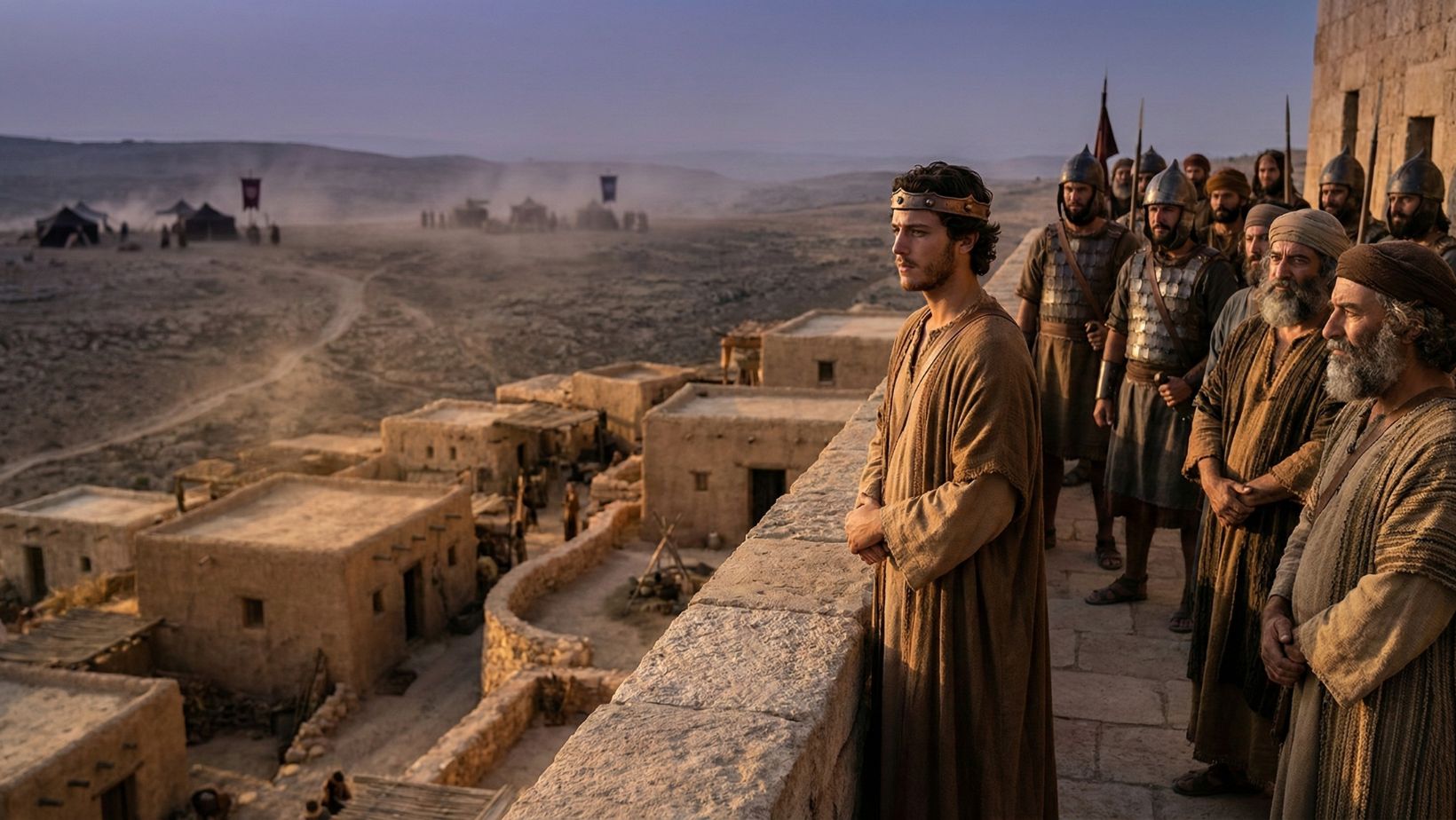
2 Samuel 2 marks a pivotal shift in history. Saul is dead, and David—God’s chosen successor—finally moves toward the throne. However, he does not instantly become king over the entire nation. Instead, God gives him one tribe: Judah. This chapter is a masterclass in patience and trusting God’s pace. It teaches us that God’s promises often unfold in stages, and rushing the process can ruin the progress.
Main Scripture: 2 Samuel 2
“In the course of time, David inquired of the Lord. ‘Shall I go up to one of the towns of Judah?’ he asked. The Lord said, ‘Go up.’ David asked, ‘Where shall I go?’ ‘To Hebron,’ the Lord answered.” — 2 Samuel 2:1 (NIV)
Introduction
We often want God’s promises to be fulfilled overnight. We want the full kingdom immediately. But in 2 Samuel 2, David shows us the power of gradual elevation. After years of running for his life, he is finally anointed King, but only over the house of Judah. He does not force the other tribes to bow; he accepts what God gives him for that season. This chapter reminds us that God builds our lives one “tribe,” one step, and one victory at a time.
1. Divine Direction Before Human Action
“In the course of time, David inquired of the Lord. ‘Shall I go up…?’” — 2 Samuel 2:1
- The Pause of Wisdom: Even though David knew he was destined to be king, he did not assume the timing. He stopped to ask God for specific instructions before making a move.
- Specific Guidance: David didn’t just ask “if” he should go, but “where” he should go. God loves specific prayers because they show we depend on His specific will, not just general blessings.
- Avoiding Presumption: Just because God promised it, doesn’t mean we can take it without asking. David avoided the mistake of moving ahead of God by seeking counsel first.
2. Embrace the Small Beginning
“Then the men of Judah came to Hebron, and there they anointed David king over the tribe of Judah.” — 2 Samuel 2:4
- Partial Fulfillment: David was promised all twelve tribes, but he started with just one. He did not complain that the promise was incomplete; he was faithful with the portion he received.
- The Test of Contentment: God often tests us with a “Judah” sized blessing before trusting us with an “Israel” sized responsibility. If we despise the small beginning, we disqualify ourselves from the greater ending.
- Local Authority: Before David could rule the nation, he had to prove he could lead his own family and kinsmen in Hebron.
3. Grace Wins Over Enemies
“David sent messengers to the men of Jabesh Gilead… ‘The Lord bless you for showing this kindness to Saul your master by burying him.’” — 2 Samuel 2:5
- Honoring the Past: The men of Jabesh Gilead were loyal to Saul, David’s enemy. Instead of attacking them, David blessed them for their loyalty.
- Building Bridges: David understood that you cannot unite a kingdom by crushing those who opposed you. He used kindness to win over hearts that were once against him.
- Leadership Character: True leaders do not hold grudges against those who supported the “old regime.” David showed that his kingship would be defined by mercy, not revenge.
4. The Struggle is Part of the Process
“Abner son of Ner, commander of Saul’s army, had taken Ish-Bosheth son of Saul and brought him over to Mahanaim… and made him king over… all Israel.” — 2 Samuel 2:8-9
- Opposition Arises: Just because David was in God’s will didn’t mean there was no resistance. Abner set up a rival king, creating a season of conflict.
- Facing Resistance: Sometimes, when you step into your calling, the enemy will set up a counterfeit to distract you. David had to endure a long war to fully step into his promise.
- Standing Firm: The existence of a rival (Ish-Bosheth) did not invalidate David’s anointing. It simply meant David had to trust God to fight the battle for the rest of the kingdom.
5. Trusting the Long Game
“The time that David was king in Hebron over the house of Judah was seven years and six months.” — 2 Samuel 2:11
- The Waiting Room: David ruled only Judah for over seven years. That is a long time to wait for the rest of the promise.
- Faithfulness in the Gap: David did not try to manipulate his way into ruling Israel during those seven years. He served faithfully where he was until God moved the hearts of the other tribes.
- God’s Perfect Timing: Those seven years were not wasted time; they were preparation time. God uses the waiting period to mature us so we don’t get crushed by the weight of the full blessing.
Quick Insights
- Do not let the delay of the full promise make you ungrateful for the partial victory you have today.
- Asking God “Where?” is just as important as asking God “When?”
- Kindness to your critics builds a stronger foundation than conquering them with force.
- A “seven-year wait” is not a denial; it is a divine development course for your character.
- God gives us influence one tribe at a time so our character can grow at the same pace as our calling.







Leave a Reply