
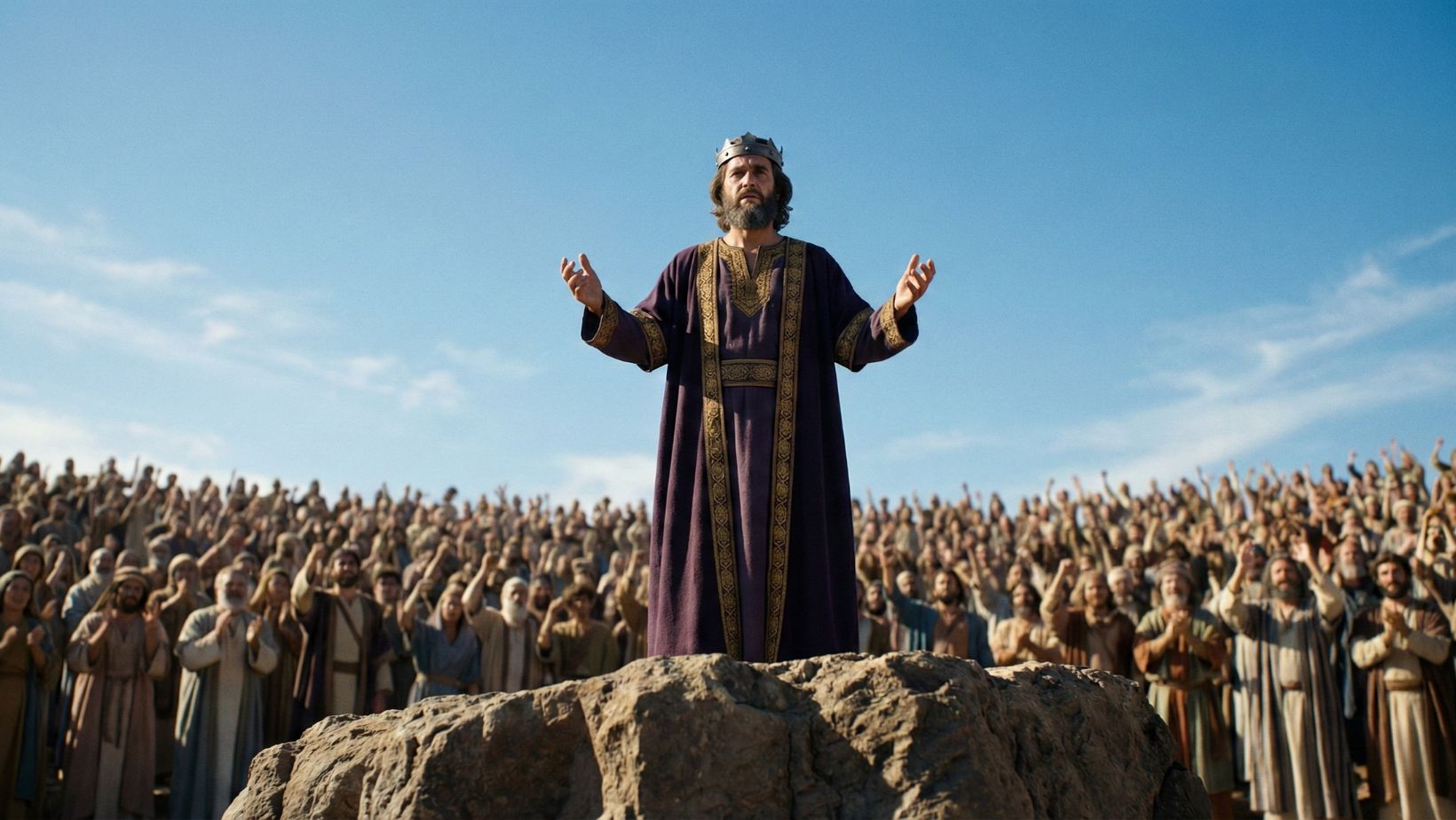
The history of Israel’s monarchy begins not with a triumph of character, but with a tragedy of potential. King Saul, the first man to wear the crown of God’s people, was a figure carved from contradiction. He was the answer to the people’s demand for a king—tall, handsome, and physically imposing. Yet, beneath the royal armor lay a man paralyzed by insecurity, a leader who could conquer armies but could not conquer his own fear.
The Reluctant Monarch
The saga began in the mundane dust of the Benjaminite hills. Saul was not seeking a kingdom; he was searching for his father’s lost donkeys. It was a humble mission for a man described as “choice and handsome,” standing head and shoulders above his peers. His journey led him to the prophet Samuel, who stunned the young man by anointing him prince over Israel in a private ceremony at dawn. despite the divine confirmation, Saul’s insecurity was immediate and crippling.
- The Private Anointing: Samuel poured oil over Saul’s head, kissing him and giving him three specific signs to confirm God’s calling—including a prophecy that Saul would join a band of prophets in ecstatic worship.
- Hiding in the Baggage: When the tribes gathered at Mizpah for the public coronation, Saul was missing. While the crowds waited to cheer, the king was found crouching behind leather sacks and supplies, terrified of the spotlight.
- The First Victory: Despite his shyness, the Spirit of God eventually empowered him to break the siege of Jabesh-Gilead, threatening to kill his own oxen to rally the tribes.
The Crack in the Armor
Saul’s early reign was marked by brilliant, decisive action, but his leadership soon crumbled under pressure. The true test came at Gilgal, facing a massive Philistine army that looked like “sand on the seashore.” As his soldiers began to desert in fear, Saul’s faith faltered. Instead of waiting for Samuel as instructed, he took matters into his own hands, offering a sacrifice he was not authorized to make.
- The Unauthorized Sacrifice: Impatient and afraid, Saul offered the burnt offering himself. Samuel arrived just as the smoke rose, rebuking him with the chilling words: “You have done foolishly.”
- The Foolish Oath: In a chaotic battle, Saul bound his soldiers with a rash oath forbidding them to eat until evening. The army grew faint, and Saul nearly executed his own son, Jonathan—the true hero of the day—for eating a little honey.
- The People’s Intervention: The people had to physically stop Saul from killing Jonathan, marking the first time the king’s authority was openly challenged by his subjects.
“To Obey is Better than Sacrifice”
The final blow to his legitimacy came with the war against the Amalekites. God’s command was absolute: destroy everything. But Saul, seeking to please his soldiers and perhaps stroke his own ego, spared King Agag and the best of the livestock. When confronted, he built a monument to himself and claimed he had obeyed the Lord.
- Partial Obedience: Saul argued that he saved the animals to sacrifice to God, but Samuel declared that “To obey is better than sacrifice.”
- The Torn Robe: As Samuel turned to leave, Saul grabbed his robe in desperation, tearing the fabric. Samuel used this as a prophetic symbol: just as the robe was torn, the kingdom had been torn from Saul and given to a neighbor “better than him.”
- The Spirit Departs: Following this rejection, the Spirit of the Lord departed from Saul, leaving a terrifying vacuum filled by a “distressing spirit” and dark moods.
The Green-Eyed Monster
Desperate to soothe his tormented mind, Saul’s servants brought in a young musician named David. David was everything Saul was not—radiant with faith and favored by God. After David killed Goliath, the giant that terrified Saul, the king’s gratitude quickly turned to a murderous jealousy that would consume the rest of his life.
- The Song of the Women: As the army returned from battle, women sang, “Saul has slain his thousands, and David his ten thousands.” This math enraged the king, who realized the people loved David more.
- The Javelin Attacks: In fits of madness inside the palace, Saul twice hurled a spear at David while the boy played the harp, trying to pin him to the wall.
- The Slaughter at Nob: In his obsession to catch the fugitive David, Saul crossed a line of no return. He ordered the execution of 85 priests at Nob merely for giving David bread, standing by as Doeg the Edomite butchered them.
The Silence and The End
The end of Saul’s life was a lonely descent into darkness. Samuel died, leaving Saul without a spiritual anchor. When the Philistines returned in overwhelming force at Shunem, Saul was petrified. He inquired of the Lord, but the heavens were silent—no dreams, no Urim, no prophets.
- The Witch of Endor: Desperate for answers, Saul disguised himself and broke his own law by consulting a medium. The spirit of Samuel rose not to comfort him, but to pronounce his doom.
- Defeat on Mount Gilboa: The prophecy was fulfilled the next day. The Israelite army was slaughtered, and Saul’s sons, including Jonathan, were killed.
- Suicide: Critically wounded by archers and unwilling to be captured, Saul fell upon his own sword. The first king of Israel died in the dust, a tragic figure who had been given a crown but lost his soul to fear.







Leave a Reply