
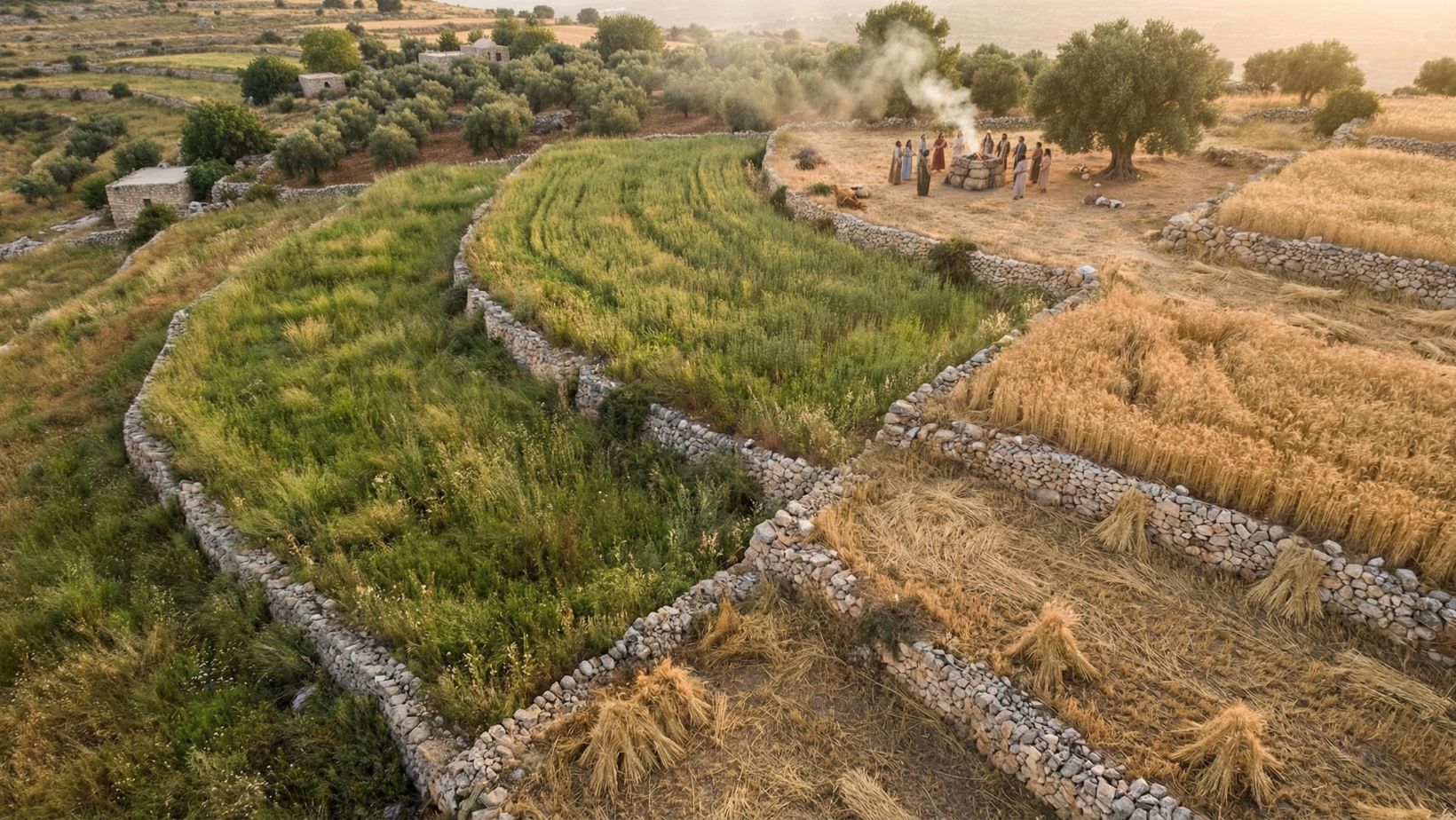
Exodus 23 concludes the “Book of the Covenant” (Exodus 20:22–23:33). It is a chapter that transitions from case laws about property and personal injury to broader instructions regarding civil justice, religious observance, and national destiny. The first half focuses on maintaining a fair judicial system—protecting the poor from bias and the innocent from false accusations. It then establishes the rhythm of Jewish life through the Sabbath laws and the three major annual festivals (Unleavened Bread, Harvest/Pentecost, and Ingathering/Tabernacles). The chapter ends with God’s promises and warnings regarding the conquest of Canaan: He will send His angel ahead of them to drive out the inhabitants, but Israel must not make covenants with them or their gods, lest they be ensnared.
1. Justice and Fair Treatment (Exodus 23:1–9 NLT)
1 “You must not pass along false rumors. You must not cooperate with evil people by lying on the witness stand.
2 “You must not follow the crowd in doing wrong. When you are called to testify in a dispute, do not be swayed by the crowd to twist justice. 3 And do not slant your testimony in favor of a person just because that person is poor.
4 “If you come upon your enemy’s ox or donkey that has strayed away, take it back to its owner. 5 If you see that the donkey of someone who hates you has collapsed under its load, do not walk by. Instead, stop and help.
6 “In a lawsuit, you must not deny justice to the poor.
7 “Be sure never to charge anyone falsely with evil. Never sentence an innocent or blameless person to death, for I never declare a guilty person to be innocent.
8 “Take no bribes, for a bribe makes you ignore something that you clearly see. A bribe makes even a righteous person twist the truth.
9 “You must not oppress a foreigner. You know what it is like to be a foreigner, for you yourselves were once foreigners in the land of Egypt.
Commentary:
- Integrity in Speech (v. 1): The foundation of justice is truth. Spreading rumors or giving false testimony undermines the community’s trust and legal system. This echoes the Ninth Commandment.
- Mob Mentality (v. 2): Justice is not a popularity contest. The law warns against “following the crowd” to do evil. Truth is objective, not democratic.
- Impartiality (v. 3 & 6):
- Enemy Love (v. 4–5): This is a remarkable foreshadowing of Jesus’ teaching. Even if someone “hates you,” you are responsible for the welfare of their animals. Economic loss for an enemy does not justify your inaction.
- Judicial Corruption (v. 7–8):
- Empathy for Foreigners (v. 9): Repeated from chapter 22, this command is grounded in empathy (“You know what it is like”). Israel’s ethical treatment of outsiders is based on their own collective memory of suffering.
2. Sabbaths and Festivals (Exodus 23:10–19 NLT)
10 “Plant and harvest your crops for six years, 11 but let the land be renewed and lie uncultivated during the seventh year. Then let the poor among you harvest whatever grows on its own. Leave the rest for wild animals to eat. The same applies to your vineyards and olive groves.
12 “You have six days each week for your ordinary work, but on the seventh day you must stop working. This gives your ox and your donkey a chance to rest. It also allows your slaves and the foreigners living among you to be refreshed.
13 “Pay close attention to all my instructions. You must not call on the name of any other gods. Do not even speak their names.
14 “Each year you must celebrate three festivals in my honor. 15 First, celebrate the Festival of Unleavened Bread. For seven days the bread you eat must be made without yeast, just as I commanded you. Celebrate this festival at the appointed time in early spring, in the month of Abib, for that is the anniversary of your departure from Egypt. No one may appear before me without an offering.
16 “Second, celebrate the Festival of Harvest, when you bring me the first fruits of your crops.
“Finally, celebrate the Festival of Shelters at the end of the harvest season, when you have gathered all the crops from your fields. 17 At these three times each year, every man in Israel must appear before the Sovereign, the Lord.
18 “You must not offer the blood of my sacrificial offerings with any baked goods containing yeast. And the fat of my festival offerings must not be left over until morning.
19 “As you harvest your crops, bring the very best of the first harvest to the house of the Lord your God.
“You must not cook a young goat in its mother’s milk.
Commentary:
- Sabbatical Year (v. 10–11): Every seventh year, the land was to rest. This served two purposes:
- Ecological: It allowed the soil to rejuvenate.
- Humanitarian: The poor could glean freely from whatever grew naturally, reinforcing that God, not the landowner, is the ultimate owner of the earth.
- Sabbath Rest (v. 12): The weekly Sabbath is re-emphasized here with a focus on refreshment for workers and animals, not just religious observance. It is a social justice law protecting the vulnerable from ceaseless labor.
- Exclusive Worship (v. 13): Speaking the names of other gods (likely in prayer or oaths) acknowledges their existence and power. Israel is to be monotheistic in practice and speech.
- The Three Pilgrimage Festivals (v. 14–17):
- Unleavened Bread (Passover): Commemorates the exodus from Egypt. “Empty-handed” implies gratitude; one cannot remember redemption without offering something back.
- Harvest (Pentecost/Weeks): Celebrates the wheat harvest (early summer). It acknowledges God as the provider of sustenance.
- Shelters (Tabernacles/Ingathering): Celebrates the final harvest (autumn) and remembers the wilderness wanderings.
- Ritual Purity (v. 18–19):
- No Yeast: Yeast symbolized corruption or the old life of Egypt; sacrifices were to be pure.
- No Leftover Fat: The fat belonged to God and was the best part; leaving it to spoil showed contempt.
- Boiling a Kid in Mother’s Milk: This specific prohibition likely targeted a Canaanite fertility ritual. Ideally, milk sustains life; using it to boil the offspring in the very fluid meant to nourish it creates a perverse mixture of life and death.
3. God’s Angel and the Conquest of Canaan (Exodus 23:20–33 NLT)
20 “See, I am sending an angel before you to protect you on your journey and lead you safely to the place I have prepared for you. 21 Pay close attention to him, and obey his instructions. Do not rebel against him, for he is my representative, and he will not forgive your rebellion. 22 But if you are careful to obey him, following all my instructions, then I will be an enemy to your enemies, and I will oppose those who oppose you. 23 For my angel will go before you and bring you into the land of the Amorites, Hittites, Perizzites, Canaanites, Hivites, and Jebusites, so you may live there. And I will destroy them completely. 24 You must not worship the gods of these nations or serve them in any way or imitate their evil practices. Instead, you must utterly destroy them and smash their sacred pillars.
25 “You must serve only the Lord your God. If you do, I will bless you with food and water, and I will protect you from illness. 26 There will be no miscarriages or infertility in your land, and I will give you full, long lives.
27 “I will send my terror ahead of you and create panic among all the people whose lands you invade. I will make all your enemies turn and run. 28 I will send terror ahead of you to drive out the Hivites, Canaanites, and Hittites. 29 But I will not drive them out in a single year, because the land would become desolate and the wild animals would multiply and threaten you. 30 I will drive them out a little at a time until your population has increased enough to take possession of the land. 31 And I will fix your boundaries from the Red Sea to the Mediterranean Sea, and from the eastern wilderness to the Euphrates River. I will hand over to you the people now living in the land, and you will drive them out ahead of you.
32 “Make no treaties with them or their gods. 33 They must not live in your land, or they will cause you to sin against me. If you serve their gods, you will be caught in the trap of idolatry.”
Commentary:
- The Angel of the Presence (v. 20–22): God promises a specific guide (“an angel”).
- Authority: This angel has God’s “name” in him (v. 21 – “my representative”), implying he carries divine authority. Many Christian theologians view this as a pre-incarnate appearance of Christ (Christophany).
- Conditionality: God’s protection is contingent on obedience. If Israel rebels against the Angel, they rebel against God.
- Total Destruction of Idolatry (v. 24): The command to “smash their sacred pillars” (standing stones used in Canaanite worship) emphasizes that co-existence with idolatry is impossible. The land must be spiritually cleansed.
- Blessings of Obedience (v. 25–26): Serving Yahweh brings tangible blessings: food, water, health, fertility, and longevity. This reverses the curses of the Fall and the plagues of Egypt.
- Gradual Conquest (v. 29–30):
- Practical Wisdom: God will not clear the land instantly. If the population is too small to manage the territory, nature (wild animals/briers) will reclaim it.
- Spiritual Patience: Growth is incremental. “Little at a time” is a principle of spiritual warfare and maturity.
- The Boundaries (v. 31): The promised borders (Red Sea to Euphrates) represent the ideal extent of the Promised Land, briefly realized under King Solomon.
- The Snare (v. 32–33): The chapter ends with a stern warning. Treaties with pagan nations are a “trap.” Tolerance of evil inevitably leads to participation in evil.
Theological Significance of Exodus 23
- Justice as Worship: The laws in verses 1–9 show that how one treats a neighbor in court is a reflection of their fear of God. False testimony is a spiritual crime.
- Rest and Reliance: The Sabbath and Sabbatical year force Israel to trust God for provision. Letting the land lie fallow declares, “We do not live by bread alone, but by the word of God.”
- Holiness and Separation: The repeated warnings against Canaanite gods and practices underscore that God’s people must be distinct. Holiness requires separation from cultural norms that contradict God’s character.
- Divine Strategy: God’s plan for conquest (“little by little”) reveals that He balances His promises with practical reality. He prepares the people for the land as much as He prepares the land for the people.
Practical Applications
- Integrity Under Pressure: We must resist the urge to “follow the crowd” when the crowd is wrong. Truth often stands alone.
- Kindness to Enemies: If we see someone we dislike in trouble, we are called to help. Our duty to do good transcends personal animosity.
- Trusting God’s Timing: When we want instant breakthroughs, God often gives “little by little” progress so we can handle the blessing when it fully arrives.
- Avoiding Spiritual Traps: We must be vigilant about what we allow into our lives. Compromising with “small” sins often leads to being “caught in the trap” of larger failures.







Leave a Reply