
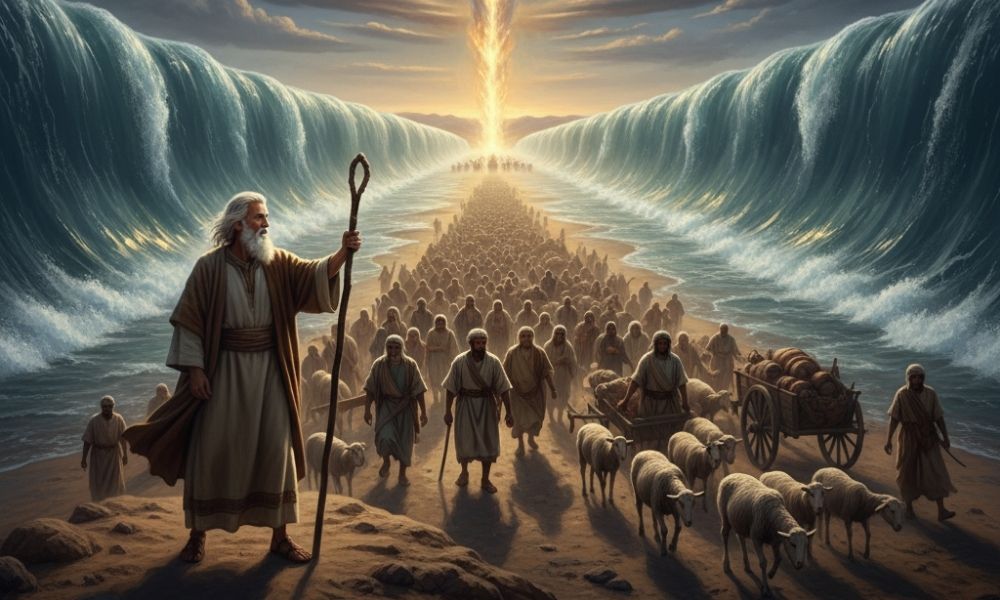
The Book of Exodus is the second book of the Bible and continues the story begun in Genesis. It records the fulfillment of God’s promises to Abraham, Isaac, and Jacob to make their descendants a great nation and to give them a land of their own. However, before receiving that land, the people of Israel must be redeemed from bondage in Egypt, receive God’s Law, and learn to live in covenant relationship with Him.
Quick Facts
- Book: Exodus
- Position: 2nd book of the Old Testament, following Genesis
- Traditional Author: Moses
- Period Covered: c. 1526–1406 BCE (approx. 80–120 years)
- Main Setting: Egypt → Wilderness → Mount Sinai
- Number of Chapters: 40
- Genre: Historical narrative, theology, law, covenant instructions
- Audience: The Israelites (and later generations) to remember God’s deliverance and covenant
- Theme Verse: “I am the LORD your God, who brought you out of the land of Egypt, out of the house of bondage.” — Exodus 20:2
Meaning and Purpose
The name Exodus (Greek: Exodos, “a way out”) captures the essence of the book: God’s powerful deliverance of His people from slavery and their journey toward becoming His covenant nation.
Exodus demonstrates that:
- God keeps His promises made to the patriarchs.
- God reveals His character—merciful, just, powerful, and holy.
- God establishes a covenant relationship with His redeemed people.
- God dwells among His people, symbolized by the Tabernacle.
Author and Historical Context
Author:
Jewish and Christian tradition attribute authorship to Moses, who led the Israelites out of Egypt and recorded their journey and laws. Internal evidence (Exodus 17:14; 24:4; 34:27) supports Mosaic authorship.
Historical Background:
- Israel had grown from the family of Jacob (around 70 people) into a large nation, fulfilling God’s promise in Genesis 46:3.
- A new Pharaoh arose who did not know Joseph (Exodus 1:8), leading to Israel’s oppression.
- God’s covenant faithfulness compels Him to act in judgment against Egypt and in salvation for His people.
Structure and Outline
| Section | Chapters | Theme / Summary |
|---|---|---|
| 1. Israel in Egypt | 1–12 | Bondage, Moses’ birth, call, plagues, and deliverance |
| 2. Journey to Sinai | 13–18 | Red Sea, wilderness tests, manna, and God’s provision |
| 3. Covenant at Sinai | 19–24 | The Law given, covenant ratified with blood |
| 4. Tabernacle and Worship | 25–40 | Instructions, rebellion (golden calf), and God’s indwelling presence |
Detailed Commentary by Section
1. Israel in Egypt (Exodus 1–12)
Theme: Bondage and Redemption
- Oppression (1:1–22):
The Israelites multiply greatly in Egypt, causing fear among the Egyptians. Pharaoh enslaves them and orders the death of all Hebrew male infants.
→ God preserves Moses, a foreshadowing of His plan to deliver Israel. - Moses’ Early Life (2:1–25):
Born to Hebrew parents, placed in the Nile, and adopted by Pharaoh’s daughter. After killing an Egyptian, he flees to Midian, where he marries Zipporah. - The Burning Bush (3:1–22):
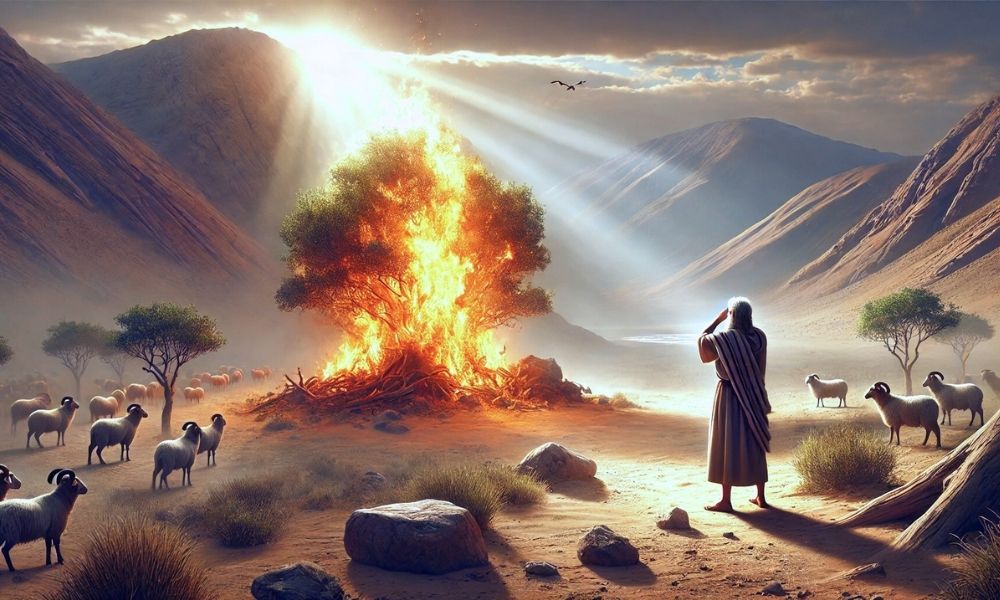
God calls Moses to deliver His people, revealing His sacred name YHWH (“I AM WHO I AM”)—the eternal, self-existent One. - The Plagues and Confrontation (7–12):
Ten plagues strike Egypt, each targeting the gods of Egypt and demonstrating Yahweh’s supremacy.- Water to blood
- Frogs
- Gnats
- Flies
- Livestock death
- Boils
- Hail
- Locusts
- Darkness
- Death of the firstborn (Passover)
- The First Passover (12:1–30):
God institutes the Passover lamb, whose blood protects Israel’s homes from judgment.
→ A direct foreshadowing of Christ’s sacrificial death (1 Corinthians 5:7). - Exodus from Egypt (12:31–51):
Pharaoh relents; Israel departs in haste.
“The LORD brought the Israelites out of Egypt by their divisions.”
2. Journey to Sinai (Exodus 13–18)
Theme: Testing and Provision
- Pillar of Cloud and Fire (13:21–22):
God leads them visibly by His presence — day and night. - Crossing the Red Sea (14):
Pharaoh pursues; God parts the waters; Israel crosses on dry ground; Pharaoh’s army is destroyed.
→ Symbolic of deliverance from sin through God’s power. - Song of Moses (15):
A hymn of praise for God’s deliverance — the first recorded song in Scripture. - Wilderness Tests (15–17):
God provides water, manna, and quail. Israel murmurs, yet God proves faithful.
Moses strikes the rock — water flows, symbolizing Christ (1 Corinthians 10:4). - Victory over Amalek (17):
Joshua leads Israel in battle; Moses intercedes with uplifted hands.
→ A picture of prayer and divine dependence.
3. Covenant at Mount Sinai (Exodus 19–24)
Theme: God’s Covenant and Law
- God’s Manifestation (19):
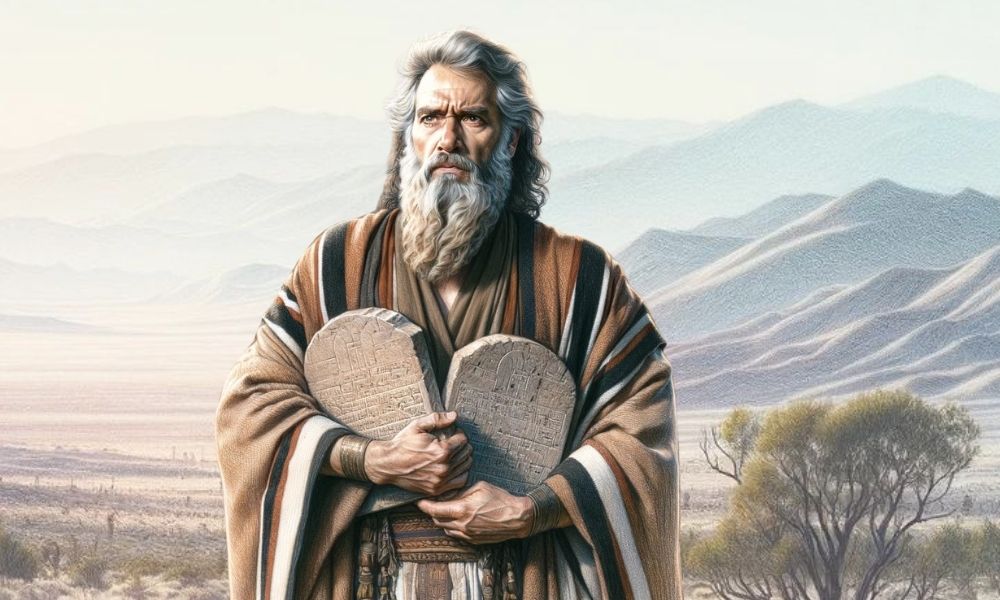
Thunder, lightning, and smoke announce God’s holiness. The people tremble at His presence. - The Ten Commandments (20:1–21):
The moral law revealing God’s holiness and man’s sin. Divided into:- Duties to God (Commandments 1–4)
- Duties to others (Commandments 5–10)
- The Book of the Covenant (21–23):
Detailed civil and moral laws about justice, property, social order, and worship. - Covenant Ratified (24):
Moses reads the Book of the Covenant; the people agree; blood is sprinkled on the altar and the people — symbolizing atonement and union with God.
Moses then ascends the mountain for forty days.
4. The Tabernacle and God’s Presence (Exodus 25–40)
Theme: Worship, Holiness, and God Dwelling Among His People
- Blueprint for the Tabernacle (25–31):
God instructs Moses in building the Tabernacle, ark, altar, and priestly garments — all symbolizing His holiness and accessibility through mediation. - The Golden Calf Rebellion (32–34):
While Moses is on Sinai, Israel falls into idolatry, worshiping a golden calf.
Moses intercedes; God spares the nation but judges the guilty.
→ Reveals human sinfulness and God’s mercy through intercession. - Renewal of the Covenant (34):
God rewrites the commandments; His glory passes before Moses — “The LORD, merciful and gracious, slow to anger, abounding in steadfast love.” - Construction and Completion (35–40):
Israel obeys, building the Tabernacle according to God’s instructions.
When complete, the glory of the LORD fills the Tabernacle, signifying that God now dwells among His redeemed people.
Theological Themes
- Redemption:
God delivers His people not by force of arms but by His power and grace — a model for salvation through Christ. - Covenant:
At Sinai, God forms Israel into a nation under divine law — His treasured possession. - God’s Presence:
The Tabernacle shows that God desires to dwell with His people, foreshadowing Christ (“Emmanuel — God with us”). - Law and Holiness:
The Law reveals God’s character and the standard of holiness required to live in His presence. - Mediation:
Moses prefigures Christ as intercessor and mediator between God and man.
Christ in Exodus – Typology
| Old Testament Type | Fulfillment in Christ |
|---|---|
| Passover Lamb (Ex 12) | Jesus, the Lamb of God (John 1:29) |
| Deliverance from Egypt | Salvation from sin (Romans 6:17–18) |
| Manna from Heaven | Jesus, the Bread of Life (John 6:35) |
| Water from the Rock | Living Water of Christ (John 4:14) |
| Tabernacle | God dwelling among us (John 1:14) |
| High Priest Aaron | Christ our High Priest (Hebrews 7) |
| Moses the Mediator | Christ, Mediator of a better covenant (Hebrews 8:6) |
Legacy and Impact
- Forms the theological foundation of the Old Testament — redemption, covenant, and divine presence.
- Central to Jewish identity and worship, commemorated in Passover and Shavuot.
- Profoundly shapes Christian theology, as the Exodus becomes the master image for salvation, freedom, and new creation.
- Echoed throughout Scripture:
- Luke 9:31 — Jesus’ “departure” (Greek exodos) refers to His death and resurrection.
- Revelation 15 — The Song of Moses and the Lamb celebrates the ultimate deliverance.







Leave a Reply