
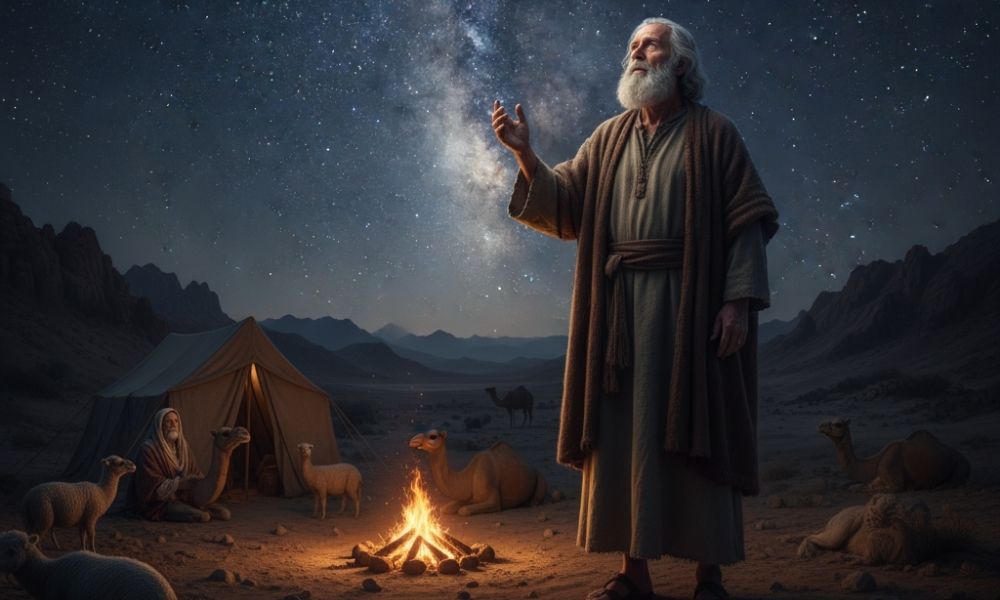
Abraham stands as one of the most influential and foundational figures in all of Scripture. Known as the “Father of Faith,” he is the man through whom God began His covenant relationship with humanity, promising to make of him a great nation, to bless all the families of the earth through him, and to bring forth the Messiah from his lineage. His faith, obedience, and intimate walk with God define the essence of biblical trust and righteousness.
Quick Facts
Name: Abraham (Hebrew: אַבְרָהָם, Avraham, meaning “Father of a Multitude”)
Original Name: Abram (“Exalted Father”)
Tribe/Descendants: Patriarch of Israel; ancestor of many nations
Born: c. 2000 BCE in Ur of the Chaldeans (Southern Mesopotamia)
Died: c. 1825 BCE, at the age of 175, buried in the Cave of Machpelah (Hebron)
Wife: Sarah (Sarai)
Concubines/Wives after Sarah: Hagar (Egyptian servant), Keturah (after Sarah’s death)
Children: Ishmael, Isaac, Zimran, Jokshan, Medan, Midian, Ishbak, Shuah
Occupation: Nomadic herdsman and tribal chief
Covenant Sign: Circumcision (Genesis 17:10–11)
Primary Biblical Passages: Genesis 12–25; Romans 4; Hebrews 11:8–19; James 2:21–23
Abraham, originally named Abram, lived during a time of widespread idolatry and rebellion against God. Yet, God chose him to begin a new chapter in divine history — one rooted in faith, promise, and covenant. Abraham’s journey from Ur of the Chaldeans to the Promised Land of Canaan was more than a geographical relocation; it was a spiritual pilgrimage of faith that continues to inspire believers across generations.
His story, primarily recorded in Genesis 12–25, illustrates the nature of divine calling, the power of faith in God’s promises, and the unfolding of God’s redemptive plan that would culminate in Jesus Christ, Abraham’s descendant (Matthew 1:1).
Name Meaning and Change
- Abram (אברם) means “exalted father.”
- Abraham (אברהם) means “father of a multitude.”
- God changed Abram’s name in Genesis 17:5, signifying the expansion of His promise: “No longer shall your name be Abram, but your name shall be Abraham, for I have made you the father of many nations.”
This change symbolized both the scope of God’s covenant and Abraham’s new identity as a man set apart for divine purpose.
Lineage and Family Background
- Father: Terah, descendant of Shem (son of Noah)
- Brothers: Nahor and Haran
- Nephew: Lot (son of Haran)
- Wife: Sarah (Sarai), his half-sister (Genesis 20:12)
- Children:
- Ishmael – by Hagar, Sarah’s maidservant; father of Arab nations
- Isaac – by Sarah, the child of promise
- Six sons by Keturah: Zimran, Jokshan, Medan, Midian, Ishbak, Shuah (Genesis 25:1–2)
From Isaac would come Jacob (Israel), whose twelve sons became the twelve tribes of Israel — the fulfillment of God’s covenant promise.
Historical and Cultural Context
- Era: Early Bronze Age (~2000 BCE)
- Geographical Setting: From Mesopotamia (Ur and Haran) to Canaan and Egypt
- Religious Climate: Pagan idolatry dominated Mesopotamia; Abraham’s faith marked a radical return to monotheism — worshiping the one true God (YHWH).
- Lifestyle: Abraham was a semi-nomadic tribal leader, wealthy in livestock, servants, and resources (Genesis 13:2). His household operated as a mobile community under patriarchal leadership.
Major Roles and Titles
- Patriarch of Israel – ancestor of the Jewish people through Isaac and Jacob
- Covenant Bearer – recipient of the Abrahamic Covenant (Genesis 15, 17)
- Man of Faith – “believed the LORD, and He counted it to him as righteousness” (Genesis 15:6)
- Prophet and Intercessor – pleaded with God for Sodom (Genesis 18:23–33)
- Friend of God – one of the few so called in Scripture (2 Chronicles 20:7; James 2:23)
Character and Personality
- Faithful: Trusted God’s promises even against impossible odds (Romans 4:18–21)
- Obedient: Left his homeland without knowing the destination (Hebrews 11:8)
- Humble: Submitted to God’s will repeatedly, even in testing
- Hospitable: Welcomed strangers — who were actually angels — in Genesis 18
- Human Weakness: Twice deceived foreign kings about Sarah being his sister out of fear (Genesis 12:10–20; 20:1–18)
Main Life Events
- The Call of Abram (Genesis 12:1–3)
God calls Abram to leave Ur and promises to make him a great nation. “Go from your country… and I will bless you… and in you all the families of the earth shall be blessed.” - Journey to Canaan
Abram travels to Canaan with Sarah and Lot; builds altars at Shechem and Bethel, worshiping God. - Sojourn in Egypt (Genesis 12:10–20)
Due to famine, Abram goes to Egypt; fears for his life and calls Sarah his sister. God protects them. - Separation from Lot (Genesis 13)
Strife between their herdsmen leads to separation; Lot chooses the Jordan Valley near Sodom. - Covenant Ceremony (Genesis 15)
God promises descendants “as numerous as the stars.” Abram believes, and it is counted as righteousness. - Birth of Ishmael (Genesis 16)
Sarah gives Hagar to Abram; Hagar bears Ishmael at age 86. - Covenant of Circumcision (Genesis 17)
Abram’s name becomes Abraham; Sarah’s name becomes Sarah; circumcision becomes the covenant sign. - Divine Visitors and Promise of Isaac (Genesis 18)
Three visitors (the Lord and angels) reaffirm God’s promise that Sarah will bear a son. - Intercession for Sodom (Genesis 18:22–33)
Abraham pleads for mercy on Sodom and Gomorrah — revealing his compassion and intimacy with God. - Birth of Isaac (Genesis 21)
At age 100, Abraham and Sarah receive the promised child — a miracle of faith. - The Testing of Faith (Genesis 22)
God commands Abraham to offer Isaac as a burnt offering. Abraham obeys, but God provides a ram as a substitute — a prophetic foreshadowing of Christ. - Death of Sarah and Burial in Machpelah (Genesis 23)
Abraham purchases a burial site in Hebron, securing the first piece of the Promised Land. - Marriage of Isaac (Genesis 24)
Abraham sends his servant to find a wife (Rebekah) for Isaac, ensuring the covenant line continues. - Death of Abraham (Genesis 25:7–10)
Dies at 175 years old; buried beside Sarah by his sons Isaac and Ishmael.
Major Relationships
- Sarah: His faithful wife, partner in the covenant promise.
- Lot: Nephew; rescued from Sodom by Abraham’s intervention.
- Hagar: Egyptian servant who bore Ishmael.
- Isaac: Promised son; covenant heir.
- God (YHWH): The central relationship of his life — based on trust, obedience, and covenant.
Covenant Promises (The Abrahamic Covenant)
- Land: God promised Abraham and his descendants the land of Canaan (Genesis 12:7).
- Descendants: His offspring would be as numerous as the stars (Genesis 15:5).
- Blessing: “In you all nations of the earth shall be blessed” (Genesis 12:3).
- Sign: Circumcision as a physical mark of the covenant (Genesis 17:10–11).
This covenant forms the theological foundation for God’s redemptive plan throughout Scripture.
Symbolism / Typology
- Foreshadow of Christ:
- Faith as Righteousness: Abraham’s belief foreshadows justification by faith (Romans 4:3).
- Friend of God: Illustrates the personal intimacy available to those who walk in faith.
Legacy and Impact
- Spiritual Father: Of all who believe (Romans 4:16–17; Galatians 3:7).
- Founder of the Covenant Line: Through Isaac and Jacob, leading to Jesus Christ.
- Model of Faith: His obedience serves as a blueprint for trusting God’s promises despite impossibility.
- Interfaith Reverence:
- Judaism: Patriarch of the chosen people.
- Christianity: Prototype of faith and righteousness.
- Islam: Prophet and ancestor of Muhammad through Ishmael (Ibrahim).
Abraham’s faith changed human history — bridging heaven and earth, and setting in motion the redemptive plan fulfilled in Christ.







Leave a Reply