
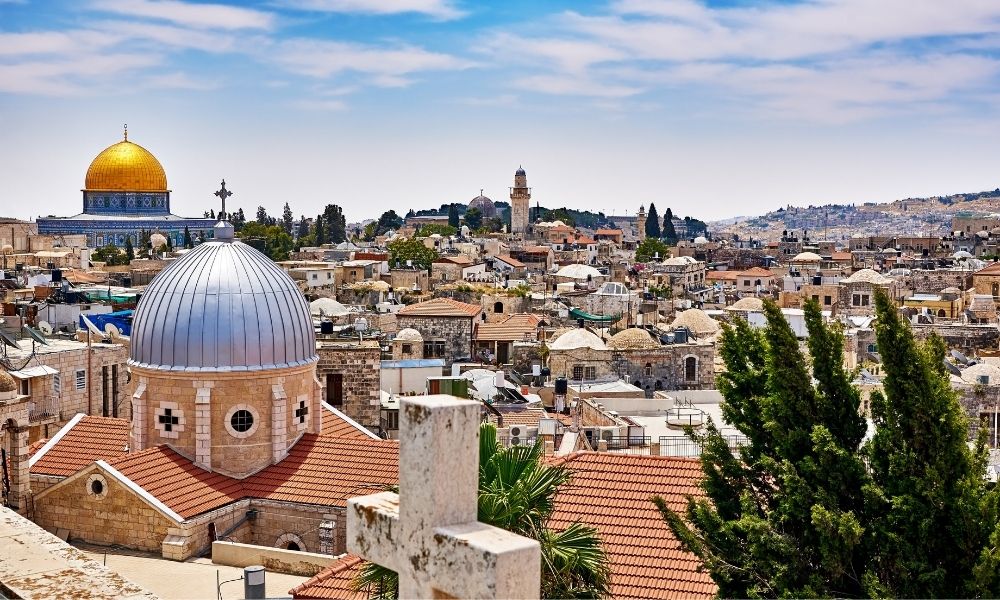
Jerusalem is the sacred city of God — the heart of biblical history, prophecy, and redemption. Chosen by the Lord as His dwelling place, it stands as the spiritual center of Judaism, Christianity, and Islam. From the days of Abraham and Melchizedek to the reign of King David, the ministry of Jesus Christ, and the future New Jerusalem of Revelation, this city embodies both the pain and promise of God’s covenant with humanity.
Quick Facts
Name: Jerusalem (Yerushalayim)
Meaning: “City of Peace”
Other Names: Salem, Zion, City of David, Holy City
Founded: c. 3000 BCE (as Jebusite stronghold)
Location: Central mountain region of Judea, between the Mediterranean Sea and the Dead Sea
Tribe / Territory: Judah and Benjamin
First Mention: Genesis 14:18 (as “Salem”)
Chosen By: King David (2 Samuel 5:6–9)
Temple Built By: King Solomon (1 Kings 6–8)
Destroyed: By Babylonians (586 BCE) and Romans (70 CE)
Modern Status: Capital of Israel; home to the Western Wall, Church of the Holy Sepulchre, and Al-Aqsa Mosque
Religious Importance: Sacred to Jews, Christians, and Muslims
Name Meaning
Jerusalem (Hebrew: Yerushalayim) means “Foundation of Peace” or “City of Peace.”
The name is derived from Yeru (“foundation” or “establishment”) and Shalom (“peace”). Despite centuries of war and turmoil, its true destiny is to become the eternal city of peace under the reign of the Messiah.
Scriptural Insight: “At that time they shall call Jerusalem ‘The Throne of the Lord,’ and all the nations shall be gathered to it.” — Jeremiah 3:17
Lineage / Historical Background
Jerusalem began as a Canaanite (Jebusite) fortress known as Jebus. It was situated on Mount Moriah — the same mountain where Abraham offered Isaac (Genesis 22). Around 1000 BCE, King David captured the city and made it his capital, renaming it the City of David. From then on, it became the spiritual and political heart of Israel.
His son, King Solomon, built the magnificent First Temple, establishing Jerusalem as the dwelling place of God’s presence on earth. Throughout the centuries, it was destroyed and rebuilt multiple times but always retained its identity as God’s chosen city.
Biblical Era / Timeline
| Period | Key Events |
|---|---|
| c. 2000 BCE | Abraham meets Melchizedek, king of Salem (Genesis 14:18–20) |
| c. 1000 BCE | King David conquers Jebus; establishes it as Israel’s capital (2 Samuel 5) |
| c. 950 BCE | Solomon builds the First Temple (1 Kings 6–8) |
| 586 BCE | Babylonians destroy Jerusalem and the Temple; people exiled |
| 516 BCE | Second Temple completed under Zerubbabel |
| 332 BCE | Conquered by Alexander the Great |
| 63 BCE | Rome occupies the city |
| 30–33 CE | Jesus crucified and resurrected in Jerusalem |
| 70 CE | Second Temple destroyed by Romans |
| 1948 CE | Modern State of Israel established |
| 1967 CE | Jerusalem reunified under Israeli control |
| Prophetic Future: The New Jerusalem descends from heaven (Revelation 21:2) |
Major Roles / Identity
- City of God’s Presence: Chosen dwelling of the Lord (Psalm 132:13–14)
- City of David: Political and spiritual capital of Israel (2 Samuel 5:7)
- Center of Worship: Site of the Holy Temple and priestly sacrifices (1 Kings 8)
- City of the Messiah: Where Jesus was crucified, resurrected, and ascended (Luke 24)
- Prophetic Symbol: Represents the future eternal Kingdom of God (Revelation 21–22)
Key Character Traits
| Aspect | Description |
|---|---|
| Divine Selection | Chosen uniquely by God (1 Kings 11:36) |
| Covenant Identity | Center of the Abrahamic and Davidic promises |
| Spiritual Significance | Symbol of holiness, worship, and redemption |
| Enduring Strength | Survived countless invasions and exiles |
| Prophetic Destiny | Future seat of Christ’s millennial reign and eternal kingdom |
Main Biblical Events
- Abraham and Melchizedek: Meeting with the king-priest of Salem (Genesis 14:18–20)
- David’s Conquest: Captures Jebus and brings the Ark of the Covenant to Jerusalem (2 Samuel 6)
- Solomon’s Temple: God’s glory fills the Temple (1 Kings 8:10–11)
- Exile and Return: The city destroyed and rebuilt under Nehemiah (Nehemiah 2–6)
- Jesus’ Ministry:
- Pentecost: Holy Spirit descends in Jerusalem (Acts 2)
- Prophetic Vision: New Jerusalem descending from heaven (Revelation 21:1–4)
Symbolism and Typology
- Zion: Spiritual representation of God’s eternal kingdom (Psalm 125:1).
- Mount Moriah: Site of Abraham’s faith and the future Temple — symbol of sacrifice and redemption (Genesis 22).
- City of David: Symbol of God’s covenant and kingship through David’s line (2 Samuel 7:16).
- New Jerusalem: Symbol of eternal life, restoration, and God dwelling with His people (Revelation 21:2–3).
“For out of Zion shall go forth the law, and the word of the Lord from Jerusalem.” — Isaiah 2:3
Legacy & Impact
Jerusalem’s story weaves through every part of Scripture — from Genesis to Revelation. It has been destroyed, rebuilt, mourned, and celebrated, yet it remains a living testimony of God’s unshakable covenant and faithfulness.
In the Christian faith, it represents both the site of Christ’s sacrifice and the promise of eternal peace in the heavenly New Jerusalem.
In Judaism, it is the eternal city of David and the longing of every Jewish heart in exile.
In Islam, it is the site of the Prophet’s ascension and the third holiest city.
“Pray for the peace of Jerusalem: ‘May they prosper who love you.’” — Psalm 122:6
Prophetic Fulfillment and the New Jerusalem
The Book of Revelation presents Jerusalem renewed — not as a city of stone, but of glory:
“Then I saw the Holy City, the New Jerusalem, coming down out of heaven from God, prepared as a bride adorned for her husband.” — Revelation 21:2
This New Jerusalem is the eternal dwelling of God with His redeemed people — where there will be no more death, sorrow, or pain (Revelation 21:4).
Summary
Jerusalem is the City of God — the heart of His covenant, the site of His Son’s sacrifice, and the throne of His eternal reign.
Though it has known suffering, it will one day know perfect peace.
It stands as a symbol of God’s faithfulness, His presence, and His everlasting promise of restoration.





Leave a Reply