
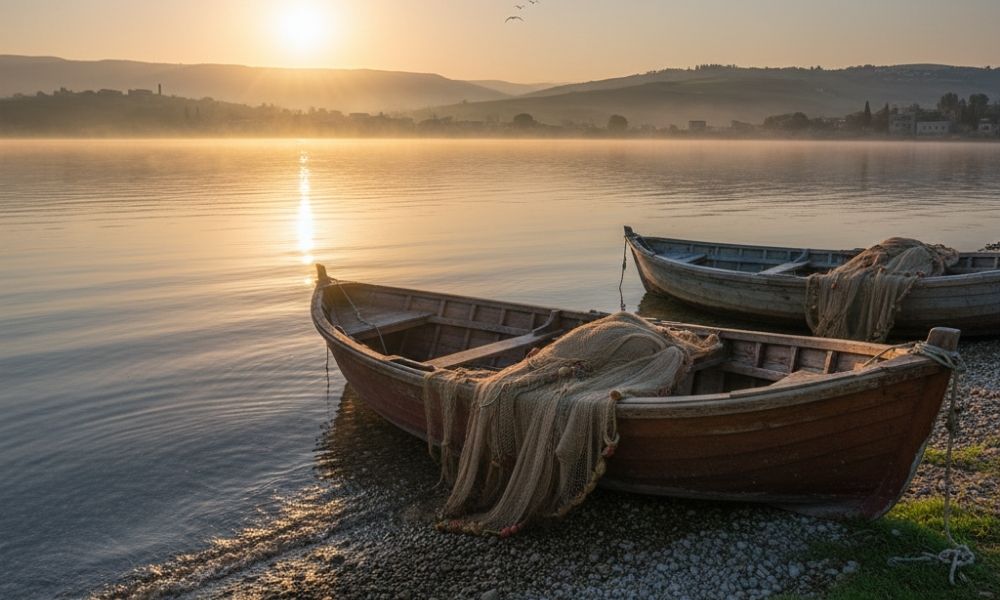
The Sea of Galilee is a freshwater lake in northern Israel, rich in biblical history and central to the life and ministry of Jesus Christ. Also known as the Lake of Gennesaret or the Sea of Tiberias, it served as the setting for many of Jesus’ miracles, teachings, and moments of deep faith. Its calm beauty and surrounding hills made it both a place of livelihood for fishermen and a living classroom where the Messiah revealed God’s power and compassion.
Quick Facts
Name: Sea of Galilee (also called Lake Gennesaret or Sea of Tiberias)
Hebrew Name: Kinneret (from kinnor, meaning “harp,” describing its shape)
Location: Northern Israel, in the Jordan Rift Valley
Type: Freshwater lake
Dimensions: About 13 miles (21 km) long, 8 miles (13 km) wide, and 686 feet (209 m) below sea level
Inflow/Outflow: Jordan River
Major Towns: Capernaum, Bethsaida, Magdala, Tiberias
Main Biblical Events: Jesus calls His disciples, calms the storm, walks on water, and performs miraculous feedings
Modern Name: Lake Kinneret
Biblical Era / Timeline
- Old Testament References: The lake is known as Kinneret (Numbers 34:11; Deuteronomy 3:17), marking part of Israel’s northern boundary.
- New Testament Period: During the time of Jesus (1st century CE), the lake’s shoreline was dotted with thriving fishing villages like Capernaum and Bethsaida.
- Roman Period: The city of Tiberias was founded by Herod Antipas (c. 20 CE) and became an important regional center.
Major Biblical Events
1. Calling of the First Disciples
Jesus called fishermen — Peter, Andrew, James, and John — from the Sea of Galilee to follow Him, saying, “Follow Me, and I will make you fishers of men” (Matthew 4:18–22).
2. Calming the Storm
When a violent storm arose, Jesus rebuked the wind and waves, saying, “Peace, be still!” and the sea became calm (Mark 4:35–41). This miracle demonstrated His divine authority over creation.
3. Walking on Water
Jesus walked on the lake toward His disciples’ boat, and Peter, stepping out in faith, briefly walked toward Him before sinking (Matthew 14:22–33).
4. Miraculous Catch of Fish
After an unfruitful night, Jesus told the disciples to cast their nets again — and they caught so many fish that the nets nearly broke (Luke 5:1–11; John 21:1–14).
5. Feeding of the 5,000
Near the northeastern shore, Jesus multiplied five loaves and two fish to feed a vast crowd (Matthew 14:13–21).
Key Figures Associated
- Jesus Christ – Taught, healed, and performed miracles along its shores.
- Peter, Andrew, James, John – Fishermen called to be disciples.
- Mary Magdalene – From the nearby town of Magdala.
- Crowds and Followers – Gathered to hear Jesus preach from a boat or hillside near the lake.
Symbolism / Theological Meaning
The Sea of Galilee symbolizes faith, divine provision, and spiritual calling. The calm and stormy waters alike reveal Christ’s power to bring peace amid chaos and to transform ordinary lives into instruments of His Kingdom. It represents the meeting place between the divine and the human, where God’s Word was proclaimed and faith was tested.
Modern Relevance
Today, the Sea of Galilee (Lake Kinneret) remains a vital source of water for Israel and a major pilgrimage site for Christians. Visitors walk where Jesus walked — at Capernaum, Tabgha, and the Mount of Beatitudes — reliving the moments that shaped the Gospel story. The tranquil lake continues to inspire reflection, faith, and devotion for believers worldwide.







Leave a Reply