
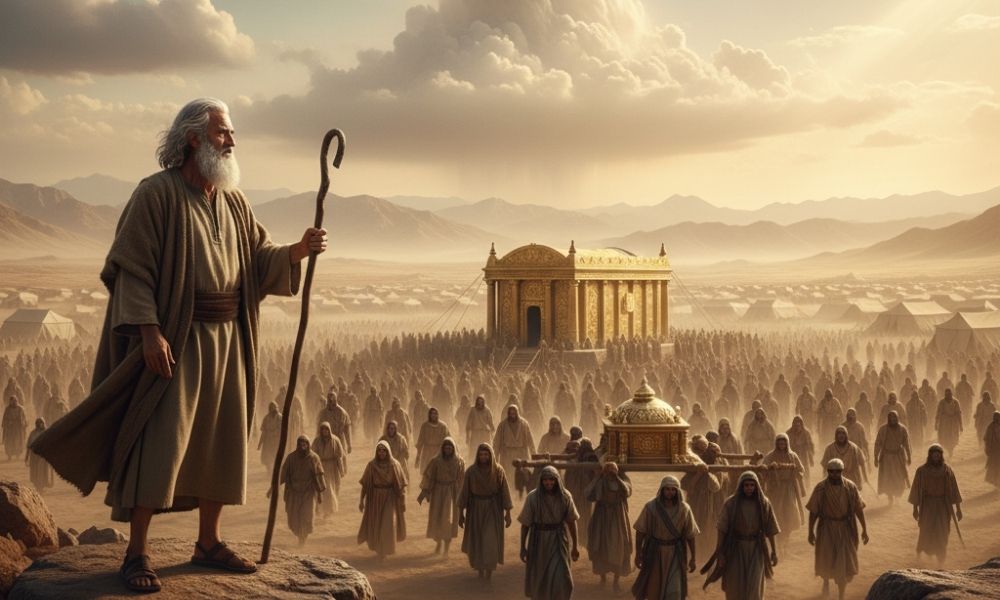
The Book of Numbers is the fourth book of the Bible and the Torah (Pentateuch), traditionally written by Moses under divine inspiration. It serves as both a historical record and a spiritual narrative of Israel’s journey from Mount Sinai to the plains of Moab, on the border of the Promised Land.
The name “Numbers” reflects the two censuses taken at the beginning and end of the book, symbolizing the transition from the first generation that left Egypt (who perished in the wilderness due to unbelief) to the new generation prepared to enter Canaan.
But more than a book of statistics, Numbers is a chronicle of faith and failure, discipline and mercy, and the enduring faithfulness of God in the face of human rebellion.
Quick Facts
Hebrew Title: Bemidbar (בְּמִדְבַּר) — “In the Wilderness”
Greek Title: Arithmoi — “Numbers” (from the Septuagint)
Author: Moses (traditional view; Numbers 33:2; cf. John 5:46–47)
Date Written: c. 1440–1400 BCE (traditional dating)
Time Period Covered: Approximately 40 years
Setting: From Mount Sinai to the plains of Moab (east of the Jordan River)
Chapters: 36
Book Order: 4th of the Pentateuch (after Leviticus, before Deuteronomy)
Main Theme: God’s faithfulness and guidance amidst the faithlessness and rebellion of His people
Key Verses:
- Numbers 6:24–26 — The Priestly Blessing
- Numbers 14:18–19 — God’s mercy in judgment
- Numbers 23:19 — “God is not a man, that He should lie.”
Meaning and Purpose
“Numbers” represents the organization, discipline, and divine order of God’s people. The Hebrew title “Bemidbar” (“In the Wilderness”) captures the essence of the book’s spiritual message — it is in the wilderness that God tests, trains, and prepares His people for the inheritance of promise.
The book reveals that while Israel was often faithless, God remained faithful to His covenant. It demonstrates that the journey to promise is not just geographical but spiritual — requiring trust, obedience, and perseverance.
Historical and Spiritual Context
After receiving the Law at Mount Sinai (Leviticus), Israel is now called to journey toward the land promised to Abraham. Yet, the nation’s lack of faith leads to repeated rebellion, divine discipline, and forty years of wandering until a new generation arises.
Numbers bridges the redemption from Egypt (Exodus) and the renewal of the covenant before entering Canaan (Deuteronomy) — a vital link in Israel’s redemptive history and a picture of the Christian life: saved from bondage, but tested before entering rest.
Major Themes
- God’s Faithfulness and Holiness
- God fulfills His promises despite human failure.
- His holiness requires obedience and purity in worship and community life.
- Rebellion and Consequences
- Murmuring, unbelief, and defiance bring judgment.
- Yet divine mercy continually restores the repentant.
- Leadership and Authority
- The Wilderness as Testing
- The desert becomes a refining furnace of faith.
- God provides manna, water, and victory — teaching total dependence on Him.
- Transition and Renewal
- The old generation dies in unbelief.
- A new generation rises, renewed in faith and ready to inherit God’s promises.
Detailed Outline
I. Preparation at Mount Sinai (Chapters 1–10)
- Census and Organization of the Tribes (Ch. 1–4)
The tribes are numbered and arranged around the Tabernacle. Levites are set apart for priestly service. - Purity, Offerings, and Dedication (Ch. 5–8)
Laws of purity, restitution, the Nazirite vow, and dedication of the Tabernacle. - The Priestly Blessing (6:24–26) — “The Lord bless you and keep you…”
- The Cloud and Trumpets (Ch. 9–10)
God leads Israel by the cloud; silver trumpets guide their movement.
II. Journey from Sinai to Kadesh-Barnea (Chapters 11–12)
- Complaints about food (manna and quail incident).
- Miriam and Aaron’s jealousy toward Moses; God defends His servant.
III. The Crisis at Kadesh-Barnea (Chapters 13–19)
- The Twelve Spies sent into Canaan. Ten bring a fearful report; only Joshua and Caleb trust God.
- Judgment: Forty years of wandering decreed — one year for each day the spies explored the land.
- Korah’s Rebellion (Ch. 16): Levites challenge Moses’ leadership; the earth swallows the rebels.
- Aaron’s Rod Blossoms (Ch. 17): A sign of divine approval.
- Water of Purification (Red Heifer) (Ch. 19): Symbol of cleansing from sin and death.
IV. Journey from Kadesh to the Plains of Moab (Chapters 20–21)
- Death of Miriam; Moses sins by striking the rock instead of speaking to it — barred from entering Canaan.
- Death of Aaron on Mount Hor.
- The Bronze Serpent (21:4–9): Healing through faith — later symbolic of Christ lifted up on the cross (John 3:14–15).
- Victory over Canaanite kings east of the Jordan.
V. On the Plains of Moab (Chapters 22–36)
- Balaam and Balak (Ch. 22–24): The pagan prophet attempts to curse Israel but blesses them instead.
- Prophecy of the coming Messianic King: “A star shall come out of Jacob” (24:17).
- Apostasy at Peor (Ch. 25): Israel seduced into idolatry; judgment by plague.
- Second Census (Ch. 26): A new generation counted for inheritance.
- Joshua Appointed as Moses’ successor (Ch. 27).
- Offerings, Feasts, and Vows (Ch. 28–30).
- War Against Midian (Ch. 31).
- Settlement East of Jordan (Ch. 32): Reuben, Gad, and half of Manasseh.
- Summary of Israel’s Journey (Ch. 33).
- Boundaries and Cities of Refuge (Ch. 34–35).
- Inheritance Laws (Ch. 36): Zelophehad’s daughters — fairness in God’s covenant community.
Key Characters
- Moses — Faithful servant and mediator between God and Israel.
- Aaron — High priest; a figure of Christ’s priesthood.
- Miriam — Prophetess and leader among the women.
- Joshua & Caleb — Examples of steadfast faith.
- Korah, Dathan, Abiram — Rebels against divine order.
- Balaam — Pagan prophet compelled by God to speak truth.
- Eleazar — Successor of Aaron as high priest.
Notable Events and Passages
- The Priestly Blessing (6:24–26): God’s promise of protection, grace, and peace.
- The Bronze Serpent (21:4–9): Foreshadowing salvation through Christ.
- Korah’s Rebellion (16): Judgment on those who oppose divine leadership.
- Balaam’s Oracles (22–24): Prophetic blessings upon Israel.
- The Census and Inheritance Laws (1, 26, 36): Order, justice, and faithfulness in God’s covenant community.
Christ in the Book of Numbers
- The Bronze Serpent — A type of Christ lifted up for salvation (John 3:14–15).
- Manna and Water from the Rock — Christ as the Bread of Life and Living Water (John 6:35; 1 Corinthians 10:4).
- The High Priest and Sacrifices — Prefigure the intercession and atonement of Christ.
- The Star from Jacob (24:17) — A prophecy fulfilled in Jesus the Messiah.
Spiritual Lessons
- Faith must rest on God’s word, not human perception.
- Grumbling and unbelief rob believers of blessing.
- God disciplines not to destroy, but to prepare.
- Leadership requires humility, faithfulness, and accountability.
- God’s promises are sure, even when delayed by human failure.
- The wilderness is God’s classroom for holiness and trust.
Legacy and Theological Significance
- Numbers reveals God’s covenant faithfulness amid human unfaithfulness.
- It warns against spiritual rebellion (1 Corinthians 10:1–13; Hebrews 3–4).
- It calls believers to trust, obedience, and perseverance on the journey to God’s promises.
- It shows that God’s plan never fails — a new generation always arises to carry His mission forward.
Symbolism and Typology
| Symbol / Event | Spiritual Meaning / Fulfillment |
|---|---|
| Manna | Christ, the Bread of Life (John 6:31–35) |
| Bronze Serpent | Salvation through faith in Christ (John 3:14–15) |
| Water from the Rock | Christ, the Living Water (1 Cor. 10:4) |
| The Wilderness | The believer’s journey of testing and sanctification |
| Promised Land | Eternal rest and fulfillment in Christ |
| Aaron’s Rod | God’s chosen authority and resurrection power |







Leave a Reply