
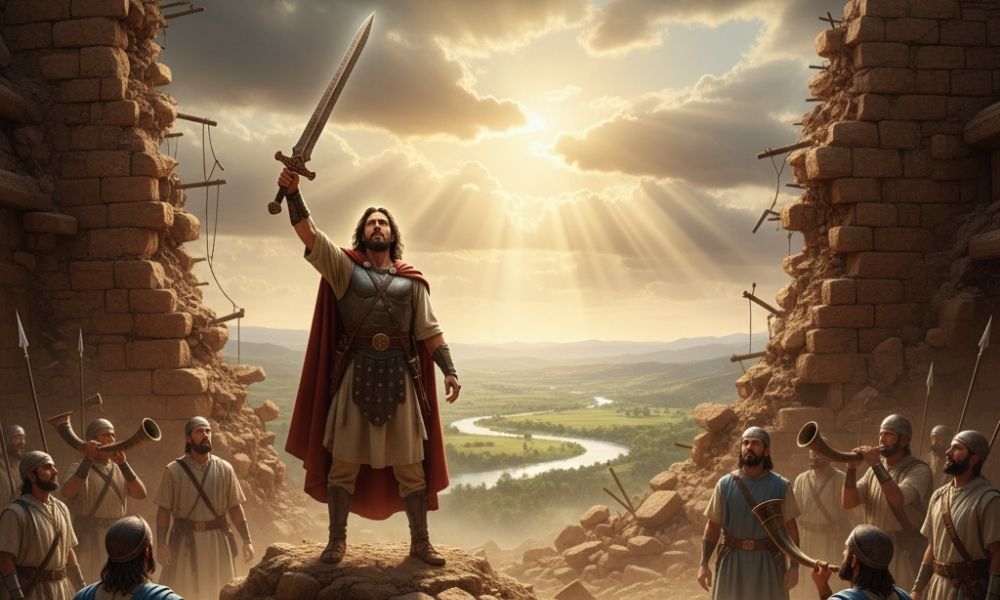
Joshua, son of Nun, was a mighty warrior, faithful servant, and successor to Moses who led the Israelites into the Promised Land. Chosen by God for his courage and obedience, Joshua guided Israel with strength and faith, conquering Canaan and establishing the nation in their inheritance. His life exemplifies steadfast trust in God’s promises and the power of courageous leadership grounded in faith.
Quick Facts
Name: Joshua (Hebrew: Yehoshua, meaning “Yahweh is salvation”)
Tribe: Ephraim
Father: Nun
Occupation: Military leader, Moses’ assistant, later national leader
Era: Late Bronze Age (~15th–13th century BCE)
Known For: Leading Israel into Canaan; conquering Jericho; strong faith and obedience
Key Verses: Joshua 1:1–9; Joshua 6; Numbers 13–14
Symbol: The victorious faith of God’s people under divine leadership
Name Meaning
“Joshua” (Yehoshua) means “Yahweh is salvation,” a prophetic name foreshadowing his mission to lead Israel into their promised rest. In Greek, the name becomes “Iesous” (Jesus) — revealing Joshua as a type or foreshadowing of Christ, who brings His people into the ultimate Promised Land of salvation.
Lineage / Family Background
- Tribe: Ephraim (one of Joseph’s sons)
- Father: Nun
- Origin: Born in Egypt during Israel’s slavery
- Mentor: Moses — Joshua served as his assistant and later succeeded him
Biblical Era / Timeline
- Period: From the Exodus to the early settlement of Canaan
- Context: God appointed Joshua to lead Israel after Moses’ death, guiding the conquest and division of the Promised Land.
Major Roles / Identity
- Servant and Successor to Moses (Exodus 24:13; Numbers 27:18–23):
Chosen to continue Moses’ mission and lead God’s people. - Faithful Spy (Numbers 13–14):
Alongside Caleb, Joshua trusted God’s promise to give Israel the land despite the fear of the other spies. - Military Commander (Exodus 17:9–14; Joshua 6–12):
Led Israel to victory in battles such as Jericho, Ai, and Gibeon, showing courage and strategic wisdom. - Covenant Keeper (Joshua 24):
Renewed Israel’s covenant with God, urging faithfulness:
“As for me and my house, we will serve the Lord.” (Joshua 24:15)
Key Character Traits
Strengths:
- Faithful obedience to God’s commands
- Courage in battle and leadership
- Humility as Moses’ servant
- Dependence on God’s presence
Weaknesses:
- None significantly recorded; minor oversight with the Gibeonite deception (Joshua 9).
Main Life Events
- Assistant to Moses: Fought Amalek under Moses’ direction (Exodus 17).
- Spying the Land: One of the twelve spies; stood with Caleb in faith (Numbers 14).
- Commissioned as Leader: God appoints Joshua to lead Israel after Moses’ death (Deuteronomy 31:7–8).
- Crossing the Jordan: Led Israel miraculously through the Jordan River (Joshua 3–4).
- Battle of Jericho: Obeyed God’s command to march around Jericho; walls fell (Joshua 6).
- Conquests of Canaan: Defeated numerous kings and divided the land among tribes (Joshua 10–12).
- Covenant Renewal at Shechem: Final exhortation to Israel before his death (Joshua 24).
Major Relationships
- Moses: Mentor and predecessor
- Caleb: Faithful comrade from the spy mission
- The Israelites: His people and followers
- God: His commander and source of victory
Notable Stories / Passages
- The Fall of Jericho (Joshua 6) — God gives victory through obedience and faith.
- The Sun Stands Still (Joshua 10:12–14) — God miraculously aids Israel in battle.
- Joshua’s Charge (Joshua 1:6–9) — “Be strong and courageous.”
- Covenant at Shechem (Joshua 24:14–24) — Joshua’s final call to serve God faithfully.
Legacy & Impact
- Led Israel into the Promised Land, fulfilling God’s covenant to Abraham.
- Set the example of faith-based leadership and obedience.
- Symbol of Christ as the greater Joshua who brings salvation and spiritual rest.
- Remembered as a man who never turned aside from God’s commands.
“Israel served the Lord all the days of Joshua.” — Joshua 24:31
Symbolism / Typology
- Type of Christ: Joshua’s name and mission prefigure Jesus, who leads believers into eternal rest.
- Faithful Leadership: Represents divine strength working through human obedience.
- Victory through Faith: His life illustrates that success comes from reliance on God, not human power.
Extra-Biblical / Cultural Notes
- The Book of Joshua is the first of the Historical Books in the Old Testament, bridging the Torah and Israel’s national history.
- Joshua is commemorated in Jewish, Christian, and Islamic traditions as a model of courage and obedience.
Summary
Joshua was a fearless and faithful leader who trusted God completely, led Israel into the Promised Land, and exemplified strength, obedience, and devotion — a man who lived out the command, “Be strong and courageous.”







Leave a Reply