
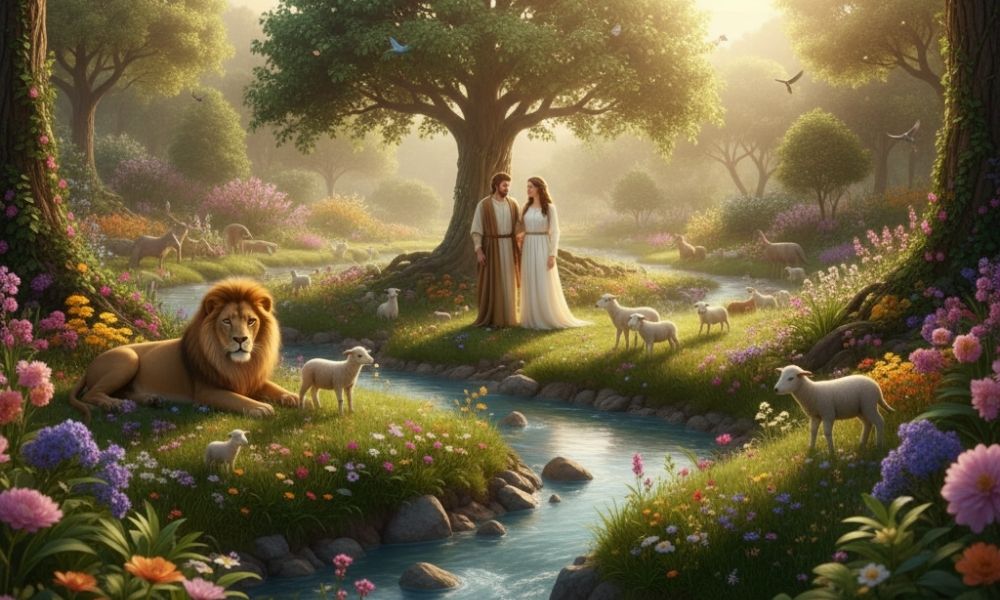
The Garden of Eden marks the dawn of human history and the setting of God’s perfect creation before the fall. It was a paradise where Adam and Eve lived in direct fellowship with God, surrounded by beauty, provision, and peace. The events that took place in the Garden — creation, temptation, and the fall — shaped the course of humanity, introducing sin, death, and the need for redemption through Jesus Christ.
Quick Facts
Event Name: The Garden of Eden (Creation and the Fall)
Location: Eastern region of Eden (exact place unknown; possibly in Mesopotamia)
Key Figures: God (the Creator), Adam, Eve, the Serpent (Satan)
Biblical Reference: Genesis 2–3
Setting: A lush, perfect garden planted by God Himself
Purpose: To establish humanity’s relationship with God, creation, and one another
Outcome: The introduction of sin and the loss of paradise
Symbolism: Innocence, temptation, the fall, and God’s promise of redemption
Meaning of “Eden”
“Eden” in Hebrew (ʿēḏen) means “delight” or “pleasure.” It represents the original state of joy and harmony between God and humanity before sin entered the world.
Biblical Era / Timeline
Era: The dawn of creation (Pre-flood era, Genesis 1–3)
Context: The world’s beginning; God creates the heavens, earth, and all life. Humanity is made in God’s image and placed in a perfect environment to live in obedience and fellowship with Him.
Major Events in the Garden
1. The Creation of Man and Woman (Genesis 2:7, 21–25)
- God formed Adam from the dust and breathed into him the breath of life.
- God placed Adam in the Garden “to work it and take care of it.”
- Seeing Adam’s need for companionship, God created Eve from his rib — the first woman and partner, symbolizing unity and equality.
2. The Garden’s Perfection
- Eden was filled with every tree “pleasing to the eye and good for food.”
- Two special trees stood in the garden:
- The Tree of Life, representing eternal life.
- The Tree of the Knowledge of Good and Evil, symbolizing moral choice and obedience.
- Adam and Eve lived without shame, fear, or sin — walking in fellowship with God.
3. The Command (Genesis 2:16–17)
God gave a single command:
“You may freely eat of every tree in the garden, but of the tree of the knowledge of good and evil you shall not eat, for when you eat of it you shall surely die.”
This command tested humanity’s trust, obedience, and love toward their Creator.
4. The Temptation and the Fall (Genesis 3:1–6)
- The Serpent (Satan) deceived Eve by questioning God’s word and goodness.
- Eve ate the forbidden fruit and gave some to Adam, who also ate.
- Their eyes were opened; they became aware of their nakedness and felt shame — the moment of the Fall.
5. The Judgment (Genesis 3:14–19)
God confronted Adam and Eve, and consequences followed:
- Serpent: Cursed to crawl and eat dust; enmity between his offspring and the woman’s.
- Eve: Pain in childbirth; struggle for authority in marriage.
- Adam: Toil and hardship in labor; the ground cursed.
- Both: Expelled from Eden; separation from God and loss of immortality.
Yet amid judgment, God gave a promise of redemption — the first prophecy of Christ (Genesis 3:15):
“He will crush your head, and you will strike His heel.”
6. The Expulsion (Genesis 3:22–24)
- God clothed Adam and Eve with garments of animal skin — symbolizing the first sacrifice for sin.
- They were driven out of Eden, and cherubim with a flaming sword guarded the way to the Tree of Life.
Symbolism & Theological Significance
| Symbol | Meaning |
|---|---|
| Tree of Life | Eternal life and communion with God |
| Tree of Knowledge | Free will and moral responsibility |
| Serpent | Satan, the deceiver and adversary |
| Fruit | Temptation and disobedience |
| Garments of Skin | God’s mercy and foreshadowing of sacrificial atonement |
| Expulsion | The consequence of sin and the beginning of God’s redemptive plan |
Key Lessons
- God desires relationship, not forced obedience.
- Sin begins with doubt in God’s goodness and leads to disobedience.
- Choices have consequences — spiritual, moral, and physical.
- God’s mercy remains, even in judgment.
- The promise of redemption through Christ began here — the “Protoevangelium” (Genesis 3:15).
Legacy & Impact
- Marks the origin of sin, human suffering, and death (Romans 5:12).
- Explains humanity’s spiritual separation from God.
- Foreshadows the need for a Savior, fulfilled in Jesus Christ — the “Second Adam” (1 Corinthians 15:22).
- Serves as a foundation for understanding free will, temptation, grace, and salvation.
- The restoration of Eden’s perfection is seen in Revelation 22, where the Tree of Life reappears in the New Jerusalem — paradise regained.







Leave a Reply