
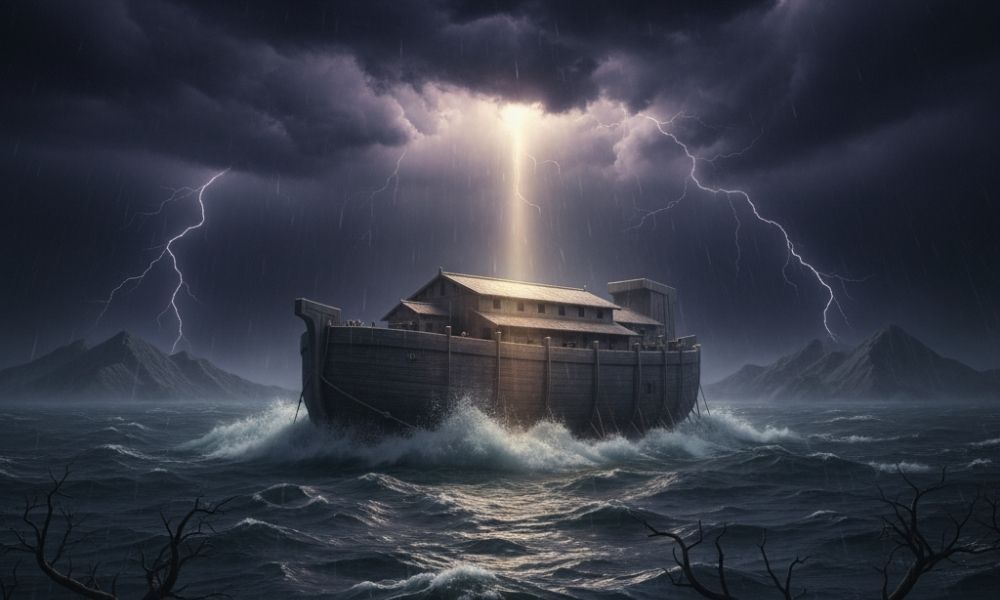
The Great Flood stands as one of the most powerful and sobering events in all of Scripture — a moment when God, grieved by humanity’s corruption, cleansed the earth of sin through the waters of judgment. Yet amid destruction, the Flood also reveals God’s mercy and faithfulness, as Noah, his family, and every living kind preserved in the ark became the foundation of a renewed world.
Quick Facts
Event Name: The Great Flood
Location: The entire earth (Genesis 7–8)
Key Figures: God, Noah, Noah’s family (his wife, Shem, Ham, Japheth, and their wives)
Cause: Humanity’s overwhelming wickedness and violence (Genesis 6:5–13)
Duration: Rain for 40 days and nights; waters prevailed 150 days; total event lasted about one year
Consequence: Global destruction of life outside the ark; renewal of creation through Noah
Key Scripture: Genesis 7:23 — “Only Noah was left, and those that were with him in the ark.”
Symbolism: Judgment, cleansing, grace, and new beginnings
Meaning of the Event
The Flood was not merely an act of wrath, but a divine reset — a cleansing of a world overwhelmed by sin and rebellion. Through the waters, God both judged the wicked and saved the faithful, setting a pattern of judgment through water, and salvation through faith. The Flood foreshadows baptism and the new life that comes from trusting in God’s provision.
Biblical Era / Timeline
Era: Antediluvian to Post-Flood transition
Context: After centuries of moral decay, violence, and idolatry, God determined to destroy all living things by a great Flood. Only Noah found grace in God’s eyes and was chosen to preserve life and restart creation.
The Story
1. The Flood Begins (Genesis 7:11–12)
“On that day all the fountains of the great deep burst forth, and the windows of heaven were opened.”
After Noah and his family entered the ark with all living creatures, rain fell for forty days and nights. Waters from both the sky and the deep earth flooded the land, covering even the highest mountains.
2. The Judgment (Genesis 7:17–24)
The Floodwaters rose until every living thing outside the ark perished — man, beast, bird, and creeping thing. The entire earth was submerged for 150 days. God’s judgment was total, fulfilling His word that sin brings death and destruction.
3. The Ark’s Preservation (Genesis 7:16)
“Then the LORD shut him in.”
God Himself sealed the ark, protecting Noah and all inside. This act of divine sealing symbolizes the security of salvation — those in God’s care are kept safe from judgment.
4. The Waters Recede (Genesis 8:1–5)
“But God remembered Noah.”
After many months, the waters began to subside. The ark rested on the mountains of Ararat, and dry land slowly appeared. This phrase — “God remembered Noah” — is a turning point, revealing His steadfast mercy and covenant faithfulness.
5. The Dove and the Olive Leaf (Genesis 8:6–12)
Noah sent out a raven and then a dove to see if the waters had receded. The dove returned with a fresh olive leaf, a symbol of peace, renewal, and reconciliation between God and creation.
6. The New Beginning (Genesis 8:15–19)
When the earth was dry, God commanded Noah to leave the ark and repopulate the world. Humanity received a new start — a rebirth of creation purified through the waters of judgment.
7. The Sacrifice and Covenant (Genesis 8:20–22)
Noah built an altar and offered burnt offerings in thanksgiving. The LORD accepted the sacrifice and promised:
“Never again will I curse the ground because of man… nor will I ever again destroy all living creatures as I have done.”
This covenant of grace set the stage for God’s enduring mercy and the rainbow promise that followed.
Symbolism & Meaning
| Symbol | Meaning |
|---|---|
| The Floodwaters | God’s judgment and cleansing power |
| The Ark | Salvation through faith and obedience |
| The Dove and Olive Leaf | Peace, renewal, and hope |
| Forty Days | Testing, purification, and transformation |
| Rainbow (in the next event) | God’s covenant promise of mercy |
Theological Significance
- Judgment and Mercy: The Flood demonstrates God’s holiness and justice but also His saving grace.
- Faith as Salvation: Noah’s obedience and trust exemplify how faith leads to deliverance (Hebrews 11:7).
- New Creation: The world after the Flood parallels a spiritual rebirth — the old world of sin destroyed, the new one emerging.
- Foreshadow of Baptism: The Flood prefigures the washing away of sin through baptism (1 Peter 3:20–21).
- God’s Faithfulness: Even in wrath, God “remembers” His people and fulfills His promises.
Key Lessons
- God’s patience has limits; His justice is sure.
- Faith acts before seeing — Noah built before the rain fell.
- Obedience brings preservation and peace.
- Even in judgment, God provides a way of salvation.
- Renewal follows repentance; mercy follows obedience.
Legacy & Impact
- The Great Flood reset human history and stands as a warning against sin’s corruption.
- Noah became the father of a renewed humanity, continuing God’s plan of redemption.
- The event established the pattern of covenant relationship that would shape all Scripture.
- It reminds believers today that God judges sin but delights in mercy — and that salvation is always found in His provision, not human strength.







Leave a Reply