
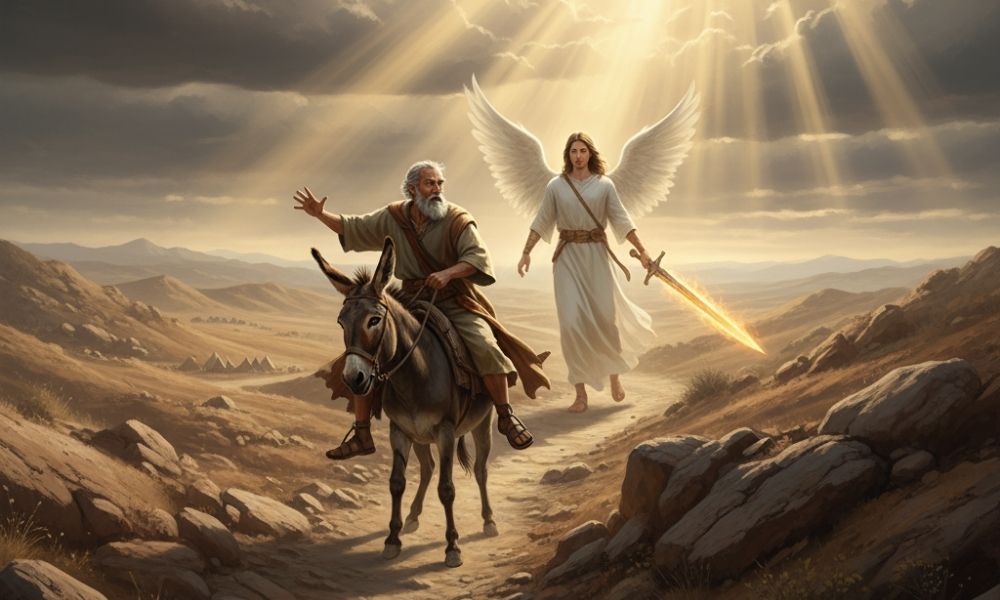
Balaam is a complex and controversial figure in the Bible — a non-Israelite prophet or diviner known for his encounters with God and his talking donkey. Though he initially blesses Israel as God commands, his later actions reveal greed and spiritual compromise. Balaam’s story serves as a warning about the dangers of loving reward over righteousness.
Quick Facts
Name: Balaam (Hebrew: Bilʿam, possibly meaning “devourer” or “not of the people”)
Occupation: Prophet / Diviner (non-Israelite)
Origin: From Pethor, near the Euphrates River (Numbers 22:5)
Tribe/Nation: Aramean or Mesopotamian (outside Israel)
Contemporaries: Balak, king of Moab; Moses; the Israelites during their wilderness journey
Time Period: c. 13th century BCE (during Israel’s wilderness wanderings)
Main Setting: Moab, on the way to Canaan
Key Scriptures: Numbers 22–24; Numbers 31:16; Deuteronomy 23:4–5; 2 Peter 2:15; Jude 11; Revelation 2:14
Symbol: The talking donkey — a symbol of divine intervention and rebuke
Name Meaning
“Balaam” may mean “devourer” or “not of the people,” reflecting both his powerful spiritual influence and his outsider status among Israel.
Lineage / Background
Balaam was the son of Beor, a known soothsayer or diviner (Numbers 22:5).
He lived in Pethor, a city near the Euphrates River, far from Israelite territory — indicating he was likely from Mesopotamia. Despite being a pagan prophet, Balaam had genuine communication with the true God (Yahweh), which makes his story both mysterious and tragic.
Biblical Era / Timeline
Era: The wilderness period after the Exodus, before Israel entered the Promised Land (Numbers 22–24).
Context: The Israelites were camped on the plains of Moab, east of the Jordan River, near Jericho. Their victories over neighboring nations terrified the Moabites. King Balak of Moab sought Balaam’s help to curse Israel and weaken them spiritually before battle.
Major Roles / Identity
- Prophet for hire: Consulted by King Balak to curse Israel.
- Instrument of God’s message: God spoke to and through Balaam, turning intended curses into blessings.
- False teacher: Later led Israel into idolatry and immorality (Numbers 31:16; Revelation 2:14).
Key Character Traits
Strengths:
- Spiritual sensitivity — he heard and recognized the voice of God.
- Prophetic gift — he uttered true and profound blessings over Israel (Numbers 23–24).
Weaknesses:
- Greed and ambition (2 Peter 2:15).
- Moral compromise — advised Balak to entice Israel into sin (Numbers 31:16).
- Double-mindedness — sought to serve both God and personal gain.
Main Life Events
- Summoned by Balak: The Moabite king sent messengers to hire Balaam to curse Israel (Numbers 22:5–7).
- Consulted God: Balaam sought God’s will; God told him not to go or curse Israel (Numbers 22:12).
- Tempted by reward: After a second request from Balak, God allowed Balaam to go, but only to speak what He commanded (Numbers 22:20).
- The talking donkey: On the way, the Angel of the Lord blocked Balaam’s path three times. His donkey saw the angel and refused to proceed until God opened Balaam’s eyes (Numbers 22:22–35).
- Blessed Israel: Despite Balak’s repeated attempts, Balaam could only bless Israel, declaring their destiny and God’s favor (Numbers 23–24).
- Downfall: Later, Balaam counseled Balak to seduce Israel with Moabite women and idolatry, leading to divine punishment (Numbers 31:16).
- Death: Balaam was later killed when Israel defeated Midian (Numbers 31:8).
Notable Prophecies
- Blessing of Israel: “How shall I curse whom God has not cursed?” (Numbers 23:8)
- Prophecy of the Messiah: “A star shall come out of Jacob; a scepter shall rise out of Israel” (Numbers 24:17) — often interpreted as a messianic prophecy.
Legacy & Impact
- Moral warning: Balaam is remembered as a tragic example of a prophet who knew God’s truth but loved profit more than righteousness.
- New Testament references:
- 2 Peter 2:15 – Warns against following “the way of Balaam, who loved the wages of unrighteousness.”
- Jude 11 – Mentions “the error of Balaam for reward.”
- Revelation 2:14 – Condemns the “teaching of Balaam,” which led Israel to idolatry and immorality.
- Symbolism: Represents spiritual compromise, greed, and false prophecy.
Symbolism / Typology
- The Talking Donkey: Symbol of God’s sovereignty — even animals can speak truth when prophets go astray.
- The Star Prophecy (Numbers 24:17): A foreshadowing of Christ, the “bright Morning Star” (Revelation 22:16).
- Contrast to True Prophets: Unlike faithful prophets (Moses, Samuel, Elijah), Balaam sought gain rather than obedience.







Leave a Reply