
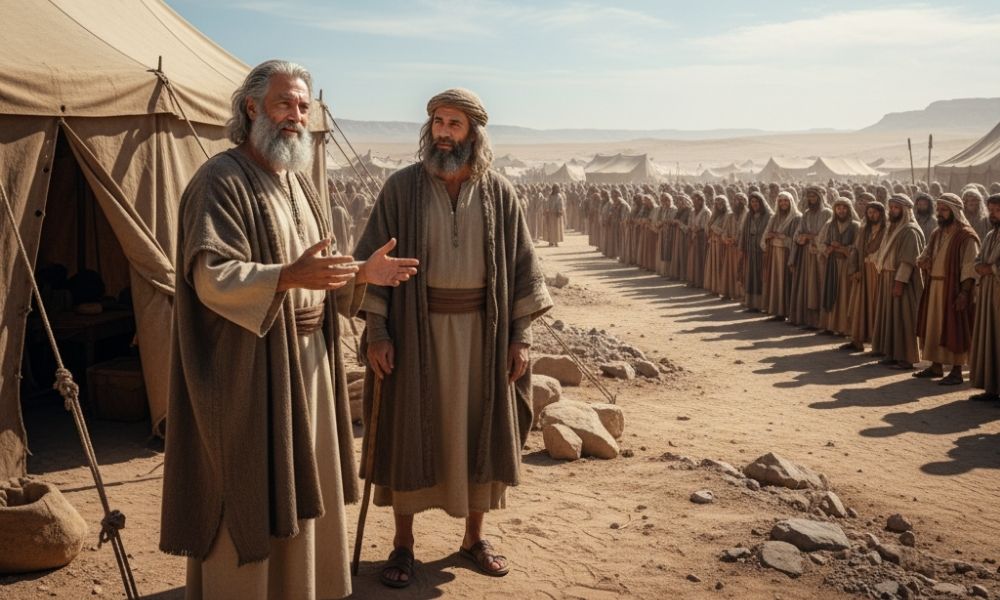
Jethro was the priest of Midian, the father-in-law of Moses, and a wise counselor who played a crucial role in Moses’ early life and leadership. Known for his hospitality, faith in God, and practical wisdom, Jethro guided Moses both personally and spiritually, modeling godly mentorship and discernment.
Quick Facts
Name: Jethro (Hebrew: Yitro, meaning “his abundance” or “his excellence”)
Also Called: Reuel (possibly a family or clan name, Exodus 2:18)
Tribe/Nation: Midianite (descendant of Abraham through Keturah, Genesis 25:1–2)
Occupation: Priest of Midian; shepherd; patriarchal leader
Family: Father of Zipporah; father-in-law of Moses; grandfather of Gershom and Eliezer
Contemporaries: Moses, Aaron, Miriam, Pharaoh
Key Scriptures: Exodus 2:15–21; Exodus 3:1; Exodus 18; Numbers 10:29–32
Symbol: Shepherd’s staff — representing guidance, counsel, and spiritual oversight
Name Meaning
“Jethro” means “his abundance” or “his excellence,” reflecting his character as a man rich in wisdom, faith, and honor.
Lineage / Family Background
Jethro was a Midianite priest, living in the land of Midian (modern-day northwest Arabia). The Midianites descended from Midian, one of Abraham’s sons through his wife Keturah (Genesis 25:2). Though outside the line of Isaac and Jacob, Jethro worshiped the true God — showing that faith in Yahweh extended beyond Israel even before the Law.
Biblical Era / Timeline
Era: Around the time of the Exodus (15th–13th century BCE).
Context: During Moses’ exile from Egypt, Jethro became his mentor and father-in-law. Later, during Israel’s wilderness journey, he offered crucial advice for effective leadership.
Major Roles / Identity
- Priest of Midian: Spiritual leader and worshiper of the true God (Exodus 18:10–12).
- Father-in-law of Moses: Welcomed Moses when he fled Egypt and gave him his daughter Zipporah in marriage (Exodus 2:21).
- Wise counselor: Guided Moses in delegating authority and organizing Israel’s leadership structure (Exodus 18:13–26).
- Witness of God’s power: Rejoiced at the deliverance of Israel and offered sacrifices to Yahweh (Exodus 18:9–12).
Key Character Traits
Strengths:
- Wise and discerning — gave practical and spiritual counsel.
- Hospitable — welcomed Moses into his family and home.
- Spiritually perceptive — recognized Yahweh’s supremacy after hearing of Israel’s deliverance.
- Humble and godly — did not seek power or recognition, but honored God.
Weaknesses:
- None explicitly recorded; portrayed positively throughout Scripture.
Main Life Events
- Meeting Moses: After Moses fled Egypt for killing an Egyptian, he arrived in Midian, defended Jethro’s daughters at a well, and was invited to stay. Jethro gave him his daughter Zipporah in marriage (Exodus 2:15–21).
- Shepherding and the Burning Bush: Moses was tending Jethro’s flock when he encountered God at the burning bush on Mount Horeb (Exodus 3:1–6).
- Visit to the Wilderness: After hearing of Israel’s deliverance, Jethro brought Zipporah and Moses’ sons to the Israelite camp, praised God, and offered sacrifices (Exodus 18:1–12).
- Wise Counsel: Seeing Moses overwhelmed with judging the people, Jethro advised him to appoint capable, God-fearing leaders over thousands, hundreds, fifties, and tens — creating a structure of shared responsibility (Exodus 18:13–26).
- Departure: After blessing Israel and Moses, Jethro returned to his own land (Exodus 18:27), leaving behind a lasting legacy of wisdom and order.
Notable Stories / Passages
- Exodus 2:16–21: Jethro (Reuel) welcomes Moses and gives him Zipporah in marriage.
- Exodus 3:1: Moses shepherds Jethro’s flocks before his divine calling.
- Exodus 18:9–12: Jethro rejoices and worships the God of Israel after hearing of the Exodus.
- Exodus 18:13–26: Jethro’s counsel on leadership — one of the earliest examples of administrative wisdom in Scripture.
Legacy & Impact
- Model of godly leadership: Jethro’s advice shaped Israel’s judicial and leadership system, influencing future governance.
- Bridge between nations: As a non-Israelite who worshiped Yahweh, he exemplifies God’s concern for all peoples.
- Mentor figure: His relationship with Moses shows the power of humble mentorship and family wisdom.
- Example of faith: His confession, “Now I know that the LORD is greater than all gods” (Exodus 18:11), reflects genuine conversion and reverence.
Symbolism / Typology
- Shepherd imagery: Like Abraham and Moses, Jethro was a shepherd — symbolizing care, leadership, and spiritual insight.
- Foreshadowing of godly counsel: His advice anticipates New Testament principles of shared leadership and pastoral care (Acts 6:1–7; 1 Timothy 3).
- Gentile believer: Jethro represents early recognition of God among non-Israelite nations, pointing to the global reach of God’s salvation plan.
Legacy in Faith and Teaching
Jethro’s story shows that wisdom and faith are not confined to one nation and that true leadership requires humility, delegation, and trust in God. His counsel helped Moses govern millions effectively, and his faith honored God above all idols. Jethro stands as a timeless example of how godly mentorship and spiritual discernment bless both families and nations.







Leave a Reply