
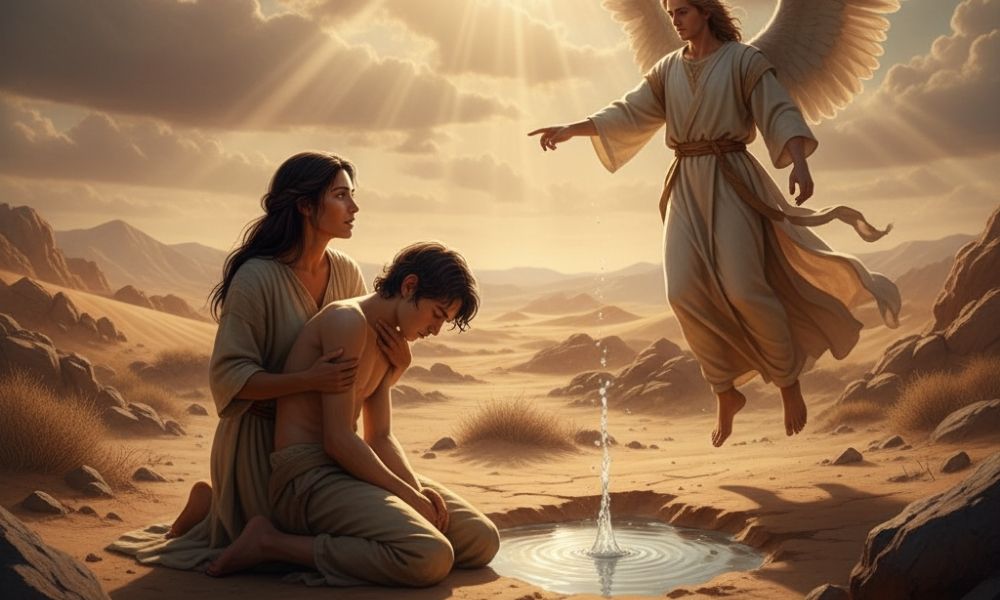
Hagar is a key biblical figure whose life story reveals God’s compassion toward the oppressed and His faithfulness to His promises. An Egyptian servant of Sarah (then Sarai) and mother of Ishmael, Hagar’s journey is one of suffering, divine encounter, and hope. Her story in Genesis 16 and 21 highlights themes of faith, rejection, and God’s care for the marginalized.
Name: Hagar (Hebrew: Hāgār, meaning “flight” or “stranger”)
Tribe/Nation: Egyptian
Era: Patriarchal period (~2000 BCE)
Master: Sarah (wife of Abraham)
Son: Ishmael
Home: From Egypt → Canaan → Wilderness of Shur → Paran
Book: Genesis (Chapters 16 & 21)
Key Virtues: Endurance, faith, maternal devotion
Legacy: Mother of Ishmael, ancestor of many nations
Symbol: A well — representing God’s provision and revelation
Name Meaning
Hagar means “flight” or “stranger,” reflecting her experience as a foreigner and fugitive. Her life embodies both exile and encounter — though cast out by humans, she was found and blessed by God.
Lineage / Family Background
Hagar was an Egyptian servant given to Sarah, likely acquired during Abraham and Sarah’s stay in Egypt (Genesis 12:16). She was not of Abraham’s household by birth but became entwined with God’s covenant family through Sarah’s plan to bear a child through her.
Biblical Era / Context
During the Patriarchal era, barren wives often gave their maidservants to their husbands to produce heirs. This practice, though customary, brought deep emotional and relational conflict — most notably between Hagar and Sarah.
Major Roles / Identity
- Servant of Sarah
- Mother of Ishmael
- The first woman to receive a divine visitation in Scripture
- The first person to name God personally (“El Roi”)
- Symbol of both bondage and divine mercy
Key Character Traits
- Faith and endurance: Survived alone in the wilderness with her son.
- Courage: Faced hardship and exile with resilience.
- Perception: Recognized and named God as “El Roi” — “The God who sees me.”
- Maternal devotion: Deeply cared for Ishmael and wept for his life.
Main Life Events
- Given to Abraham: Sarah, unable to conceive, gives Hagar to Abraham to bear a child (Genesis 16:1–3).
- Conception and Conflict: Hagar conceives Ishmael; tension arises with Sarah, leading to Hagar’s mistreatment and flight (Genesis 16:4–6).
- Encounter at the Spring: The Angel of the LORD finds Hagar by a spring in the wilderness, instructing her to return and promising her descendants will be countless (Genesis 16:7–12).
- Birth of Ishmael: Hagar bears Abraham a son, Ishmael, meaning “God hears” (Genesis 16:15).
- Expulsion: After Isaac’s birth, Sarah demands Hagar and Ishmael be sent away; Abraham reluctantly agrees (Genesis 21:9–14).
- Divine Provision in the Desert: In despair, Hagar weeps, and God opens her eyes to a well — saving Ishmael and reaffirming His promise to make him a great nation (Genesis 21:17–19).
Major Relationships
- Sarah: Mistress and rival; their relationship mirrors human struggle over control and faith in God’s promise.
- Abraham: Father of her son; their relationship was shaped by duty and divine purpose rather than love.
- Ishmael: Beloved son and heir of God’s promise to Hagar.
- God (“El Roi”): The One who saw her suffering and provided hope and blessing.
Notable Passages
- Genesis 16:13: “You are the God who sees me” (El Roi).
- Genesis 21:17–18: God hears Ishmael’s cry and renews His promise.
- Galatians 4:22–26: Paul uses Hagar and Sarah as symbols — Hagar representing the covenant of law and slavery, Sarah the covenant of promise and freedom.
Legacy & Impact
- Mother of Ishmael, ancestor of Arab peoples.
- Represents God’s care for the outcast and afflicted.
- Her story reminds believers that God sees and hears every cry, even from the wilderness.
- Spiritually, she symbolizes the law and human striving, in contrast to Sarah’s symbol of grace and promise.
Symbolism / Typology
- Hagar’s Flight: Represents humanity’s tendency to flee hardship — yet God pursues with mercy.
- The Well: Symbol of divine revelation and sustenance in the desert.
- Ishmael’s Name (“God hears”): A testimony that God listens to the cries of the brokenhearted.
- Contrast with Sarah: Illustrates law versus grace; human effort versus divine promise.







Leave a Reply