
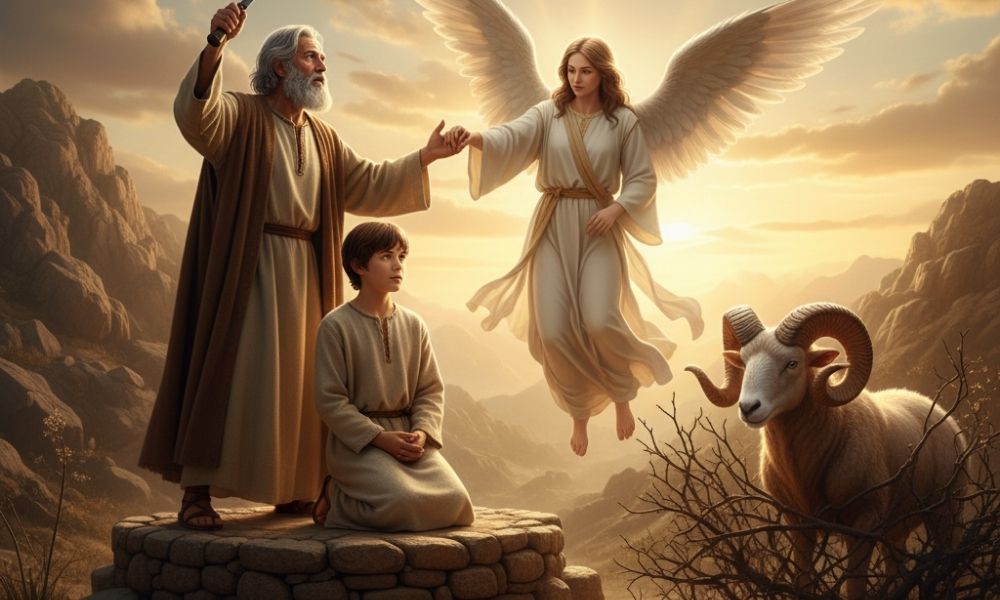
Isaac is one of the great patriarchs of Israel, the long-awaited son of Abraham and Sarah, born as the miraculous fulfillment of God’s promise. His life is a bridge between the faith of Abraham and the covenantal blessing carried forward by his son Jacob. The story of Isaac, told primarily in Genesis 17–35, reveals themes of promise, obedience, peace, and divine faithfulness.
Name: Isaac (Hebrew: Yitzḥaq, meaning “he laughs”)
Tribe/Nation: Hebrew — descendant of Abraham
Era: Patriarchal period (~1900–1700 BCE)
Father: Abraham
Mother: Sarah
Wife: Rebekah
Children: Esau and Jacob (twins)
Home: Canaan — Beersheba, Gerar, Hebron
Book: Genesis (Chapters 17–35)
Key Virtues: Obedience, faith, patience, peace-making
Legacy: Second patriarch of Israel; carrier of God’s covenant promises
Symbol: The altar — representing faith, sacrifice, and divine provision
Name Meaning
Isaac means “he laughs,” a name given because both Abraham and Sarah laughed in astonishment when God promised them a child in their old age (Genesis 17:17, 18:12). The name reflects joy, disbelief turned to faith, and the fulfillment of divine promise.
Lineage / Family Background
Isaac was the promised son of Abraham and Sarah, born when Abraham was 100 and Sarah was 90 years old (Genesis 21:1–3). His birth confirmed God’s covenant to make Abraham “the father of many nations.” He was circumcised on the eighth day according to God’s command.
Biblical Era / Context
Isaac lived during the Patriarchal era, a time when God established His covenant people through personal relationships and promises. As the second patriarch, Isaac inherited both the spiritual and material blessings given to Abraham.
Major Roles / Identity
- Child of Promise — born through divine intervention
- Obedient son — submitted to Abraham on Mount Moriah
- Faithful heir — continued the covenant blessings
- Husband of Rebekah — a union arranged by divine guidance
- Father of Esau and Jacob — from whom the nations of Israel and Edom came
Key Character Traits
- Obedience: Willingly submitted to God’s will and his father’s leadership (Genesis 22).
- Faith: Trusted God’s promises even amid barrenness (Genesis 25:21).
- Peacefulness: Chose peace over conflict, reopening wells rather than fighting over them (Genesis 26:17–22).
- Patience: Waited twenty years for children with Rebekah.
- Devotion: Prayed earnestly for his wife and family.
Main Life Events
- Miraculous Birth: Born to Abraham and Sarah in their old age, fulfilling God’s promise (Genesis 21:1–3).
- The Sacrifice at Moriah: As a young boy, was bound and placed on the altar by Abraham, yet spared when God provided a ram (Genesis 22:1–14).
- Marriage to Rebekah: Abraham’s servant found Rebekah by divine direction; she became Isaac’s wife (Genesis 24).
- Birth of Twins: After years of prayer, Rebekah bore Esau and Jacob (Genesis 25:21–26).
- Conflict with the Philistines: Reopened the wells of his father, showing peace and persistence (Genesis 26:12–25).
- Blessing Jacob: In his old age, Isaac’s blessing — though deceived by Jacob — fulfilled God’s will (Genesis 27).
- Death and Burial: Lived 180 years and was buried by his sons Esau and Jacob in the Cave of Machpelah (Genesis 35:28–29).
Major Relationships
- Abraham: His father and mentor in faith.
- Sarah: His mother, who rejoiced at his birth.
- Rebekah: His faithful and prayerful wife.
- Esau and Jacob: His sons; their rivalry shaped the destiny of nations.
- God: The covenant-keeping Lord who renewed Abraham’s promises through Isaac.
Notable Passages
- Genesis 21:1–3: The miracle of Isaac’s birth.
- Genesis 22:9–14: The near-sacrifice — “God will provide.”
- Genesis 24:63–67: Isaac meets Rebekah; love and comfort after Sarah’s death.
- Genesis 26:24: God’s reassurance — “Fear not, for I am with you.”
Legacy & Impact
- The covenant of Abraham was reaffirmed through Isaac, showing the continuation of God’s redemptive plan.
- His life reflects quiet faith and obedience rather than bold action.
- Through his son Jacob came the twelve tribes of Israel, fulfilling God’s promise.
- The near-sacrifice of Isaac foreshadows Christ’s sacrifice — the beloved Son offered but spared, pointing to the Lamb of God provided for salvation.







Leave a Reply