
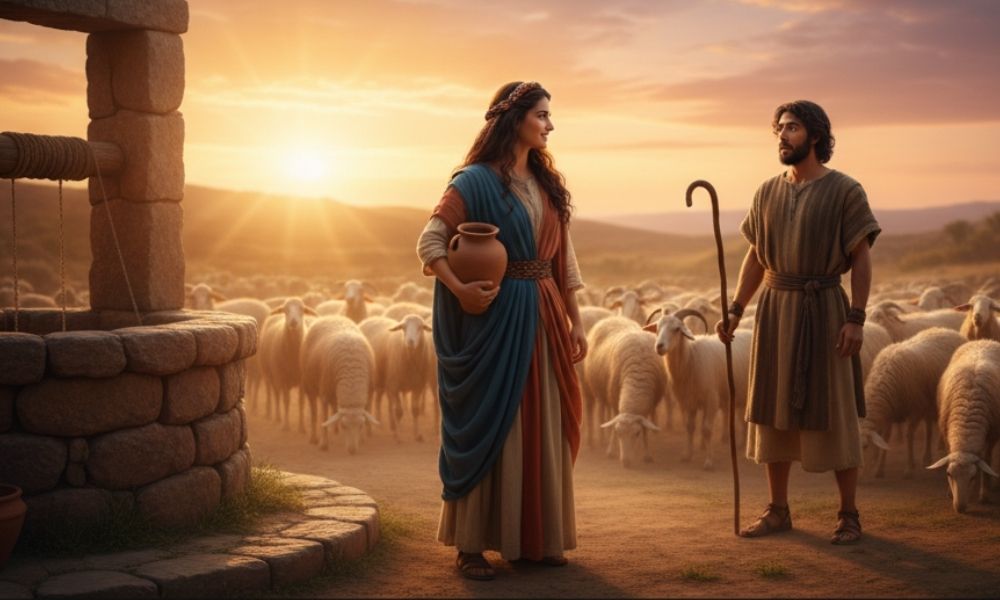
Rachel was the beloved wife of Jacob and the mother of Joseph and Benjamin. Her story is one of love, beauty, longing, and faith. Though her life was marked by years of waiting and sorrow, Rachel’s devotion and role in God’s covenant family made her one of the most cherished matriarchs in Israel’s history. Her life reveals themes of divine providence, enduring love, and the fulfillment of God’s promises even through human struggle.
Name: Rachel (Hebrew: Rāḥēl, meaning “Ewe” or “Lamb”)
Tribe/Nation: Israel (by marriage to Jacob)
Era: Patriarchal Period (~19th century BCE)
Father: Laban (brother of Rebekah)
Sister: Leah
Husband: Jacob
Children: Joseph and Benjamin
Home: Haran → Canaan
Book: Genesis (Chapters 29–35)
Key Virtues: Love, patience, devotion
Legacy: Mother of Joseph (who saved Israel in Egypt) and Benjamin; remembered as a symbol of maternal compassion
Symbol: A lamb — representing gentleness and belovedness
Name Meaning
Rachel means “Ewe” (a female sheep), symbolizing tenderness, beauty, and nurturing — qualities that defined her role as wife and mother. The name also reflects her gentle spirit and her place as the beloved one among Jacob’s wives.
Lineage / Family Background
Rachel was the younger daughter of Laban, Rebekah’s brother, making her Jacob’s cousin. She grew up in Haran, a region in Mesopotamia, where Jacob fled to escape his brother Esau.
- Father: Laban — a wealthy herdsman known for his deceit
- Mother: Not named in Scripture
- Sister: Leah — elder sister and co-wife of Jacob
- Uncle/Aunt: Isaac and Rebekah
- Husband: Jacob — the patriarch of Israel
Major Roles / Identity
- Beloved wife of Jacob
- Mother of Joseph and Benjamin
- Matriarch of the tribes of Ephraim and Manasseh (through Joseph) and Benjamin
- Symbol of enduring love and sorrow
Key Character Traits
- Beautiful and Graceful: Described as “beautiful in form and face” (Genesis 29:17)
- Loved Deeply: Jacob served fourteen years for her hand in marriage
- Long-Suffering: Endured barrenness and rivalry with her sister Leah
- Faithful: Cried out to God in her anguish and was blessed with children
- Compassionate: Remembered in Scripture as a mother who weeps for her children
Main Life Events
- Meeting Jacob: Jacob met Rachel at the well, where she was tending her father’s sheep — a scene of love at first sight (Genesis 29:9–11).
- Marriage to Jacob: Jacob worked seven years for her, but Laban deceived him by giving Leah first; he then worked another seven years for Rachel (Genesis 29:18–28).
- Years of Barrenness: Rachel watched as Leah bore children and cried to God for her own (Genesis 30:1–2).
- Birth of Joseph: God answered her prayers — “God has taken away my reproach” — and she bore Joseph, who would later save Israel (Genesis 30:22–24).
- Death in Childbirth: Rachel died giving birth to her second son, Benjamin, near Bethlehem (Genesis 35:16–20). She was buried on the road to Ephrath.
Major Relationships
- Jacob: Her devoted husband, who loved her more than Leah and worked fourteen years for her.
- Leah: Older sister and rival in love and motherhood, yet part of the same divine plan.
- Joseph: Her firstborn, beloved by Jacob, who rose to power in Egypt.
- Benjamin: Her youngest son, born during her final moments of life.
Notable Passages
- Genesis 29:20: “So Jacob served seven years for Rachel, and they seemed to him but a few days because of his love for her.”
- Genesis 30:22–23: “Then God remembered Rachel… and she conceived and bore a son.”
- Genesis 35:19–20: “So Rachel died and was buried on the way to Ephrath (that is, Bethlehem).”
- Jeremiah 31:15: “A voice is heard in Ramah, Rachel weeping for her children…” — a prophetic image later echoed in Matthew 2:18.
Legacy & Impact
Rachel’s life reminds believers of God’s compassion for the brokenhearted and His power to redeem sorrow. Though she died young, her legacy lived through her sons: Joseph, who preserved Israel during famine, and Benjamin, from whom came Israel’s first king, Saul.
- Symbol of enduring love and faith amid suffering
- Mother of key tribes that shaped Israel’s destiny
- Remembered as a mother who mourns for her children — a symbol of God’s own compassion
Symbolism / Typology
- Rachel as the Beloved Bride: Represents the Church as the Bride of Christ, deeply loved and chosen.
- Her Barrenness and Blessing: Symbolizes God’s power to bring life and hope where none seems possible.
- Rachel’s Tomb: A place of mourning and hope — foreshadowing redemption through sorrow.







Leave a Reply