
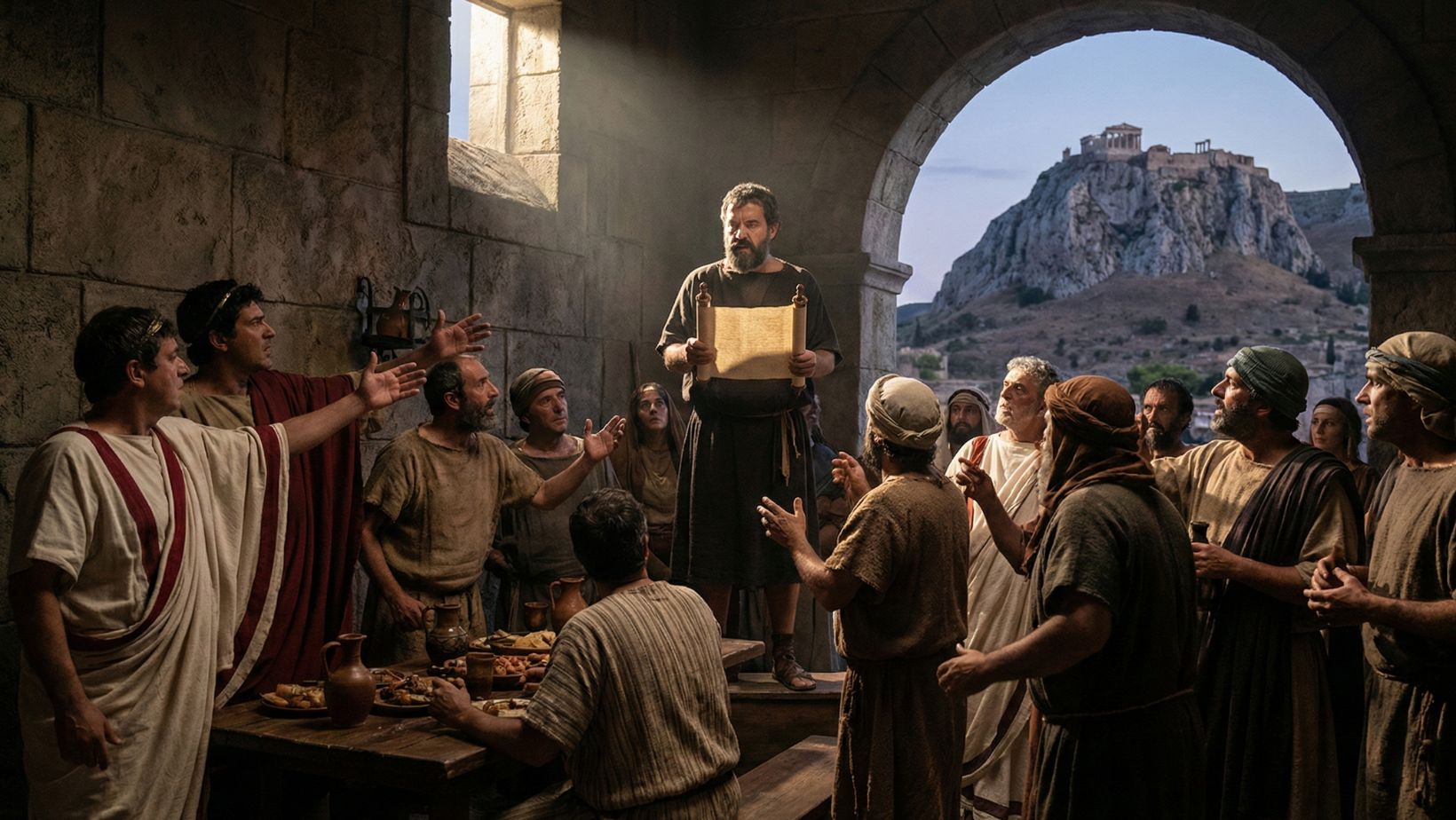
The First Epistle to the Corinthians is a practical, corrective, and deeply pastoral letter from the Apostle Paul to a troubled church. Situated in Corinth—a bustling, wealthy, and morally loose seaport city—the church was riddled with division, sexual immorality, confusion about spiritual gifts, and doctrinal errors regarding the resurrection. Paul writes not just to scold, but to reorient their worldview around the Cross of Christ. He argues that true spiritual maturity is not found in knowledge or ecstatic experiences, but in love and unity. It contains some of the most famous passages in Scripture, including the “Love Chapter” (1 Corinthians 13) and the definitive defense of the Resurrection (1 Corinthians 15).
Quick Facts
- Author: The Apostle Paul (and Sosthenes)
- Date Written: ~53–55 AD (during his 3rd Missionary Journey)
- Location: Written from Ephesus
- Audience: The Church of God in Corinth
- Theme: Unity, Christian Conduct, and Love
- Key Word: “Love” (agape) and “Body” (soma)
- Key Verse: 1 Corinthians 13:13 (“And now these three remain: faith, hope and love. But the greatest of these is love.”)
- Structure: Responses to oral reports (Ch 1–6) followed by responses to a letter (Ch 7–16)
- Symbol: The Temple of God (referring to the believers themselves)
Title / Purpose
Title: The First Epistle of Paul to the Corinthians (First Corinthians).
Purpose:
- Corrective: To address alarming reports of factions (“I follow Paul,” “I follow Apollos”) and gross immorality (a man sleeping with his stepmother).
- Instructional: To answer specific questions the Corinthians had sent him regarding marriage, food sacrificed to idols, worship order, and the resurrection.
Authorship & Context
The Author: Paul founded the Corinthian church on his second missionary journey (Acts 18), staying there for 18 months making tents with Priscilla and Aquila. He considers himself their spiritual “father.”
The City: Corinth was the “Sin City” or “Las Vegas” of the ancient world. To “Corinthianize” was a slang term for practicing sexual immorality. The church was composed of people saved out of this hedonistic culture, and they were struggling to leave their old baggage behind.
The Crisis: The church was arrogant, wealthy, and intellectually proud, valuing “wisdom” and spectacular spiritual gifts over character and love.
Structure / Narrative Arc
The letter is structured by the problems Paul addresses.
1. Addressing Division (Chapters 1–4): Paul dismantles their cliques. The Cross is “foolishness” to the Greeks but the power of God. Leaders like Paul and Apollos are merely servants; God gives the growth.
2. Addressing Immorality (Chapters 5–6): A case of incest is ignored by the church. Paul commands church discipline. He also addresses lawsuits between believers and warns against visiting temple prostitutes (“Your body is a temple of the Holy Spirit”).
3. Addressing Questions – The “Now Concerning” Section (Chapters 7–14): Paul answers their letter point by point:
- Marriage (Ch 7): Singleness is a gift; marriage is good.
- Idol Meat (Ch 8–10): Do not cause a weaker brother to stumble. Liberty must be limited by love.
- Worship & The Supper (Ch 11): Correcting disorder at the Lord’s Table (where the rich were getting drunk while the poor went hungry).
- Spiritual Gifts (Ch 12–14): Gifts are for the common good. Unity in diversity (The Body metaphor). Tongues and Prophecy must be used orderly. Chapter 13 (Love) anchors this section.
4. The Resurrection (Chapter 15): The theological climax. Paul argues that if Christ is not raised, faith is futile. He explains the nature of the resurrection body.
5. Conclusion (Chapter 16): The Collection for the saints and final greetings.
Major Themes
Unity in the Church: Paul constantly attacks the spirit of factionalism. We are one body; when one part suffers, every part suffers.
The Supremacy of Love: Knowledge puffs up, but love builds up. Spiritual gifts are noise without love.
Christian Liberty: Just because you can do something (like eat meat offered to idols) doesn’t mean you should, especially if it hurts a brother’s conscience.
The Resurrection: It is not just a spiritual idea but a physical reality that guarantees our future hope.
Key Characters
Paul: The concerned spiritual father. Apollos: An eloquent teacher whom some Corinthians preferred over Paul. Chloe’s Household: The people who reported the divisions to Paul (1:11). Stephanas, Fortunatus, and Achaicus: The delegation who likely brought the letter with questions to Paul (16:17).
Notable Passages
The Message of the Cross (1:18): “For the message of the cross is foolishness to those who are perishing, but to us who are being saved it is the power of God.”
The Body is a Temple (6:19–20): “Do you not know that your bodies are temples of the Holy Spirit… You are not your own; you were bought at a price.”
Running the Race (9:24): “Run in such a way as to get the prize.”
The Love Chapter (13:4–8): “Love is patient, love is kind…” (Often read at weddings, though originally written to correct a chaotic church meeting).
The Resurrection Defense (15:55): “Where, O death, is your victory? Where, O death, is your sting?”
Legacy & Impact
Ecclesiology: This book provides the most detailed look at the practical struggles and worship services of the early church. It establishes the “Body of Christ” metaphor used in theology today.
The Eucharist: 1 Corinthians 11 contains the earliest written account of the Words of Institution (“This is my body…”) used in communion liturgies worldwide.
Cultural Impact: The definition of love in Chapter 13 is one of the most universally recognized texts in Western literature.
Symbolism / Typology
Leaven (Yeast): Used in Chapter 5 to describe how a little sin (incest) can infect the whole church (“A little leaven leavens the whole lump”).
The Body: Used in Chapter 12 to symbolize the Church—many diverse parts (eyes, hands, feet) functioning as one organic unit.
Firstfruits: Christ is called the “firstfruits” of those who have fallen asleep (Ch 15), employing an agricultural image to guarantee the full harvest (our resurrection) is coming.







Leave a Reply