
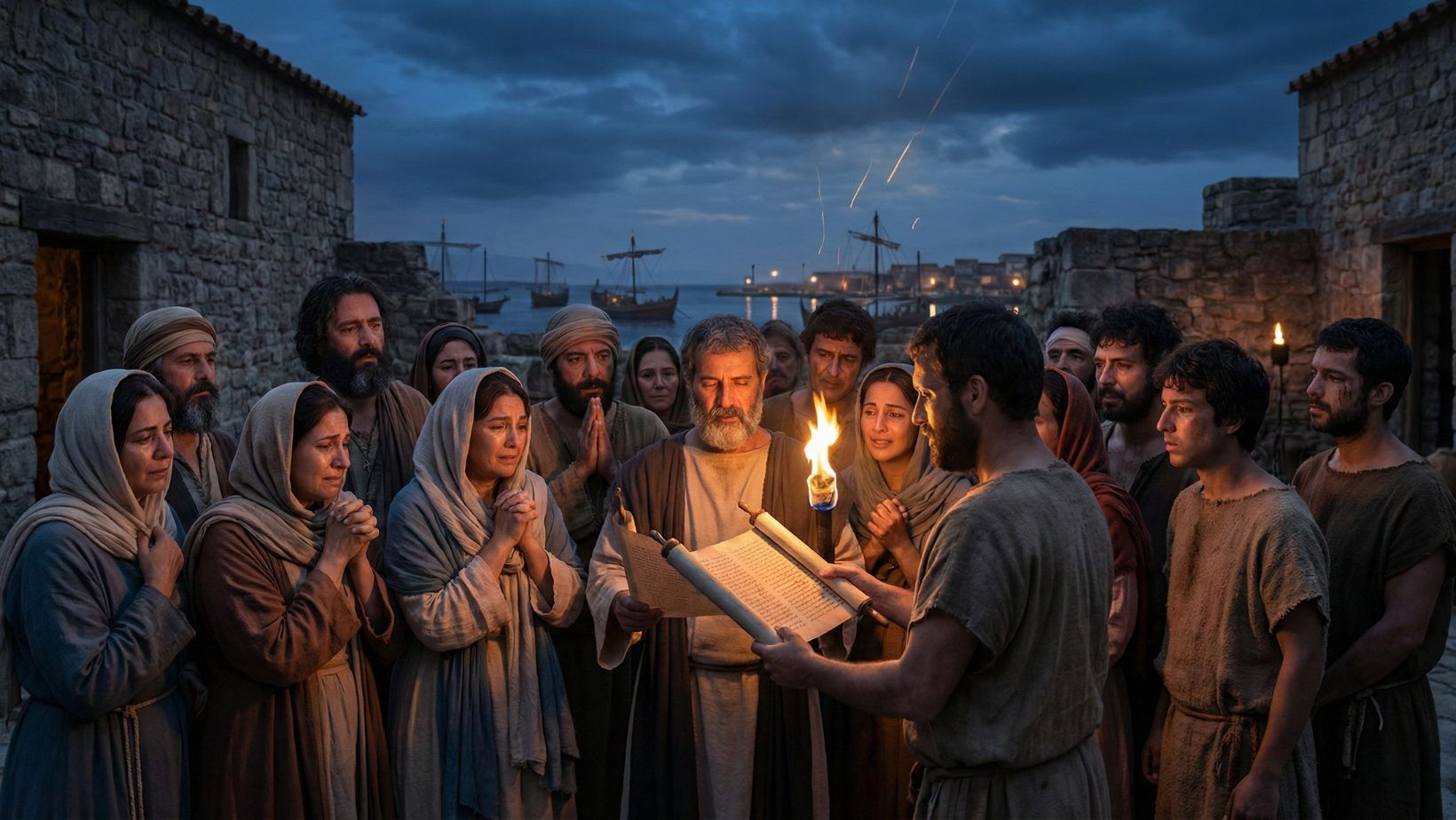
The First Epistle to the Thessalonians is one of the earliest documents in the New Testament (possibly the very first), written by the Apostle Paul to a young church he had been forced to leave abruptly. It is a warm, encouraging letter filled with relief and affection. Paul writes like a worried parent who has just received good news that his children are thriving despite intense pressure. The letter is famous for its extensive teaching on the “End Times” (Eschatology), specifically the Rapture and the Second Coming of Christ. However, this theology isn’t written for academic debate; it is written to comfort grieving believers who feared their deceased loved ones would miss out on Christ’s return.
Quick Facts
- Author: The Apostle Paul (with Silas and Timothy)
- Date Written: ~50–51 AD (Written from Corinth)
- Audience: The Church in Thessalonica (Capital of Macedonia)
- Theme: Holiness in light of the Second Coming
- Key Word: “Coming” (parousia) — mentioned in every chapter
- Key Verse: 1 Thessalonians 4:14 (“For we believe that Jesus died and rose again, and so we believe that God will bring with Jesus those who have fallen asleep in him.”)
- Structure: Personal Reflections (1–3) → Practical Instructions (4–5)
- Symbol: The Trumpet — signaling the return of the King
Title / Purpose
Title: The First Epistle of Paul to the Thessalonians.
Purpose:
- To Encourage: To strengthen the new believers who were facing persecution from both Jews and Gentiles.
- To Defend: To defend Paul’s integrity against accusations that he was a cowardly charlatan who ran away when things got tough.
- To Correct: To correct misunderstandings about the resurrection of the dead and the timing of Jesus’ return.
Authorship & Context
The Author: Paul writes with a tender, almost maternal tone (“like a nursing mother caring for her children,” 2:7).
The Backstory: Acts 17 tells the story. Paul preached in Thessalonica for only three weeks (three Sabbaths) before a jealous mob caused a riot, forcing him to flee by night. He left behind a baby church in a hostile city. Worried they would crumble, he sent Timothy back to check on them.
The Context: Timothy returned to Paul in Corinth with surprising news: the Thessalonians were standing firm! This letter is Paul’s immediate, overjoyed response to that report.
Structure / Narrative Arc
The letter is evenly split between looking back at their relationship and looking forward to their future hope.
1. Personal: Paul’s Heart for Them (Chapters 1–3):
- Thanksgiving: Paul praises their “work of faith, labor of love, and endurance of hope.”
- Defense: He reminds them he didn’t seek money or glory but worked night and day so as not to be a burden.
- Relief: He expresses his immense joy at Timothy’s report of their faith.
2. Practical: Call to Holiness (Chapter 4:1–12):
- Sanctification: God’s will is that they avoid sexual immorality. In a pagan port city, this was a radical counter-cultural demand.
- Quiet Living: “Make it your ambition to lead a quiet life… and work with your hands.”
3. Prophetic: The Coming of the Lord (Chapters 4:13–5:28):
- The Dead in Christ: Comfort for those grieving. The dead will rise first when Jesus returns.
- The Rapture: Believers alive will be “caught up” (harpazo) in the clouds to meet the Lord.
- The Day of the Lord: It will come like a “thief in the night,” sudden and unexpected. Therefore, stay awake and sober.
Major Themes
The Second Coming (Parousia): Every single chapter ends with a reference to the return of Jesus. It is the anchor of their hope and the motivation for their purity.
Sanctification: Paul defines this clearly: “It is God’s will that you should be sanctified: that you should avoid sexual immorality” (4:3). Holy living is the necessary response to the Gospel.
Model Ministry: Paul defends his ministry style—gentle, honest, hard-working, and self-sacrificing—as a model for how they should treat one another.
Work Ethic: Some believers had stopped working, thinking Jesus was returning immediately. Paul corrects this: “Mind your own business and work with your hands” (4:11).
Key Characters
Paul: The founding apostle, deeply anxious about his converts. Silas (Silvanus): Paul’s companion who suffered with him in Philippi before coming to Thessalonica. Timothy: The young protégé sent on the dangerous mission to check on the church. The Mob: The “city rabble” (Acts 17:5) whose persecution forms the backdrop of the letter.
Notable Passages
The Model Church (1:8): “The Lord’s message rang out from you not only in Macedonia and Achaia—your faith in God has become known everywhere.”
Nursing Mother / Father (2:7, 11): “We were gentle among you, like a nursing mother… For you know that we dealt with each of you as a father deals with his own children.”
The Rapture (4:16–17): “For the Lord himself will come down from heaven, with a loud command, with the voice of the archangel and with the trumpet call of God… After that, we who are still alive and are left will be caught up together with them in the clouds to meet the Lord in the air.”
Thief in the Night (5:2): “For you know very well that the day of the Lord will come like a thief in the night.”
Final Commands (5:16–18): “Rejoice always, pray continually, give thanks in all circumstances.”
Legacy & Impact
Eschatology: This book is the primary text for the doctrine of the Rapture (Pre-Tribulation, Mid-Tribulation, and Post-Tribulation views all debate the interpretation of 4:17).
Grief: It revolutionized the ancient world’s view of death. While pagans grieved without hope, Christians grieved with the certainty of reunion.
Christian Labor: The Protestant Work Ethic draws heavily from Paul’s command to lead a quiet life and work hard.
Symbolism / Typology
Sleep: Paul consistently uses “sleep” as a metaphor for the death of a believer (4:13). It implies that death is temporary and the body will “wake up” at the resurrection.
The Thief: A symbol of suddenness and unexpectedness regarding Christ’s return—not to scare believers, but to ensure they are always ready.
Armor of Light: In Chapter 5, Paul reuses the armor metaphor (faith and love as a breastplate, hope as a helmet) to describe spiritual alertness.







Leave a Reply