
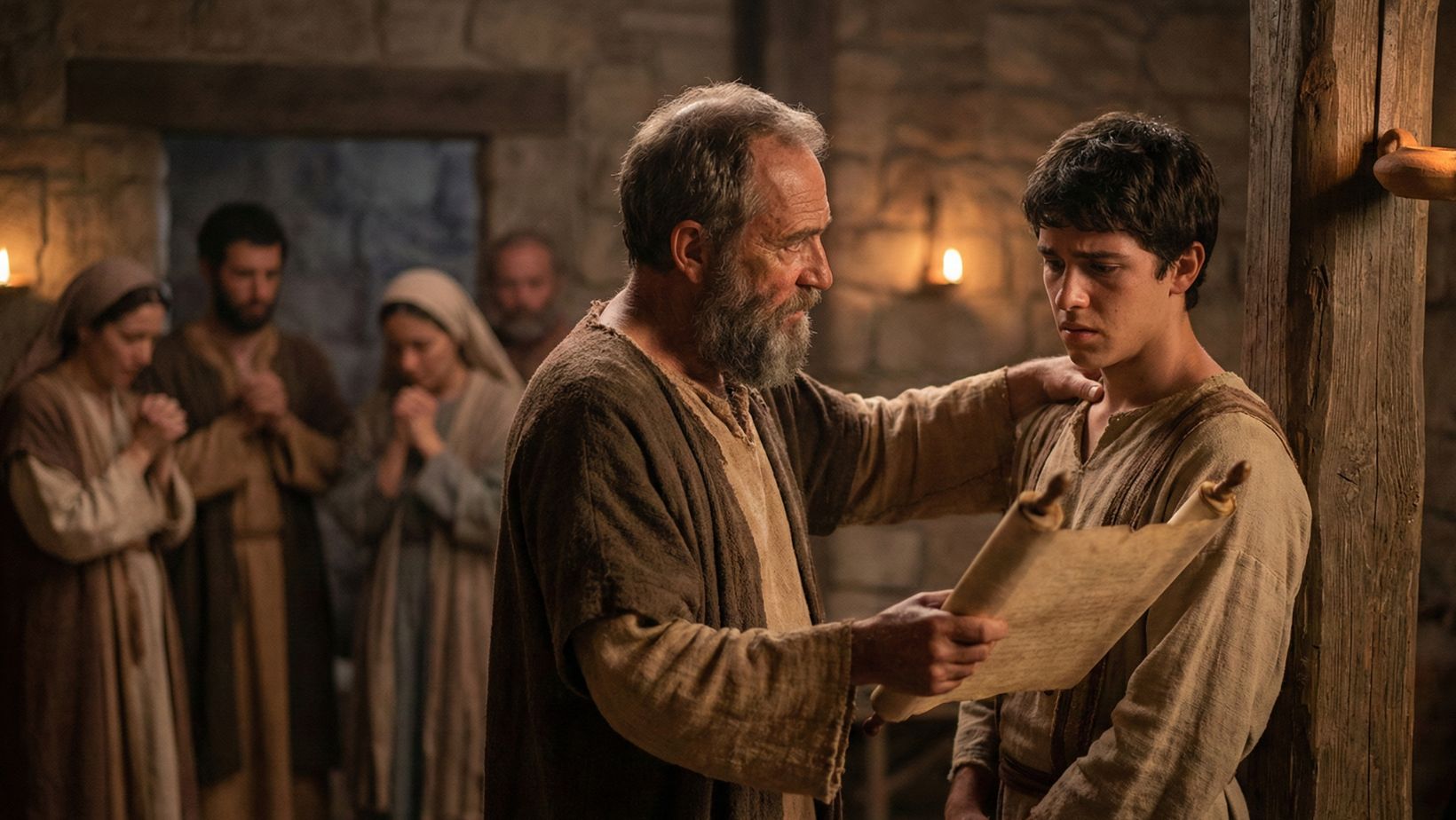
The First Epistle to Timothy is the first of the “Pastoral Epistles” (1 & 2 Timothy, Titus), written by an aging Apostle Paul to his young protégé, Timothy. Unlike the congregational letters (like Romans or Ephesians), this is an administrative manual for a church leader. Timothy has been left in charge of the influential but troubled church in Ephesus, where false teachers are peddling myths and endless genealogies. Paul writes to instruct Timothy on how to organize the church, appoint qualified leaders (elders and deacons), and maintain sound doctrine. It is a letter about “house rules” for the family of God, emphasizing that leadership is primarily about character, not just skill.
Quick Facts
- Author: The Apostle Paul
- Date Written: ~62–64 AD (After Paul’s release from his first Roman imprisonment)
- Recipient: Timothy (Paul’s “true son in the faith”)
- Location: Written from Macedonia to Timothy in Ephesus
- Theme: Leadership, Sound Doctrine, and Church Order
- Key Phrase: “Fight the good fight” or “Trustworthy saying”
- Key Verse: 1 Timothy 3:15 (“…if I am delayed, you will know how people ought to conduct themselves in God’s household, which is the church of the living God, the pillar and foundation of the truth.”)
- Structure: Warning against False Teachers (1) → Church Worship & Leadership (2–3) → Pastoral Duties (4–6)
- Symbol: The Shepherd’s Staff — representing oversight and care
Title / Purpose
Title: The First Epistle of Paul to Timothy.
Purpose:
- To Authorize: To bolster Timothy’s authority in the face of older, rebellious opponents.
- To Organize: To provide clear qualifications for church officers (Overseers and Deacons).
- To Instruction: To regulate public worship, the role of women, care for widows, and the handling of wealth.
Authorship & Context
The Author: Paul is now an old man, free from his first imprisonment (Acts 28), and traveling again. He writes with the weight of a seasoned general handing orders to a field commander.
The Recipient: Timothy was younger, prone to frequent illnesses (stomach issues), and seemingly timid by nature (2 Tim 1:7). Paul constantly has to encourage him to be bold: “Don’t let anyone look down on you because you are young.”
The Setting: Ephesus was a spiritual battlefield. The false teachers were not just outsiders; they were likely elders within the church who had gone astray (Acts 20:29–30), teaching a blend of Jewish legalism and asceticism (forbidding marriage and certain foods).
Structure / Narrative Arc
The letter alternates between personal charges to Timothy and official regulations for the church.
1. Charge Concerning Doctrine (Chapter 1):
- Stop the Heretics: Paul commands Timothy to stay in Ephesus and command certain people not to teach false doctrines.
- The Law: The law is good if used properly (to convict sinners), but the goal of instruction is “love from a pure heart.”
- Paul’s Testimony: Paul cites himself as the “chief of sinners” to showcase God’s immense patience.
2. Charge Concerning Worship (Chapters 2–3):
- Prayer: Pray for kings and all in authority.
- Men and Women: Men should pray without anger; women should dress modestly and learn in quietness (a controversial and heavily debated section regarding authority).
- Qualifications: Detailed character lists for Overseers/Elders (above reproach, husband of one wife, able to teach) and Deacons (tested, sincere).
3. Charge Concerning Ministry (Chapters 4–6):
- Apostasy: Warnings that in later times some will abandon the faith.
- Training: “Physical training is of some value, but godliness has value for all things.”
- Widows: Instructions on which widows the church should support financially (the “true widows”).
- Elders: Elders who direct the affairs of the church well are worthy of “double honor” (respect + pay).
- Money: “For the love of money is a root of all kinds of evil.” Command the rich to be generous.
Major Themes
Church Order: The church is not a chaotic gathering but the “household of God.” It requires structure, qualified leadership, and proper decorum.
Leadership Character: Paul lists almost no skills for leaders (except “able to teach”). The focus is entirely on moral character—how they treat their family, their temper, their reputation, and their sobriety.
Sound Doctrine: Paul emphasizes “healthy” teaching (the Greek word hygiainō gives us “hygiene”). Bad theology makes the soul sick; good theology heals.
The Incarnation: The letter contains early creedal hymns, such as 3:16 (“He appeared in the flesh, was vindicated by the Spirit…”), anchoring the church in the mystery of Christ.
Key Characters
Paul: The mentor and spiritual father. Timothy: The young apostolic delegate facing a tough assignment. Hymenaeus and Alexander: Two ringleaders of the false teachers whom Paul has “handed over to Satan” (excommunicated) to be taught not to blaspheme.
Notable Passages
The Chief of Sinners (1:15): “Christ Jesus came into the world to save sinners—of whom I am the worst.”
One Mediator (2:5): “For there is one God and one mediator between God and mankind, the man Christ Jesus.”
The Mystery of Godliness (3:16): An early Christian hymn: “Beyond all question, the mystery from which true godliness springs is great: He appeared in the flesh…”
Youth (4:12): “Don’t let anyone look down on you because you are young, but set an example for the believers in speech, in conduct, in love, in faith and in purity.”
Contentment (6:6): “But godliness with contentment is great gain.”
Love of Money (6:10): “For the love of money is a root of all kinds of evil.”
Legacy & Impact
Ecclesiastical Structure: This book (along with Titus) serves as the primary constitution for church governance in almost every Christian denomination (Presbyterian, Episcopal, Baptist, etc.), defining the offices of Bishop/Elder and Deacon.
The Role of Women: 1 Timothy 2:11–15 remains the focal point of the Complementarian vs. Egalitarian debate regarding women in ministry.
Symbolism / Typology
The Pillar and Foundation: The Church is described not as the source of truth, but as the pillar and foundation (3:15)—its job is to hold the truth (the Gospel) high so the world can see it and to provide a stable base so it doesn’t collapse.
Good Warfare: Ministry is described as a military campaign. Timothy is called to “fight the good fight,” holding on to faith and a good conscience.







Leave a Reply