
The Second Book of Chronicles continues the priestly retelling of Israel’s history, focusing exclusively on the Southern Kingdom of Judah from the reign of Solomon to the decree of Cyrus the Persian. While the Books of Kings document the political and prophetic struggles of both the North and South, 2 Chronicles evaluates each king based on a single criterion: their heart for the Temple and the worship of Yahweh. It is a book of dramatic cycles—revival and reform followed by apostasy and judgment. For the original post-exilic audience, this book served as a powerful reminder that national survival and blessing are directly tied to “seeking the Lord” and maintaining the sanctity of His dwelling place.
Quick Facts
- Name: 2 Chronicles (The continuation of “The Words of the Days”)
- Author: Traditionally attributed to Ezra the Scribe
- Main Characters: Solomon, Jehoshaphat, Hezekiah, Josiah
- Key Figures: The Queen of Sheba, Athaliah, Joash, Manasseh, Cyrus the Great
- Era: From the Splendor of Solomon to the Edict of Restoration (~970–538 BCE)
- Core Themes: The glory of the Temple, the power of prayer, repentance, and divine retribution
- Setting: Jerusalem and the Temple Mount
- Literary Style: Sacred history with an emphasis on speeches, prayers, and liturgical details
- Key Symbol: The Open Door of the Temple — representing access to God’s mercy through sacrifice and prayer
Name Meaning
Following 1 Chronicles, the title emphasizes a spiritual record of the Davidic line. In the Hebrew order, 2 Chronicles is the final book of the Tanakh (Old Testament), ending the scriptures on a note of hope and the call to “Go up” and rebuild the Temple.
Historical Context
Time: It covers approximately 430 years of Judean history. The Focus on Judah: The Northern Kingdom is largely ignored because it abandoned the Temple and the Davidic line, which the author considers the only legitimate path for God’s people. The Post-Exilic Perspective: Written for a community trying to figure out why their nation fell and how to ensure it doesn’t happen again.
Major Roles / Identity
Solomon the Wise Builder: The first nine chapters are dedicated to his construction and dedication of the Temple. The Godly Reformers: Kings who rediscovered the Law or cleansed the Temple (Asa, Jehoshaphat, Hezekiah, Josiah). The Warning Prophets: Messengers like Shemaiah and Huldah who provided divine commentary on the kings’ actions. The Levites and Singers: Portrayed as the spiritual frontline who sometimes led the army into battle with praise.
Key Character Traits
Humility: A major theme; kings who “humbled themselves” (like Manasseh or Hezekiah) found immediate grace. Faith in Prayer: Highlighted by Jehoshaphat’s dependence on God when faced with an overwhelming army. Spiritual Inconsistency: Seen in kings like Uzziah, who started well but became proud and usurped priestly duties. Resilience: The ability of the Davidic line to survive through assassinations and foreign invasions.
Main Events
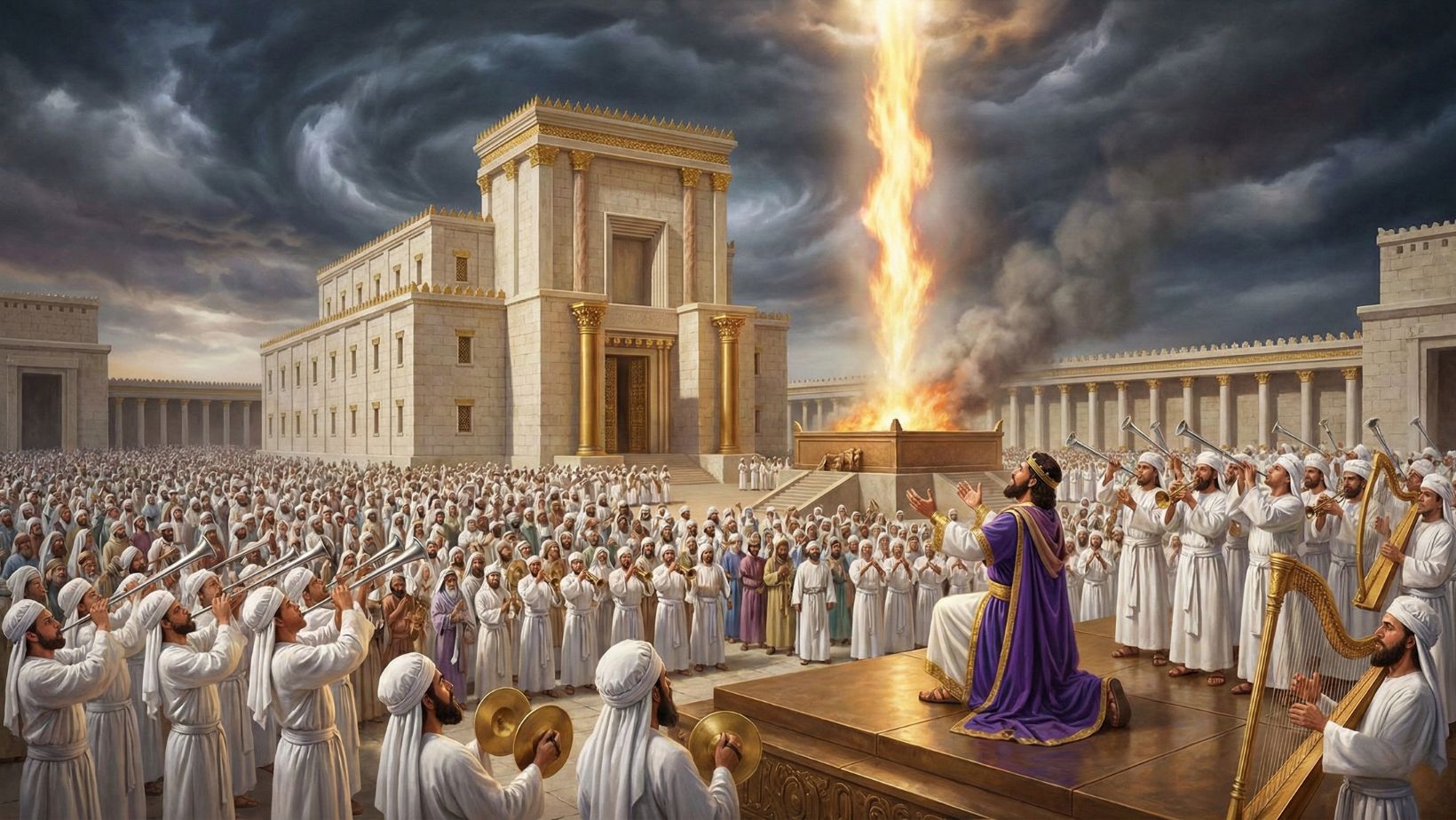
The Dedication of the Temple: The climax of the book, where fire falls from heaven to consume the sacrifices (2 Chronicles 7). The Division of the Kingdom: Rehoboam’s folly leads to the loss of the ten tribes, but Judah remains the keeper of the Temple. Jehoshaphat’s Victory: A battle won through choir singers leading the army, illustrating that “the battle is the Lord’s.” Joash’s Restoration: A young king hides in the Temple for six years before being crowned and repairing the sanctuary. Hezekiah’s Passover: A massive spiritual revival that reunited the scattered remnants of the tribes. The Decree of Cyrus: The book ends with the Persian King authorizing the Jews to return and rebuild.
Major Relationships
The King and the Temple: The health of the Temple always reflects the spiritual health of the sitting king. The King and the Priesthood: A delicate balance of power; conflict arises when kings (like Uzziah) try to bypass the priests. Judah and the Surrounding Nations: Often a test of faith; kings were judged by whether they made alliances with foreign powers or trusted God. God and the Remnant: A persistent relationship of mercy where God continually sends “messengers” to warn His people.
Notable Passages
2 Chronicles 7:14: The foundational promise: “If my people… will humble themselves and pray and seek my face… then I will hear from heaven.” 2 Chronicles 16:9: “For the eyes of the Lord range throughout the earth to strengthen those whose hearts are fully committed to him.” 2 Chronicles 20:15: The prophetic encouragement: “Do not be afraid or discouraged… For the battle is not yours, but God’s.” 2 Chronicles 36:23: The final word of the Old Testament: “The Lord his God be with him, and let him go up.”
Legacy & Impact
2 Chronicles provides the theology of revival. It teaches that no matter how far a nation has fallen, repentance can bring restoration. It elevates praise and worship as spiritual weapons and establishes the “Cyrus Decree” as the historical turning point that allowed the Jewish faith to survive into the Second Temple period and beyond.
Symbolism / Typology
The Glory Cloud: Symbolizes the Holy Spirit inhabiting the people of God. The Brazen Altar: Represents the necessity of the blood of the Lamb for the forgiveness of sins. The Royal Seed: The preservation of Joash from Athaliah’s massacre symbolizes God’s protection of the line that would lead to Christ. The Exile and Return: A type of the believer’s journey from the bondage of sin back to the presence of God.







Leave a Reply