
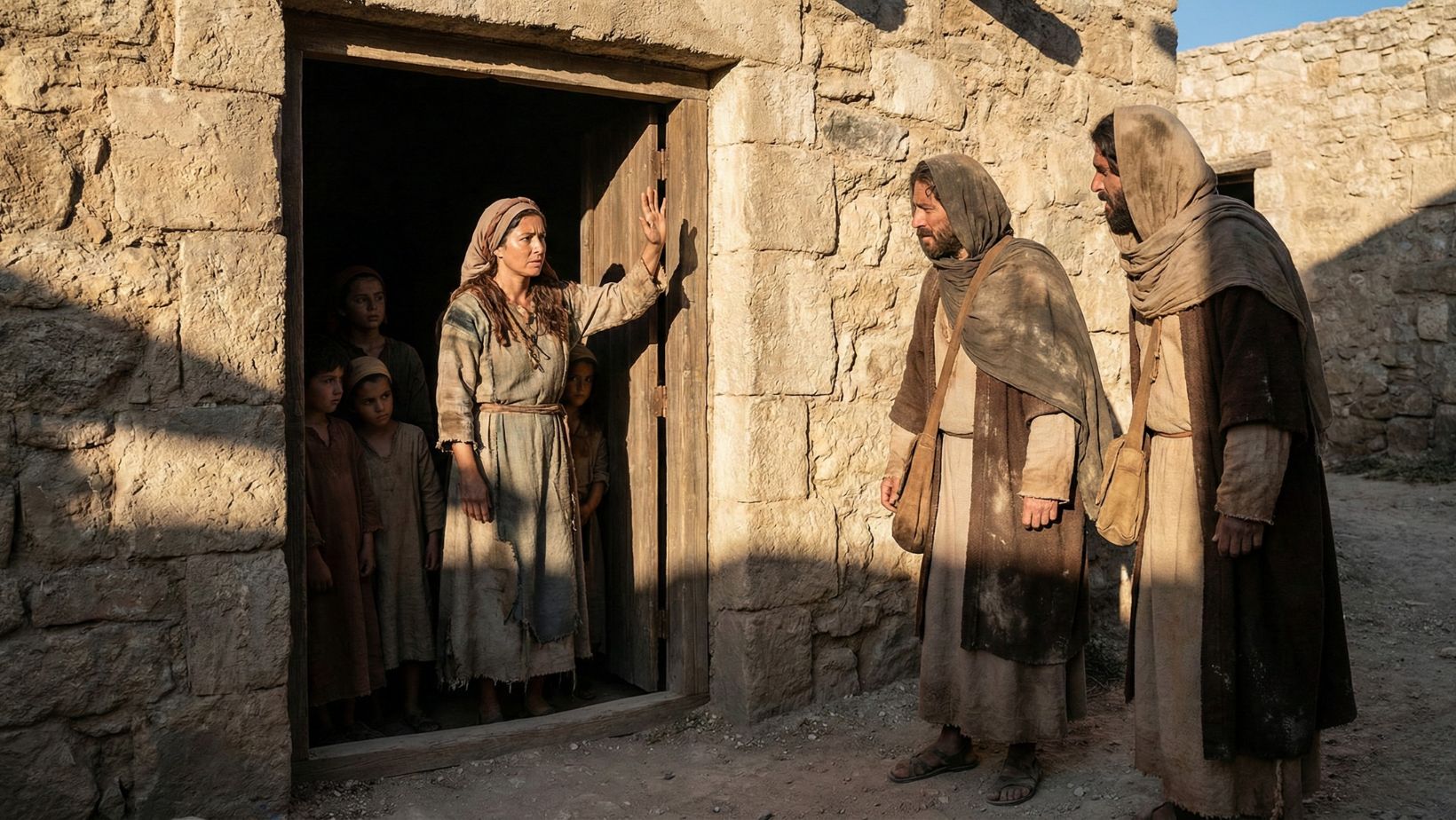
The Second Epistle of John is the shortest book in the Bible by verse count (only 13 verses). Despite its brevity, it packs a critical punch, serving as a warning label for the early church. Written by the Apostle John to a specific “chosen lady and her children” (likely a metaphor for a local church and its members), the letter balances two inseparable truths: Love and Truth. John warns that biblical love is not indiscriminately accepting everything; rather, true love requires discerning boundaries. He strictly forbids the church from showing hospitality to false teachers, arguing that welcoming a deceiver is participating in their wicked work.
Quick Facts
- Author: The Apostle John (identifies himself as “The Elder”)
- Date Written: ~85–95 AD
- Location: Likely Ephesus
- Recipient: “The Elect Lady and her children” (A local church and its members)
- Theme: Truth, Love, and Discernment
- Key Word: “Truth” (appears 5 times in the first 4 verses)
- Key Verse: 2 John 1:10 (“If anyone comes to you and does not bring this teaching, do not take him into your house or welcome him.”)
- Structure: Walking in Truth (1–6) → Watching for Deceivers (7–11) → Closing (12–13)
- Symbol: The Closed Door — representing the necessary boundary against heresy
Title / Purpose
Title: The Second Epistle of John.
Purpose:
- To Commend: To praise the church for those members who were “walking in the truth.”
- To Command: To remind them of the commandment they had from the beginning: to love one another.
- To Caution: To warn them about deceptive traveling missionaries (Gnostics) who denied Jesus’ physical incarnation.
- To Clarify Hospitality: To set a limit on Christian hospitality—it must not be extended to those who are actively spreading lies about Christ.
Authorship & Context
The Author: John calls himself “The Elder” (Presbyteros). This title implies both his age (he was the last living apostle) and his authoritative position over the network of churches in Asia Minor.
The Recipient: “The Chosen Lady” (Eklektē Kyria). While some argue this was a literal woman named Kyria, most scholars believe it is a personification of a local congregation, and “her children” are the members. This code language may have been used to protect the church during persecution.
The Context: In the first century, inns were dirty, expensive, and immoral. Traveling preachers relied entirely on the hospitality of believers (food and a bed). False teachers were exploiting this generosity to spread heresy.
Structure / Narrative Arc
The letter is a miniature version of 1 John, distilled into a single warning.
1. The Foundation: Truth and Love (Verses 1–6):
- The Bond: John loves them “in the truth.” Christian fellowship is grounded in shared theology, not just shared emotion.
- The Command: He is not writing a new commandment, but the old one: Love one another.
- The Definition: “And this is love: that we walk in obedience to his commands.”
2. The Danger: Deceivers (Verses 7–9):
- The Heresy: Deceivers have gone out who do not acknowledge Jesus Christ as coming in the flesh. This is the spirit of the antichrist.
- The Warning: “Watch out” so that you do not lose what you have worked for.
- The Limit: Anyone who “runs ahead” and does not continue in the teaching of Christ does not have God.
3. The Instruction: No Hospitality for Heretics (Verses 10–11):
- The Prohibition: Do not take them into your house or welcome them.
- The Reason: “Anyone who welcomes them shares in their wicked work.”
4. The Conclusion (Verses 12–13):
- Paper vs. Face: John has more to say but prefers to do it face to face so their joy may be complete.
- Greetings: The “children of your sister” (a sister church) send greetings.
Major Themes
Truth vs. Tolerance: John argues that love without truth is sentimentalism. True charity does not mean tolerating heresy that damns the soul. We must love people enough to protect them from lies.
The Incarnation: Like 1 John, this letter hinges on the physical reality of Jesus. Any teaching that denies Jesus was fully human (Docetism) attacks the core of the Gospel (the atonement).
Complicity: Verse 11 introduces a frightening concept: Guilt by association. If you financially support or socially validate a false teacher, you become a partner in their destruction.
Progressive Christianity (The Wrong Kind): Verse 9 warns against those who “run ahead” (or “go onward”) beyond the teaching of Christ. John implies that “new” theology that leaves the original Gospel behind is actually abandonment of God.
Key Characters
The Elder (John): The protective spiritual grandfather. The Elect Lady: The local church receiving the warning. The Deceivers: Traveling false teachers claiming to have “advanced” knowledge but denying the Incarnation.
Notable Passages
Walking in Truth (Verse 4): “It has given me great joy to find some of your children walking in the truth, just as the Father commanded us.”
Antichrist (Verse 7): “Any such person is the deceiver and the antichrist.”
Don’t Welcome Them (Verse 10): “If anyone comes to you and does not bring this teaching, do not take him into your house or welcome him.”
Legacy & Impact
Church Discipline: This letter provides the biblical basis for separating from false teachers. It teaches that while we evangelize unbelievers, we do not partner with or platform heretics.
The Limits of Tolerance: It stands as a perpetual reminder that an open mind, like an open mouth, should eventually close on something solid.
Symbolism / Typology
The House: Represents the local church gathering or the intimate sphere of fellowship. To open the “house” is to grant access to the family’s ears and hearts.
Ink and Paper: John contrasts the medium of writing (limited, distant) with the medium of face-to-face presence (full, joyful), pointing toward the ultimate joy of seeing God.







Leave a Reply