
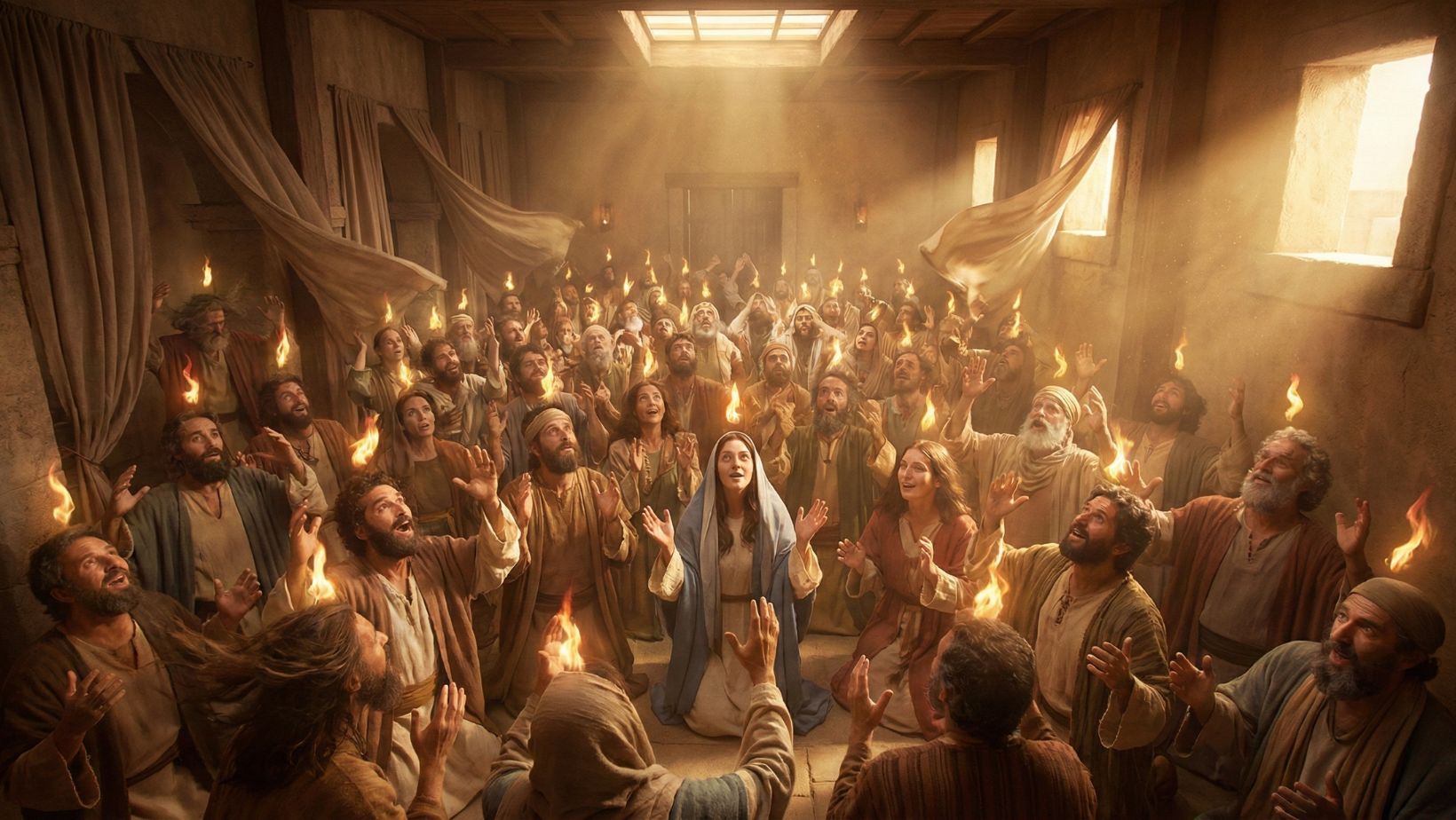
The Book of Acts (officially The Acts of the Apostles) is the dynamic sequel to the Gospel of Luke, picking up exactly where the Gospel leaves off—with the ascension of Jesus. It serves as the vital historical bridge between the Gospels and the Epistles (Letters). Acts chronicles the birth of the Christian Church and the explosion of the Gospel from a small group of Jewish believers in Jerusalem to a multi-ethnic movement spreading across the Roman Empire. It is not merely a history book; it is a theological narrative demonstrating that the ministry of Jesus continues through His people, empowered by the Holy Spirit.
Quick Facts
- Author: Luke (the Physician and traveling companion of Paul)
- Date Written: Likely between 62–70 AD (ends abruptly with Paul in prison)
- Recipient: Theophilus (meaning “Lover of God”)
- Genre: Historical Narrative / Theological History
- Key Verse: Acts 1:8 (“…you will be my witnesses in Jerusalem, and in all Judea and Samaria, and to the ends of the earth.”)
- Key Figure: The Holy Spirit (mentioned over 50 times)
- Structure: Geographical expansion (Jerusalem → Judea/Samaria → World)
- Symbol: Tongues of Fire — representing the arrival of the Holy Spirit
Title / Purpose
Title: Traditionally “The Acts of the Apostles,” though many scholars suggest “The Acts of the Holy Spirit” or “The Acts of Jesus and the Spirit” are more accurate, as the apostles are merely the vessels for God’s action.
Purpose:
- Historical: To record the origins and rapid growth of the early church.
- Apologetic: To show Roman officials (like Theophilus) that Christianity was a legitimate heir to Judaism and not a political threat to Rome.
- Theological: To demonstrate the universality of the Gospel—that salvation is for both Jew and Gentile.
Authorship & Context
The Author: Luke is the only Gentile author in the Bible. His medical background is evident in his attention to detail.
The “We” Passages: In the latter half of the book (e.g., Acts 16:10), the narrative shifts from “they” to “we,” indicating that Luke personally joined Paul on his missionary journeys.
Historical Context: Written during a time when the church was transitioning from a Jewish sect to a distinct global faith, often amidst persecution from both Jewish religious leaders and Roman authorities.
Structure / Narrative Arc
The book is structured around the command Jesus gives in Acts 1:8, outlining a clear geographical expansion.
1. Witness in Jerusalem (Chapters 1–7):
- Key Figure: Peter
- Events: The Ascension, Pentecost, the first sermon, the first miracles, and the martyrdom of Stephen. The church is born but remains local.
2. Witness in Judea & Samaria (Chapters 8–12):
- Key Figures: Philip, Peter, Barnabas
- Events: Persecution scatters the believers, causing the message to spread. Philip preaches to Samaritans and an Ethiopian eunuch. Saul (Paul) is converted on the road to Damascus. Peter receives the vision (sheet with animals) to accept Gentiles.
3. Witness to the Ends of the Earth (Chapters 13–28):
- Key Figure: Paul
- Events: Paul’s three missionary journeys planting churches across Asia Minor and Greece. The Jerusalem Council (Acts 15) settles the Gentile question. The book ends with Paul under house arrest in Rome, preaching boldly.
Major Themes
The Holy Spirit: The Spirit is the primary actor—directing travel, empowering speech, performing miracles, and appointing leaders. The church does not move unless the Spirit moves.
The Inclusion of Gentiles: A major tension in the book is the Jewish church realizing that God has granted “repentance unto life” to the Gentiles without requiring them to become Jewish first.
Persecution as Fuel: Every time the church is persecuted, it grows. Stephen’s death leads to the scattering of seed; Paul’s imprisonment leads to the Gospel reaching Caesar’s household.
The Resurrection: The central message of every sermon in Acts is not just “Jesus loves you,” but “Jesus is alive.”
Key Characters
Peter: The bold leader of the Jerusalem church who opens the door to the Gentiles (Cornelius).
Paul (Saul): The former persecutor turned apostle to the Gentiles, dominating the second half of the book.
Stephen: The first Christian martyr, whose death introduces Saul to the narrative.
Barnabas: The “Son of Encouragement” who vouches for Paul and mentors Mark.
Philip: The evangelist who breaks barriers by preaching to Samaritans and the Ethiopian official.
Notable Passages
Acts 1:8: The thesis statement of the book regarding the power of the Spirit and the scope of the mission.
Acts 2:1–4 (Pentecost): The coming of the Holy Spirit with wind and tongues of fire; the birth of the Church.
Acts 9:1–19: The dramatic conversion of Saul on the road to Damascus.
Acts 15 (The Jerusalem Council): The pivotal decision that Gentiles do not need to follow the Law of Moses (circumcision) to be saved, preserving the Gospel of grace.
Legacy & Impact
The Blueprint for Church: Acts provides the pattern for church governance (appointing elders), sacraments (baptism, breaking bread), and community life (sharing possessions).
Missionary Strategy: Paul’s method of targeting major cities, preaching first in synagogues and then in marketplaces, established the model for global missions.
Unfinished Story: Acts ends abruptly with Paul preaching in Rome. Many theologians suggest this implies the “Acts of the Church” are still ongoing—the reader is invited to continue the story.
Symbolism / Typology
Wind and Fire: Symbols of the Holy Spirit’s invisible power (wind) and purifying/illuminating presence (fire) at Pentecost.
Dust Shaken Off Feet: A symbolic act performed by apostles when a city rejected the Gospel, signifying a release of responsibility.







Leave a Reply