
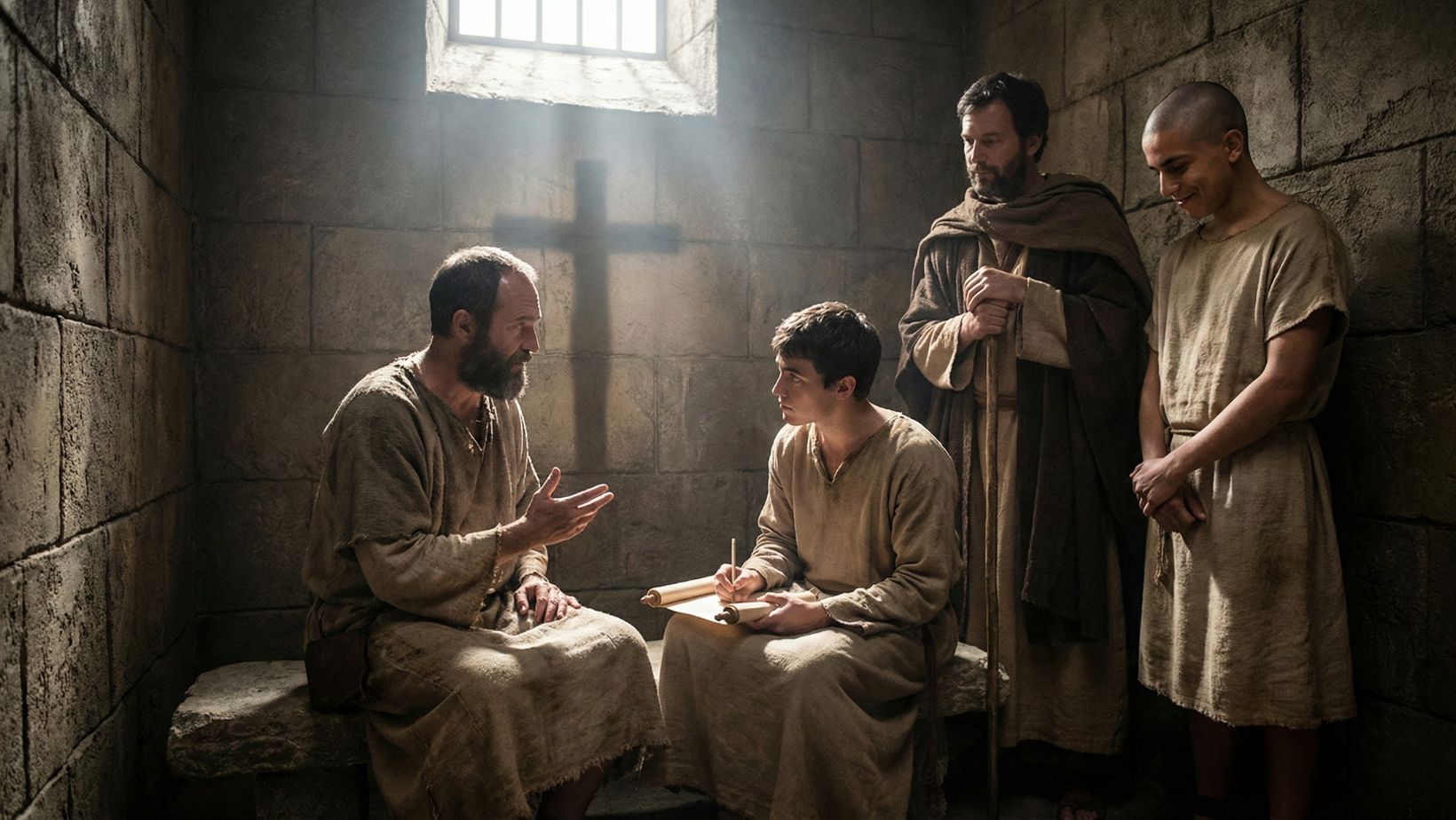
The Epistle to the Colossians is the twin letter to Ephesians (written at the same time and sent by the same courier), but with a sharper, more focused edge. While Ephesians focuses on the Church (the Body), Colossians focuses on Christ (the Head). It contains the highest “Christology”—the study of the nature of Jesus—in the entire Bible. Paul writes to dismantle a dangerous heresy threatening the church at Colossae: a toxic mix of Jewish legalism, Greek philosophy, and mystical angel worship. Paul counters this not by arguing every minor point, but by presenting the absolute Supremacy of Christ, declaring that Jesus is the image of the invisible God and that “in Him all things hold together.”
Quick Facts
- Author: The Apostle Paul (and Timothy)
- Date Written: ~60–62 AD (A “Prison Epistle”)
- Location: Written from house arrest in Rome
- Audience: The Church in Colossae (a declining city in the Lycus Valley)
- Courier: Tychicus and Onesimus (Colossians 4:7–9)
- Theme: The Preeminence and Supremacy of Christ
- Key Word: “Supremacy” (Preeminence) and “Fullness” (pleroma)
- Key Verse: Colossians 1:15–17 (“He is the image of the invisible God… and in him all things hold together.”)
- Structure: Theological (Christ is Lord over all) → Practical (Christ is Lord in you)
- Symbol: The Head — emphasizing Christ’s authority over the Body
Title / Purpose
Title: The Epistle of Paul to the Colossians.
Purpose:
- Combat Heresy: To refute the “Colossian Heresy”—a syncretistic blend of Jewish legalism (circumcision, food laws) and proto-Gnostic mysticism (worship of angels, secret knowledge).
- Establish Authority: To prove that Jesus is not just a high-ranking angel or a good teacher, but the Creator and Sustainer of the universe, fully God in bodily form.
- Encourage Maturity: To assure believers they are “complete in Christ” and do not need extra rituals or secret knowledge to be saved.
Authorship & Context
The Author: Paul writes from prison. Interestingly, Paul had never visited Colossae personally (2:1). The church was founded by Epaphras, Paul’s disciple.
The City: Colossae was a small town in the Lycus Valley (modern Turkey), overshadowed by its wealthier neighbors, Laodicea and Hierapolis. This shows Paul’s care even for small, obscure congregations.
The Connection: This letter was sent alongside the letter to Philemon. Onesimus (the runaway slave discussed in Philemon) was from Colossae and traveled back with Tychicus to deliver this letter.
Structure / Narrative Arc
Like Ephesians, the book divides neatly into doctrine and duty.
1. Doctrine: The Supremacy of Christ (Chapters 1–2):
- The Hymn of Christ: Paul opens with a majestic poem (1:15–20) declaring Jesus as the Creator, the Sustainer, and the Reconciler of all things.
- Paul’s Labor: Paul struggles so that they might have “full riches of complete understanding.”
- The Warning: Don’t be captured by hollow philosophy.
- The Legalism Trap: Why submit to rules like “Do not handle! Do not taste!”? These are shadows; the reality is Christ.
2. Duty: The Submission to Christ (Chapters 3–4):
- The Heavenly Mindset: “Set your minds on things above, not on earthly things.”
- Kill Sin: Put to death the “earthly nature” (lust, greed, anger).
- Clothing: Put on compassion, kindness, humility, and love.
- The Household Codes: Instructions for wives, husbands, children, slaves, and masters.
- Witness: “Let your conversation be always full of grace, seasoned with salt.”
Major Themes
The Supremacy of Christ: Jesus is supreme over creation (He made it), over the Church (He is the Head), and over Paul’s ministry. He is the “firstborn over all creation”—a title signifying rank and inheritance, not biological birth.
The Colossian Heresy: Though scholars debate the exact nature, it involved:
- Asceticism: Harsh treatment of the body (“Do not touch/taste”).
- Angel Worship: Seeking spiritual mediators other than Christ.
- Jewish Legalism: Observing Sabbaths and New Moons. Paul argues that these are useless in restraining sensual indulgence.
Fullness (Pleroma): The Gnostics believed God’s fullness was split among many lower spirits (aeons). Paul asserts that all the fullness of Deity dwells in Christ alone (2:9).
Union with Christ: Believers have died with Christ and been raised with Him. Therefore, their life is now “hidden with Christ in God” (3:3).
Key Characters
Paul: The writer, contending for a church he has never met. Epaphras: The founder and pastor of the Colossian church who visited Paul in prison to report the heresy. Tychicus: The faithful messenger who carried the letter. Onesimus: The returning runaway slave, now a “faithful and dear brother.” Mark: Mentioned in the greetings (4:10), showing he has been fully restored to Paul’s good graces since the split in Acts 15.
Notable Passages
The Image of God (1:15–17): “He is the image of the invisible God… For in him all things were created: things in heaven and on earth, visible and invisible… all things have been created through him and for him.”
Christ in You (1:27): “To them God has chosen to make known… the glorious riches of this mystery, which is Christ in you, the hope of glory.”
Fullness of Deity (2:9): “For in Christ all the fullness of the Deity lives in bodily form.”
** nailing the Record of Debt (2:14):** “He canceled the record of debt that stood against us… nailing it to the cross.”
Excellence in Work (3:23): “Whatever you do, work at it with all your heart, as working for the Lord, not for human masters.”
Legacy & Impact
Apologetics: Colossians 1 provides one of the strongest biblical arguments for the divinity of Jesus, used for centuries to refute Arianism (the belief that Jesus was a created being) and modern cults.
Christian Mysticism: The phrase “Christ in you, the hope of glory” is central to understanding the mystical union between the believer and God.
Work Ethic: Colossians 3:23 is the “life verse” for the Christian doctrine of vocation—that all work, secular or sacred, is done for Jesus.
Symbolism / Typology
Shadow vs. Substance: Paul uses the imagery of a shadow cast by an approaching figure. The Old Testament laws (diet, festivals, Sabbath) were the shadow; the person casting the shadow (the Substance) is Christ. Now that He has arrived, we look at Him, not the shadow.
Circumcision of the Heart: Paul speaks of a “circumcision made without hands”—the cutting away of the sinful nature by the Spirit, rather than the physical cutting of the flesh.







Leave a Reply