
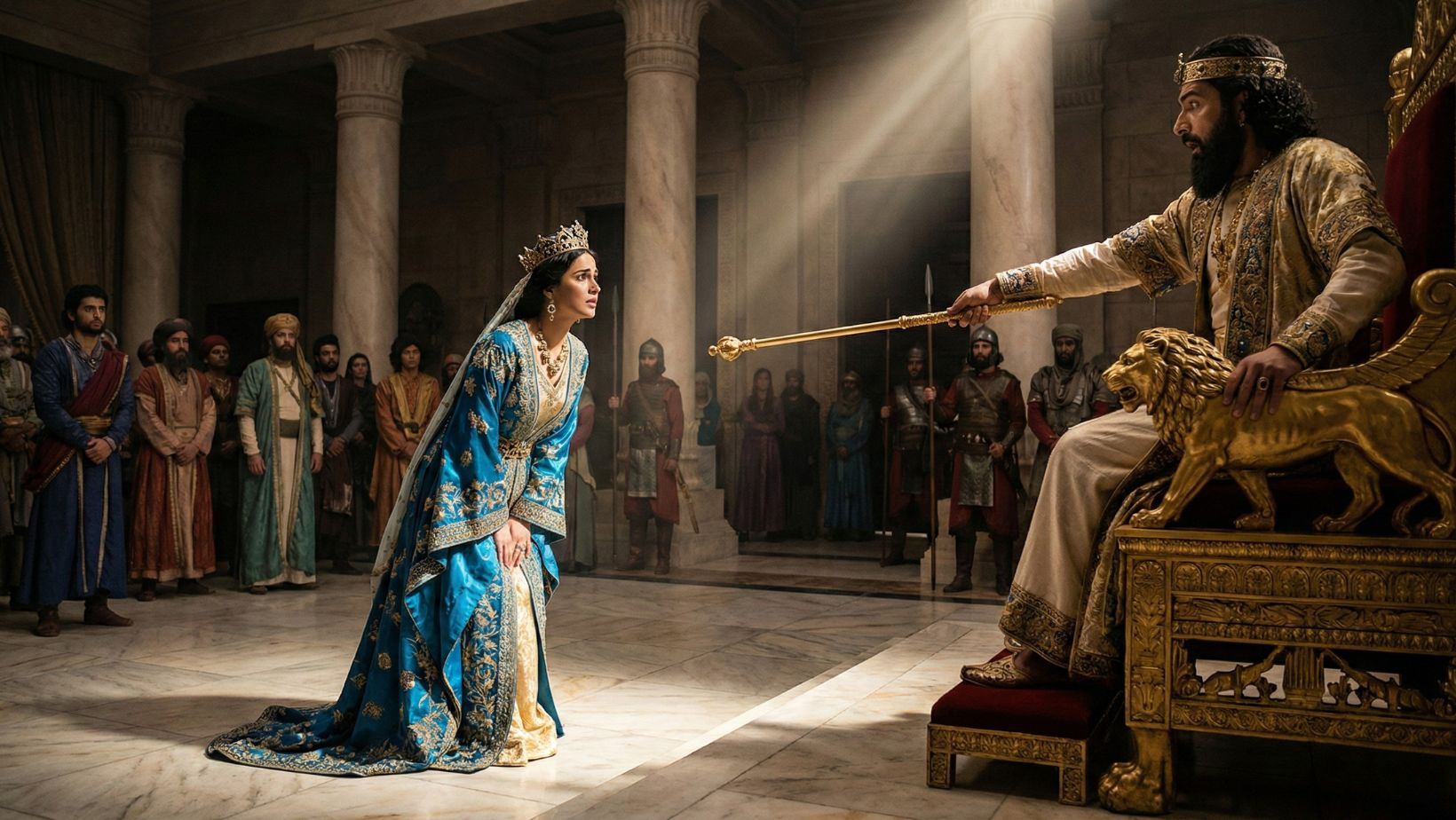
The Book of Esther is one of the most masterful narratives in the Bible, reading like a high-stakes political thriller filled with court intrigue, assassination plots, and a sudden reversal of destiny. Uniquely, it is one of only two books in the Bible (along with Song of Solomon) that does not explicitly mention the name of God. However, His fingerprints are everywhere. The story is set in the Persian capital of Susa and details how a Jewish orphan girl rose to become the Queen of Persia, ultimately saving her people from a state-sanctioned genocide. It is the historical basis for the Jewish festival of Purim and serves as a profound testament to the doctrine of Divine Providence—the belief that God is actively working behind the scenes of history to protect His covenant people.
Quick Facts
- Name: Esther (Hebrew: Megillat Ester)
- Author: Unknown (Traditionally attributed to Mordecai or the Men of the Great Assembly)
- Main Characters: Esther, Mordecai, King Xerxes (Ahasuerus), Haman
- Key Figures: Queen Vashti, Zeresh, Hegai
- Era: The Persian Empire (Reign of Xerxes I, ~486–465 BCE)
- Core Themes: Providence, courage, anti-Semitism, deliverance, sovereignty
- Setting: Susa (Shushan), the winter capital of Persia
- Literary Style: Historical narrative / Diaspora novella
- Key Symbol: The Golden Scepter — representing the King’s grace and the power of life and death
Name Meaning
Esther has a dual identity. Her Hebrew name was Hadassah, meaning “Myrtle” (a symbol of peace and thanksgiving). Her Persian name, Esther, likely comes from the Persian word for “Star” (or possibly the goddess Ishtar). The name implies someone who shines light in the darkness.
Historical Context
Time: The events take place between the first return of exiles (under Zerubbabel) and the second return (under Ezra). These are the Jews who stayed behind in the Empire. The King: Ahasuerus is identified as Xerxes I, a powerful monarch historically known for his vast wealth, volatile temper, and massive military campaign against Greece (depicted in the movie 300). The Agagite Feud: The villain, Haman, is an Agagite—a descendant of Agag, King of the Amalekites. This connects the story back to King Saul (a Benjamite) who failed to kill Agag. Now, Mordecai (a Benjamite) must finish the battle against Haman (an Agagite).
Major Roles / Identity
Esther (The Hidden Queen): An orphan raised by her cousin, she wins a beauty contest to become queen but keeps her Jewish identity a secret until the critical moment. Mordecai (The Faithful Guardian): Esther’s older cousin and a court official who uncovers an assassination plot and refuses to bow to Haman. Haman (The Enemy): The archetype of anti-Semitism; his bruised ego leads him to orchestrate a decree to annihilate every Jew in the empire. Xerxes (The Volatile Ruler): A king of immense power but little self-control, easily manipulated by his advisors and his own vanity.
Key Character Traits
Courage: Esther risks execution by approaching the King without a summons (“If I perish, I perish”). Providence: Coincidences abound—Vashti’s removal, Mordecai overhearing the plot, the King’s insomnia—revealing a divine script. Pride: Haman’s need for validation is his undoing; he builds a gallows for Mordecai that he eventually hangs on himself. Loyalty: Mordecai remains loyal to the King (saving his life) and to his people, even when it puts him in mortal danger.
Main Events
Vashti’s Refusal: Queen Vashti refuses to be displayed at the King’s drunken banquet and is deposed, creating a vacancy. The Beauty Pageant: Esther is taken into the harem and, through grace and favor, is crowned Queen. The Refusal to Bow: Mordecai refuses to honor Haman, inciting Haman to cast lots (pur) to choose a date for the extermination of the Jews. The Plea: Mordecai convinces Esther to intervene, arguing that she may have attained royalty “for such a time as this.” The Golden Scepter: Esther approaches the King uninvited; he extends the scepter, sparing her life. The King’s Insomnia: A sleepless Xerxes reads the chronicles and realizes he never rewarded Mordecai for saving his life—just as Haman arrives to ask for Mordecai’s execution. The Banquet: Esther reveals her identity and Haman’s plot; the King is enraged, and Haman is hanged on his own gallows. The Defense: Since Persian laws cannot be revoked, a new decree allows the Jews to defend themselves, leading to a great victory.
Major Relationships
Esther and Mordecai: A relationship defined by obedience and wisdom. Even as Queen, Esther “continued to follow Mordecai’s instructions as she had done when he was bringing her up.” Haman and Mordecai: A cosmic struggle between the people of God and the enemies of God, echoing the ancient war between Israel and Amalek. Esther and Xerxes: A delicate dance where Esther uses tact, timing, and respect to guide a volatile husband toward justice.
Notable Passages
Esther 4:14: The central thesis: “And who knows but that you have come to your royal position for such a time as this?” Esther 4:16: The statement of resolve: “I will go to the king, even though it is against the law. And if I perish, I perish.” Esther 6:6: Haman’s irony: “Who is there the king would rather honor than me?” Esther 9:22: The origin of Purim: “As the time when the Jews got relief from their enemies, and as the month when their sorrow was turned into joy.”
Legacy & Impact
The book establishes the feast of Purim, celebrated annually with reading the scroll (Megillah), giving gifts, and celebrating survival. It is a powerful message to the Diaspora that God remains with His people even when they are far from Jerusalem and the Temple. It teaches that God often works through “natural” means—politics, timing, and human courage—rather than overt miracles.
Symbolism / Typology
The “Pur” (Lots): Symbolizes that what looks like chance or luck is actually under the sovereign control of God (“The lot is cast into the lap, but its every decision is from the Lord”). The Gallows: A symbol of “ironic justice” or retribution; the trap set for the righteous snaps shut on the wicked. Esther as Intercessor: Esther functions as a type of mediator, willing to lay down her life to save her people, foreshadowing the work of Christ.







Leave a Reply