
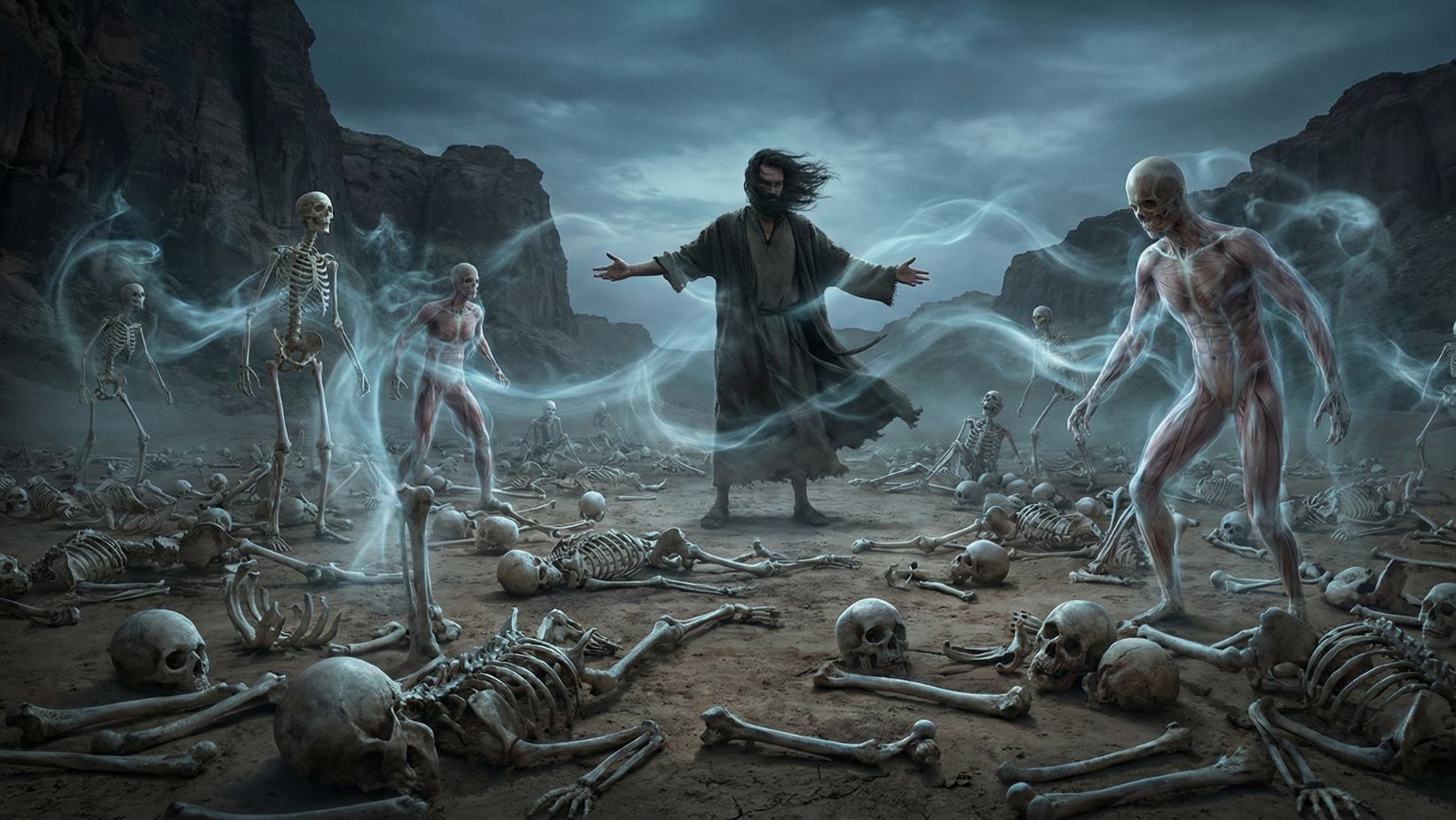
The Book of Daniel is unique in the Old Testament, blending gripping court narratives with mind-bending apocalyptic visions. It tells the story of four young Jewish nobility—Daniel and his three friends—who are exiled to Babylon and trained to serve in the court of the very king who destroyed their homeland. It is a book about how to live faithfully in a hostile culture (“in the world but not of it”). While the first half (Chapters 1–6) details their personal integrity and miraculous deliverances (the fiery furnace, the lions’ den), the second half (Chapters 7–12) shifts to prophetic visions that outline the rise and fall of future world empires, culminating in the eternal Kingdom of God.
Quick Facts
- Name: Daniel (Hebrew: Daniyyel, meaning “God is my Judge”)
- Author: Daniel
- Date Written: ~536–530 BCE
- Kings Served: Nebuchadnezzar, Belshazzar (Babylon); Darius, Cyrus (Medo-Persia)
- Languages: Written in both Hebrew (Ch 1, 8–12) and Aramaic (Ch 2–7)
- Core Themes: God’s sovereignty over nations, faithfulness under pressure, the End Times
- Setting: The royal courts of Babylon and Susa
- Key Symbol: The Statue of Empires — representing the succession of worldly powers
Name Meaning
“God is my Judge” is a fitting name for a man who answered only to God, regardless of what earthly laws or kings commanded.
- Babylonian Name: His captors renamed him Belteshazzar (“Lady, protect the King” or referring to the god Bel) in an attempt to erase his Jewish identity.
Historical Context
- The Exile: Daniel was taken in the first wave of deportation (605 BCE) as a teenager. He lived the rest of his long life (approx. 85 years) in a foreign land.
- The Transition: He is one of the few figures to serve at the highest levels of two different world empires: the Babylonian Empire (gold head) and the Medo-Persian Empire (silver chest).
- Cultural Pressure: The book opens with a “re-education” program designed to assimilate the Jewish youth by changing their names, diet, and education.
Major Roles / Identity
- The Statesman: Daniel was not a priest or a remote prophet; he was a high-ranking government official, effectively a Prime Minister, managing the affairs of a pagan empire with excellence.
- The Interpreter: He possessed the supernatural ability to interpret dreams and riddles that baffled the local magicians and astrologers.
- The Intercessor: In Chapter 9, he prays a model prayer of corporate repentance on behalf of his people, reading the scrolls of Jeremiah to understand the timing of the exile.
- The Apocalyptic Seer: He received detailed visions of the future, predicting the rise of Greece and Rome and the coming of the “Son of Man.”
Key Character Traits
- Uncompromising Purity: As a youth, he “resolved not to defile himself” with the royal food, choosing vegetables and water instead to honor God’s law.
- Consistency: His enemies could find no corruption in him; the only way to trap him was to make his faith illegal.
- Courage: He spoke hard truths to violent dictators, telling Nebuchadnezzar he would go insane and Belshazzar he would die that very night.
- Discipline: Even under the threat of death, he maintained his routine of praying toward Jerusalem three times a day.
Main Events
- The Vegetable Test: Daniel and his friends prove that God’s way leads to better health and wisdom than the King’s luxury (Daniel 1).
- Nebuchadnezzar’s Dream: Daniel interprets a dream of a giant statue made of four metals, crushed by a “Stone not cut by human hands” (God’s Kingdom) (Daniel 2).
- The Fiery Furnace: Shadrach, Meshach, and Abednego refuse to bow to a gold idol. They are thrown into fire but survive, accompanied by a “fourth man” who looks like a son of the gods (Daniel 3).
- The Writing on the Wall: During a drunken party using stolen Temple cups, a disembodied hand writes MENE MENE TEKEL PARSIN—judgment has come. Babylon falls that night (Daniel 5).
- The Lions’ Den: Daniel defies a ban on prayer. He is sealed in a den of lions but is found unharmed the next morning because “he trusted in his God” (Daniel 6).
- The Vision of the 70 Weeks: A complex prophecy pinpointing the timing of the Messiah’s arrival and being “cut off” (Daniel 9).
Major Relationships
- Daniel and the Three Friends: A brotherhood of faith (Hananiah, Mishael, Azariah) that supported each other in a hostile environment.
- Daniel and Nebuchadnezzar: A fascinating dynamic. Daniel served him loyally but warned him sternly. Nebuchadnezzar eventually praises Daniel’s God after his bout of insanity.
- Daniel and the Angels: Daniel has extensive interactions with Gabriel and Michael, revealing the spiritual warfare occurring behind political events.
Notable Passages
- Daniel 2:44: The Kingdom Prophecy: “The God of heaven will set up a kingdom that will never be destroyed… It will crush all those kingdoms and bring them to an end.”
- Daniel 3:17–18: The Defiant Faith: “The God we serve is able to deliver us… But even if he does not, we will not serve your gods.”
- Daniel 7:13–14: The Son of Man: “There before me was one like a son of man, coming with the clouds of heaven… He was given authority, glory and sovereign power.”
- Daniel 12:3: The Promise: “Those who are wise will shine like the brightness of the heavens, and those who lead many to righteousness, like the stars for ever and ever.”
Legacy & Impact
The Book of Daniel provides the blueprint for history. It assures believers that earthly empires are temporary and beastly, but God is in control.
- The “Son of Man”: Jesus chose this title (from Daniel 7) as His primary way of referring to Himself, signaling that He was the cosmic King.
- Resurrection: Daniel 12 contains one of the clearest Old Testament references to the bodily resurrection of the dead.
Symbolism / Typology
- The Stone: Represents Christ and His Kingdom, which starts small (cut from a mountain) but grows to fill the whole earth.
- The Tree: In Chapter 4, Nebuchadnezzar is a mighty tree cut down to a stump, symbolizing that pride comes before a fall.
- The Four Beasts: Represent the same four empires as the statue, but seen from God’s perspective—as predatory, chaotic monsters rather than glorious metals.







Leave a Reply