
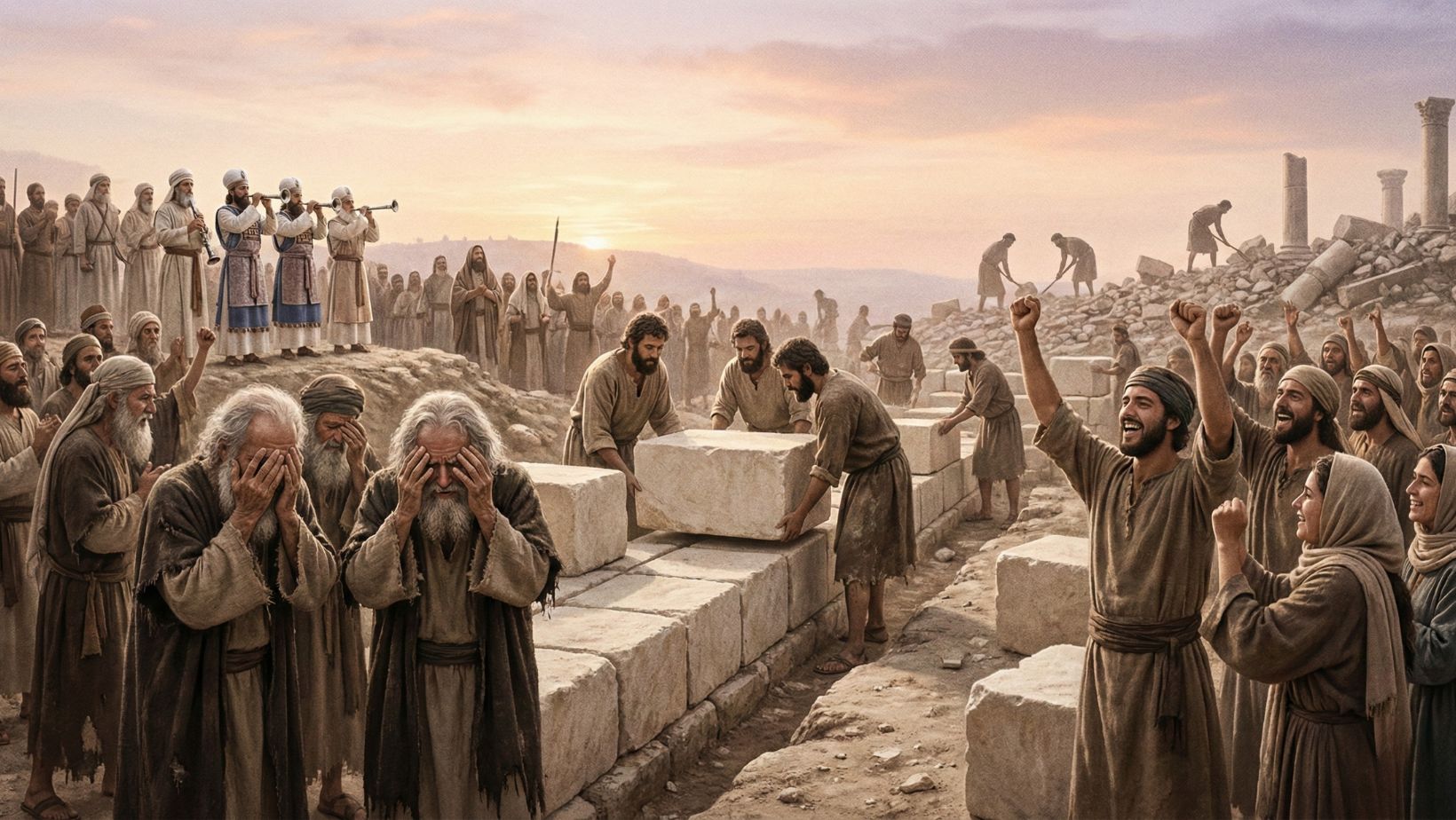
The Book of Ezra is a narrative of restoration, documenting the fulfillment of God’s promise to bring His people back from Babylonian exile. It serves as the direct sequel to 2 Chronicles, beginning with the momentous decree of Cyrus the Great that allowed the Jewish exiles to return to Jerusalem. The book is divided into two distinct eras separated by roughly 60 years: the first section focuses on the rebuilding of the Temple under Zerubbabel, while the second focuses on the reformation of the people under Ezra the scribe. It is a story of grit and grace, illustrating that while physical walls and altars can be rebuilt with stone, a community can only be rebuilt through a return to the Word of God and holiness.
Quick Facts
- Name: Ezra (Hebrew: Ezra, meaning “Help” or “Helper”)
- Author: Traditionally attributed to Ezra the Scribe (likely using records from Nehemiah)
- Main Characters: Ezra, Zerubbabel, Jeshua (Joshua), King Cyrus, King Artaxerxes
- Key Figures: Prophets Haggai and Zechariah, local adversaries (Rehum and Shimshai)
- Era: The Persian Period / Post-Exilic Era (~538–450 BCE)
- Core Themes: Return from exile, rebuilding the Temple, sovereignty of God, religious purity
- Setting: Babylon (modern Iraq) and Jerusalem
- Literary Style: Historical narrative with included official Aramaic court documents
- Key Symbol: The Scroll of the Law — representing the foundation of the community’s life
Name Meaning
The name Ezra is a shortened form of Azaryahu, meaning “Yahweh Helps.” This is fitting for a leader who constantly attributes his success not to political skill, but to “the gracious hand of his God being upon him.”
Historical Context
Time: The narrative spans about 80 years. It opens in 538 BCE with the fall of Babylon to Persia and concludes around 457 BCE with Ezra’s reforms. The Persian Policy: Unlike the Assyrians or Babylonians who displaced populations, the Persian kings (Cyrus, Darius, Artaxerxes) encouraged subject peoples to return to their homelands and worship their own gods, believing this would bring blessing upon the empire. The Remnant: Only a small fraction of Jews chose to return (approx. 50,000 in the first wave); many had become comfortable in Babylon.
Major Roles / Identity
Zerubbabel: The governor of the first wave of returnees; a descendant of David who leads the physical reconstruction of the Temple. Jeshua (Joshua): The High Priest who restores the altar and reinstitutes the sacrificial system. The Adversaries: Local inhabitants (ancestors of the Samaritans) who use political intrigue and intimidation to halt the building work for over a decade. Ezra the Scribe: A priest and scholar who leads the second wave of returnees to teach the statutes and rules of God to Israel.
Key Character Traits
Providence: The book repeatedly emphasizes that God moves the hearts of pagan kings (Cyrus, Darius, Artaxerxes) to fund and protect His work. Resilience: The people continue to build despite “fear of the people around them” and legal injunctions to stop. Legal Rigor: Ezra is portrayed as a man deeply committed to the details of the Law, unwilling to compromise on issues of holiness. Corporate Grief: Seen when the elders weep at the laying of the foundation, remembering the glory of the first Temple, and later when Ezra weeps over the people’s intermarriage.
Main Events
The Decree of Cyrus: The Persian king authorizes the return and returns the stolen Temple vessels (Ezra 1). The Altar Rebuilt: Before the Temple is up, worship begins on a bare altar, prioritizing spiritual relation over architecture. Laying the Foundation: A bittersweet ceremony where shouts of joy mix with the weeping of the older generation (Ezra 3). The Opposition: Enemies send letters to the Persian court, successfully halting construction for roughly 16 years. Prophetic Intervention: Haggai and Zechariah preach to the people, urging them to resume building, which leads to the Temple’s completion in 516 BCE. Ezra’s Arrival: Years later, Ezra arrives with a decree to teach the Law and beautify the Temple. The Marriage Crisis: Ezra discovers that the holy seed has mixed with the surrounding pagan peoples, leading to a drastic measure of separation (Ezra 9–10).
Major Relationships
Ezra and the Law: “For Ezra had set his heart to study the Law of the Lord, and to do it and to teach his statutes…” (Ezra 7:10). Zerubbabel and the Prophets: The political leader needed the spiritual push from Haggai and Zechariah to overcome discouragement. The Returnees and the “People of the Land”: A relationship defined by tension, exclusion, and fear, setting the stage for centuries of Jewish-Samaritan conflict. God and the Persian Kings: A demonstration that God is the King of Kings, using worldly emperors as His treasurers and protectors.
Notable Passages
Ezra 1:1: “The Lord moved the heart of Cyrus king of Persia…” Ezra 3:11: “With praise and thanksgiving they sang to the Lord: ‘He is good; his love toward Israel endures forever.’” Ezra 7:10: The Scribe’s Motto: “For Ezra had set his heart to study the Law of the Lord, and to do it and to teach his statutes and rules in Israel.” Ezra 9:6: Ezra’s prayer: “I am too ashamed and disgraced, my God, to lift up my face to you, because our sins are higher than our heads.”
Legacy & Impact
The Book of Ezra marks the transition from the Hebrew religion of the pre-exilic period to Judaism as a religion of the Book. It established the synagogue system (indirectly, through the focus on teaching) and the Scribe as a central religious figure. It highlights that the “House of God” is not just a building, but a people set apart by holiness.
Symbolism / Typology
The Second Exodus: The return from Babylon parallels the deliverance from Egypt, but with a focus on spiritual rather than physical slavery. The Journey: Symbolizes the pilgrimage of faith, leaving the “comforts” of a pagan world (Babylon) for the difficult but promised place of God’s blessing. The Mixed Marriages: Represents the danger of syncretism—trying to blend the holy with the profane, which threatens the covenant identity.







Leave a Reply