
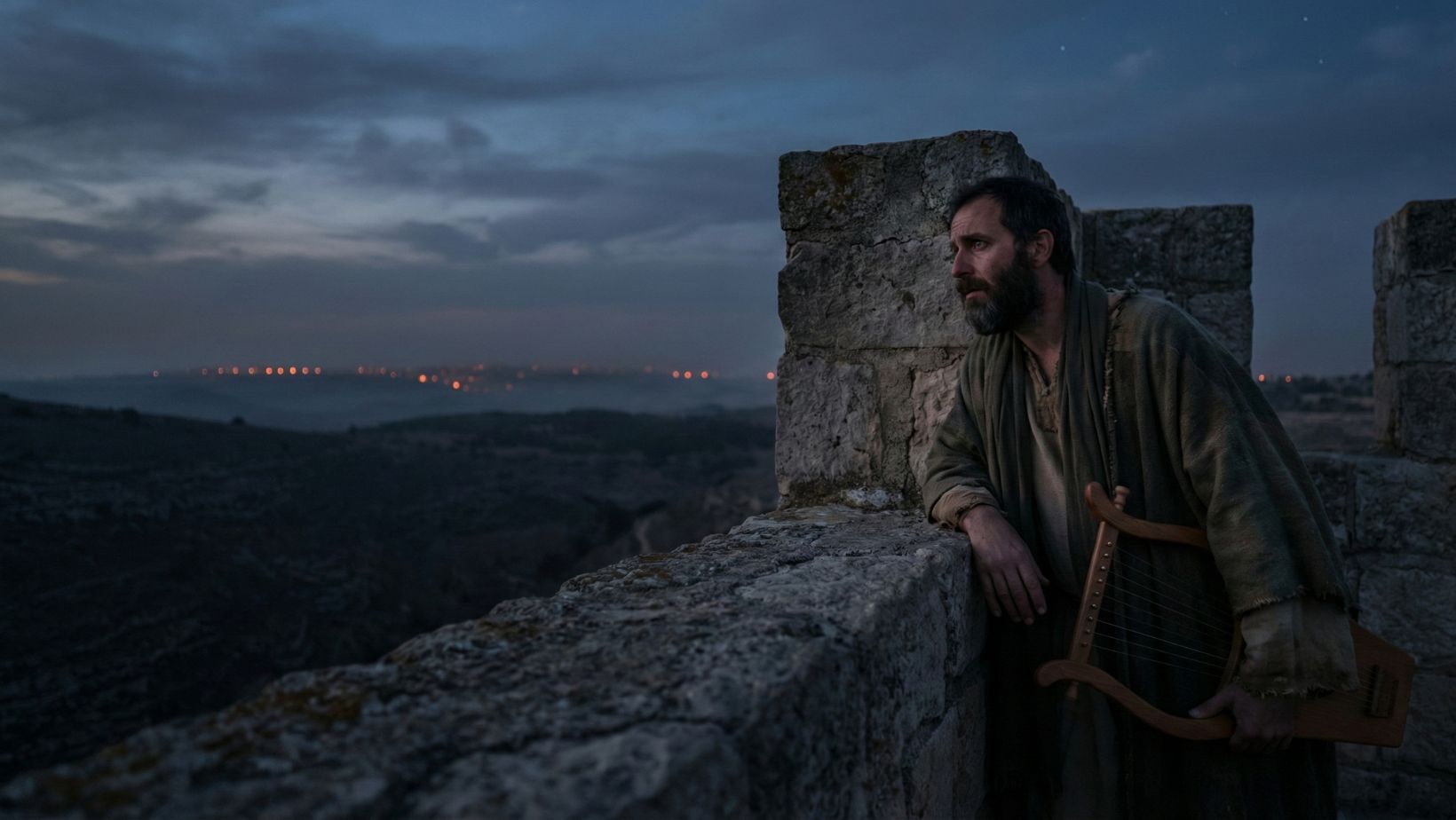
Habakkuk is unique among the prophets because he did not speak for God to the people, but rather spoke to God on behalf of the people. He is the “Philosopher Prophet,” the man who dared to ask God, “Why?” wrestling with the age-old problem of evil. Living during the final, violent days of the Kingdom of Judah, Habakkuk was horrified by the injustice he saw around him and confused by God’s silence. His confusion deepened when God revealed His plan: to use the wicked Babylonians to punish Judah. The Book of Habakkuk chronicles his journey from agonizing doubt to absolute trust, concluding with one of the most beautiful confessions of faith in Scripture.
Quick Facts
- Name: Habakkuk (Hebrew: Chabaqquq)
- Tribe/Nation: Judah (Southern Kingdom)
- Era: Pre-Exilic (Late 7th Century BCE, reign of Jehoiakim)
- Profession: Prophet, likely a Levitical musician/priest
- Home: Jerusalem
- Book: The Book of Habakkuk (3 chapters)
- Key Virtues: Honesty in prayer, patience, joy in suffering
- Legacy: Provided the theological foundation for the Reformation (“The righteous shall live by his faith”)
- Symbol: The Watchtower — representing waiting for God’s answer
Name Meaning
“Habakkuk” is derived from a Hebrew root meaning “Embrace” or “Wrestle.” This name is remarkably fitting. He “wrestled” with God over difficult questions, yet ultimately he chose to “embrace” God’s will, clinging to Him regardless of the circumstances.
Lineage / Family Background
Background: The text gives no genealogy, simply calling him “Habakkuk the prophet.”
The Levitical Connection: Many scholars believe Habakkuk was a Levite and a temple musician. The third chapter of his book is actually a psalm, complete with musical notations (“on my stringed instruments,” Hab 3:19) and liturgical directions (“Selah”). This suggests he led worship in the Temple, making his struggle with God’s silence even more poignant.
Biblical Era / Context
Time: Approx. 612–589 BCE.
Political Context: The good King Josiah had died, and his son Jehoiakim was leading the nation back into idolatry and corruption. Internally, Judah was full of violence and injustice. Externally, the Babylonians (Chaldeans) were defeating the Egyptians and Assyrians, rising as the new terrifying world power.
Spiritual Context: Habakkuk looked at his own people and saw the law was “paralyzed” (Hab 1:4). He felt God was inactive, allowing the wicked to swallow up the righteous.
Major Roles / Identity
The Skeptic Believer: He modeled that it is not a sin to question God, provided the questions are brought to God in relationship, rather than used as an excuse to leave Him.
The Watchman: After posing his complaints, he positioned himself on the ramparts to “watch and see what he will say to me” (Hab 2:1), embodying the discipline of waiting on God.
The Intercessor: He pleaded for revival: “LORD, I have heard of your fame; I stand in awe of your deeds, O LORD. Renew them in our day” (Hab 3:2).
Key Character Traits
Raw Honesty: He bluntly asked God, “How long, O LORD, must I call for help, but you do not listen?” (Hab 1:2).
Theological Depth: He understood that God was “from everlasting” and that His eyes were “too pure to look on evil” (Hab 1:12–13), which made the use of the wicked Babylonians a theological crisis for him.
Resilience: His journey ends not with a change in circumstances, but a change in perspective. He decides to rejoice even if the economy collapses and the nation fails.
Main Life Events
The First Complaint: Habakkuk complains about the violence and injustice within Judah. He asks why God stands idly by (Hab 1:2–4).
God’s First Answer: God replies that He is doing something “you would not believe.” He is raising up the Babylonians (Chaldeans), a “ruthless and impetuous people,” to judge Judah (Hab 1:5–11).
The Second Complaint: Habakkuk is stunned. How can a holy God use a nation more wicked than Judah to punish Judah? It seemed like using a wolf to punish a naughty sheep (Hab 1:12–17).
The Vision on the Tower: God answers that Babylon’s judgment is also coming. They are puffed up, but “the righteous person will live by his faithfulness” (Hab 2:4). God pronounces five “Woes” against the Babylonians for their greed, violence, and idolatry.
The Hymn of Faith: Habakkuk trembles at the coming wrath but resolves to trust God. He closes with a song of praise, declaring that God is his strength (Hab 3).
Major Relationships
The Chaldeans (Babylonians): The instrument of God’s judgment. Habakkuk describes them vividly: “Their horses are swifter than leopards, fiercer than wolves at dusk” (Hab 1:8).
God: The book is an intimate dialogue. It is one of the few prophetic books that is not an oracle to the people, but a private conversation made public.
Notable Passages
Habakkuk 2:4: “See, the enemy is puffed up; his desires are not upright—but the righteous person will live by his faithfulness.” (The central verse of the book).
Habakkuk 2:14: “For the earth will be filled with the knowledge of the glory of the LORD as the waters cover the sea.”
Habakkuk 2:20: “The LORD is in his holy temple; let all the earth be silent before him.”
Habakkuk 3:17–18: “Though the fig tree does not bud and there are no grapes on the vines… yet I will rejoice in the LORD, I will be joyful in God my Savior.”
Legacy & Impact
The Reformation: The Apostle Paul quotes Habakkuk 2:4 (“The righteous shall live by faith”) in Romans 1:17 and Galatians 3:11. This verse became the catalyst for Martin Luther’s revelation of justification by faith alone (sola fide), changing the course of Church history.
Theodicy: Habakkuk provides the biblical model for dealing with the problem of pain. It teaches that faith is not the absence of doubt, but the tenacity to hold onto God through the doubt.
Symbolism / Typology
The Watchtower: Represents the state of spiritual alertness and the separation from the noise of the world to hear God’s voice.
The Deer’s Feet: “He makes my feet like the feet of a deer, he enables me to tread on the heights” (Hab 3:19). This symbolizes sure-footed confidence and ability to navigate the dangerous, rocky terrain of life (suffering) without slipping.
Extra-Biblical References
Bel and the Dragon: In the apocryphal additions to Daniel, there is a legendary story where an angel grabs Habakkuk by his hair and flies him from Judea to Babylon to deliver a bowl of stew to Daniel, who is in the lions’ den. While legendary, it highlights Habakkuk’s reputation as a servant of God.
Dead Sea Scrolls: A “Commentary on Habakkuk” (Pesher Habakkuk) was one of the first scrolls discovered at Qumran, showing how important this book was to the Essene community in understanding their own times of trouble.







Leave a Reply