
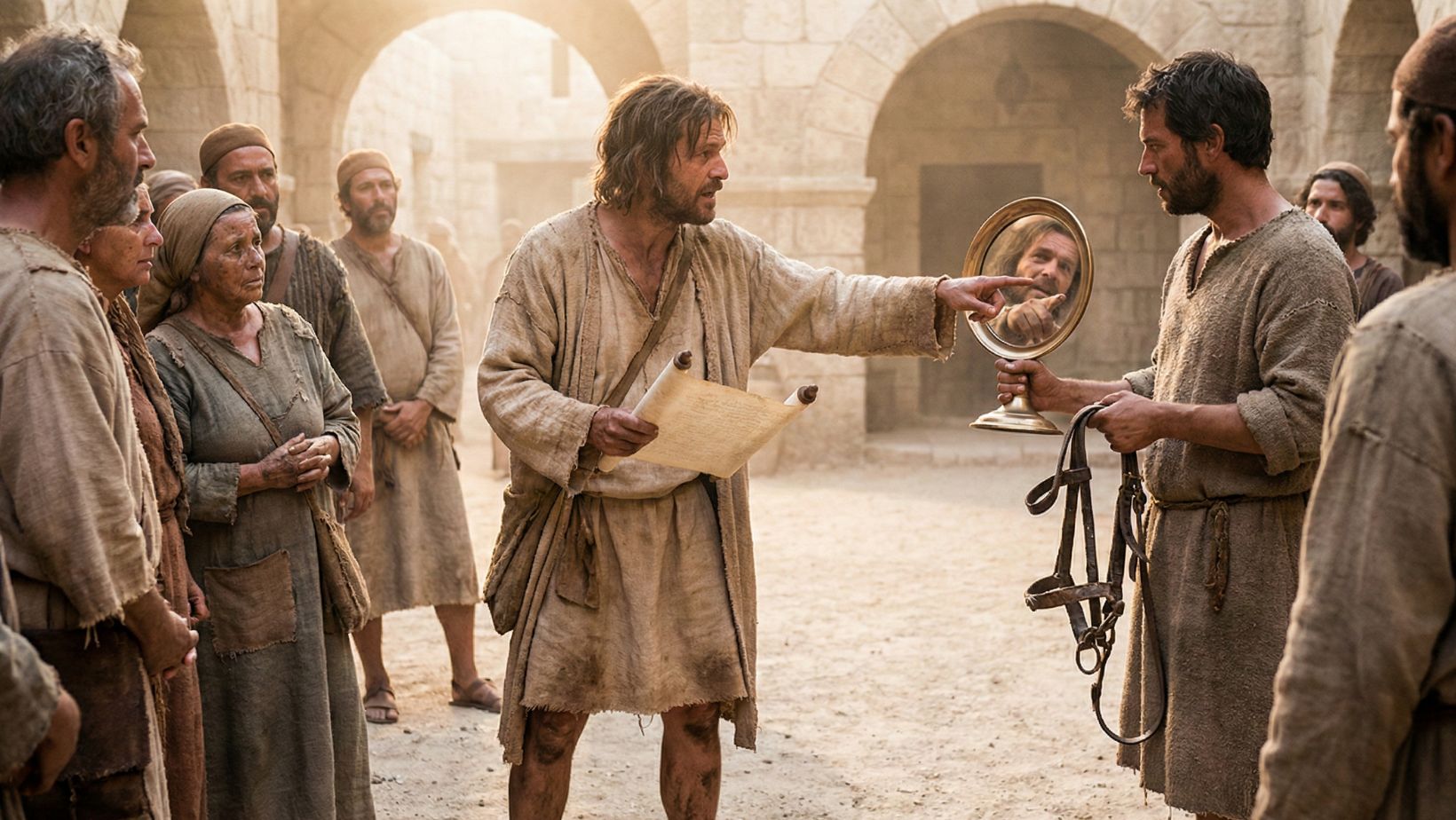
The Epistle of James is often called “The Proverbs of the New Testament.” It is a hard-hitting, practical manual on how to live out the Christian faith in the real world. Written by James, the half-brother of Jesus and leader of the church in Jerusalem, it lacks the complex theology of Paul’s letters and instead offers punchy, imperative commands. James argues that genuine faith is not merely an intellectual agreement with facts but a transformative force that produces action. If a person claims to have faith but shows no change in how they speak, treat the poor, or handle trials, James bluntly declares that their faith is “dead.”
Quick Facts
- Author: James (Jacob), the half-brother of Jesus
- Date Written: ~44–49 AD (Likely the very first New Testament book written)
- Audience: The “Twelve Tribes scattered among the nations” (Jewish Christians)
- Theme: Faith in Action / Spiritual Maturity
- Key Word: “Doers” and “Works”
- Key Verse: James 2:26 (“As the body without the spirit is dead, so faith without deeds is dead.”)
- Structure: A collection of wisdom sayings (similar to Proverbs or the Sermon on the Mount)
- Symbol: The Mirror — representing the Word of God that reveals our true state
Title / Purpose
Title: The Epistle of James.
Purpose:
- To Expose Hypocrisy: To confront a “dead orthodoxy” where people claimed to believe in Jesus but continued to live in sin, favoritism, and pride.
- To Instruct in Wisdom: To teach believers how to handle suffering, control their tongues, and pray effectively.
- To Challenge the Rich: To rebuke wealthy landowners who were oppressing the poor and withholding wages.
Authorship & Context
The Author: James (Hebrew: Ya’akov) was not a believer during Jesus’ earthly ministry (John 7:5). However, after the Resurrected Jesus appeared to him (1 Corinthians 15:7), he became a pillar of the early church. He was known as “James the Just” and tradition says he had “knees like a camel” because he spent so much time kneeling in prayer.
The Context: This is likely the earliest Christian document we have. It reflects a very Jewish setting (he calls the church meeting a “synagogue” in 2:2) and addresses believers who are facing economic persecution.
The Tone: Direct and authoritative. James uses over 50 imperatives (commands) in just 108 verses.
Structure / Narrative Arc
Unlike Paul’s letters which build a linear argument, James cycles through topics like a wisdom teacher, revisiting themes of speech, wealth, and trials.
1. True Religion under Tension (Chapter 1):
- Trials: “Count it all joy” when you face trials, because they produce perseverance.
- Temptation: God tempts no one; we are dragged away by our own evil desires.
- The Word: Do not just listen to the Word (like looking in a mirror and forgetting your face)—do what it says.
2. True Faith vs. False Faith (Chapters 2–3):
- Favoritism: Warning against treating a rich man better than a poor man in church.
- Faith and Works: The theological core. Abraham and Rahab are used as examples of people whose faith was proven by what they did.
- The Tongue: A small spark sets a forest on fire. The tongue is a restless evil that no human can tame.
3. True Wisdom vs. Worldliness (Chapters 4–5):
- Quarrels: Fights come from internal desires. “You do not have because you do not ask.”
- Arrogance: Don’t say “Tomorrow I will do this or that.” Say, “If the Lord wills.”
- The Rich: A terrifying warning to the wealthy who hoard wealth while their workers go hungry.
- Patience & Prayer: Be patient like a farmer waiting for rain. Pray for the sick; the prayer of a righteous person is powerful and effective.
Major Themes
Faith and Works: This is the most controversial theme. While Paul says we are justified by faith apart from works (Romans 3:28), James says we are justified by works and not by faith alone (2:24).
- Resolution: They are fighting different enemies. Paul is fighting Legalism (the idea that works cause salvation). James is fighting Laziness (the idea that salvation requires no change). Paul speaks of the root of salvation; James speaks of the fruit.
The Tongue: James provides the Bible’s most extensive teaching on speech. He describes the tongue as a bit in a horse’s mouth, a rudder on a ship, and a fire from hell.
Rich and Poor: James is a champion of the poor. He defines “pure religion” as looking after orphans and widows (1:27) and harshly condemns the rich who live in luxury while oppressing others.
Wisdom: He distinguishes between “earthly wisdom” (envy, ambition) and “wisdom from heaven” (pure, peace-loving, considerate).
Key Characters
James: The pastor-teacher. Abraham: Used as an example of works—he was willing to offer Isaac on the altar. Rahab: Used as an example of works—she hid the spies and sent them off safely. Job: Cited as an example of perseverance in suffering. Elijah: Cited as an example of the power of prayer (he prayed for rain to stop and start).
Notable Passages
Count it Joy (1:2): “Consider it pure joy, my brothers and sisters, whenever you face trials of many kinds…”
Mirror of the Word (1:23–24): “Anyone who listens to the word but does not do what it says is like someone who looks at his face in a mirror and, after looking at himself, goes away and immediately forgets what he looks like.”
Faith is Dead (2:17): “In the same way, faith by itself, if it is not accompanied by action, is dead.”
The Tongue (3:5): “Likewise, the tongue is a small part of the body, but it makes great boasts. Consider what a great forest is set on fire by a small spark.”
Submission (4:7): “Submit yourselves, then, to God. Resist the devil, and he will flee from you.”
Prayer (5:16): “The prayer of a righteous person is powerful and effective.”
Legacy & Impact
Martin Luther: The Reformer famously struggled with this book, calling it an “epistle of straw” compared to Romans, because he felt it lacked the focus on Christ’s work. However, he kept it in his Bible, and the church has maintained it as a vital balance to cheap grace.
Social Justice: James has been a favorite text for Christian movements focused on social justice, fair wages, and care for the marginalized.
Alcoholics Anonymous: The early AA movement drew heavily from James, particularly the instruction to “confess your sins to each other and pray for each other so that you may be healed” (5:16).
Symbolism / Typology
The Mirror: The Word of God. It shows us our dirt (sin) so that we can wash it off (repent). The Rudder: A tiny mechanism that steers a massive ship, symbolizing how the tongue directs the course of one’s life. The Farmer: A symbol of the Christian life—waiting patiently for the “autumn and spring rains” (the return of the Lord) while the crop matures.







Leave a Reply