
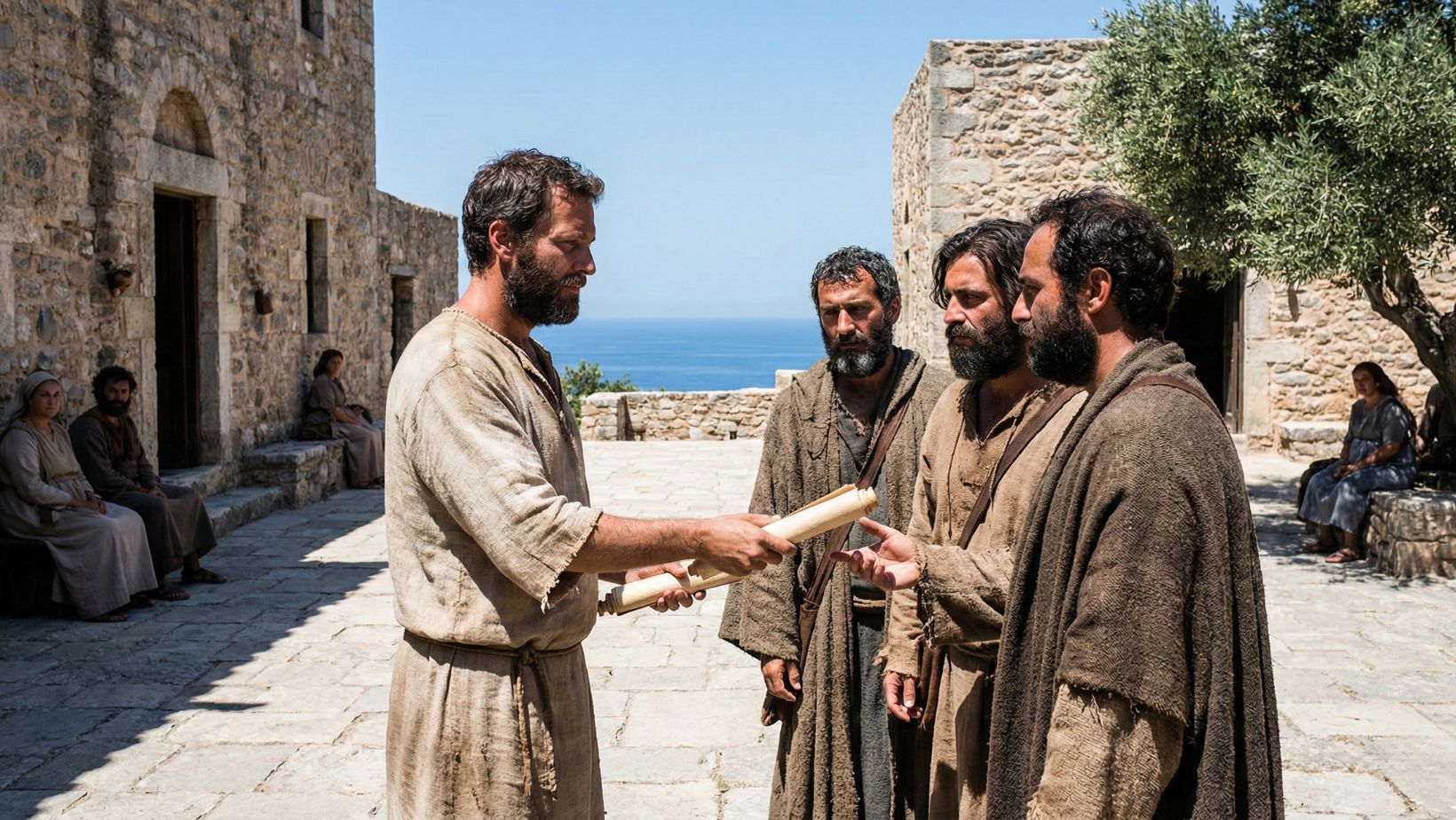
The Epistle to Titus is a compact, punchy manual on church organization and Christian living. Written by the Apostle Paul to his trusted associate Titus, it addresses a specific and difficult mission: bringing order to the chaotic network of house churches on the island of Crete. If Timothy was the sensitive pastor needing encouragement, Titus was the tough “troubleshooter” sent to handle difficult situations. The letter is famous for its harsh assessment of the local culture (“Cretans are always liars, evil brutes, lazy gluttons”) and its beautiful summary of the Gospel—that the grace of God has appeared not just to save us, but to train us to live self-controlled, upright lives. It bridges the gap between sound doctrine and good works.
Quick Facts
- Author: The Apostle Paul
- Date Written: ~63–65 AD (Between Paul’s Roman imprisonments)
- Recipient: Titus (Paul’s “true son in our common faith”)
- Location: Written to Titus on the island of Crete
- Theme: Sound Doctrine leading to Good Works / Church Order
- Key Word: “Good” (Greek: kalos, referring to noble/attractive works)
- Key Verse: Titus 2:11–12 (“For the grace of God has appeared… It teaches us to say ‘No’ to ungodliness…”)
- Structure: Organization (1) → Instruction (2) → Application (3)
- Symbol: The Washing (Baptism/Regeneration)
Title / Purpose
Title: The Epistle of Paul to Titus.
Purpose:
- To Organize: Paul left Titus in Crete specifically to “straighten out what was left unfinished and appoint elders in every town” (1:5).
- To Rebuke: To silence the rebellious false teachers (especially those of the Circumcision group) who were upsetting whole households.
- To Instruct: To teach the church that belief must affect behavior—sound doctrine creates “good works.”
Authorship & Context
The Author: Paul writes as a free man, traveling between his first and second imprisonment. His tone is direct, practical, and authoritative.
The Recipient: Titus was a Gentile convert (uncircumcised) who had accompanied Paul to the Jerusalem Council (Galatians 2). He had previously handled the difficult Corinthian church, proving he had the backbone for tough assignments.
The Setting: Crete was notorious in the ancient world. To “Cretanize” meant to lie. The culture was insubordinate, violent, and dishonest. Planting a holy church in such unholy soil was a massive challenge.
Structure / Narrative Arc
The letter follows a clear “Order out of Chaos” progression.
1. Appointing Leaders (Chapter 1):
- The Mandate: Appoint elders in every town.
- The Qualifications: Elders must be blameless, hospitable, and able to refute false doctrine.
- The Opposition: The “Rebellious People” (empty talkers and deceivers) must be silenced because they are ruining families for dishonest gain.
2. Teaching Living (Chapter 2):
- Discipleship Groups: Titus must teach specific demographics: older men, older women (who then train younger women), young men, and slaves.
- The Theology: Why live this way? Because the grace of God has appeared. Grace is an active instructor, training us to renounce ungodliness.
3. Doing Good (Chapter 3):
- Public Witness: Remind the people to be subject to rulers and ready for every good work.
- The Gospel: We used to be foolish and enslaved, but God saved us “not because of righteous things we had done, but because of his mercy.”
- Handling Division: Warn a divisive person once, then twice, then have nothing to do with them.
Major Themes
Sound Doctrine vs. False Teaching: Paul emphasizes that truth is healthy (“sound”) and false teaching is like a sickness. The false teachers in Crete focused on “Jewish myths” and human commands.
Good Works: The phrase “good works” (or doing good) appears six times. Paul argues that while works do not save us (3:5), a saved person must produce them (3:8).
Grace as a Teacher: Titus 2 presents a dynamic view of grace. It is not just a pardon for the past; it is a power for the present that disciplines and trains the believer.
Godliness in Culture: The church is called to be a counter-culture. In a society known for lying and laziness, Christians are to be known for integrity and hard work so that “the word of God may not be reviled.”
Key Characters
Paul: The strategist giving orders. Titus: The apostolic delegate and organizer. The Cretan Prophet: Epimenides, a 6th-century BC philosopher whom Paul quotes (“Cretans are always liars…”). Zenas the Lawyer and Apollos: Friends mentioned in the conclusion (3:13), showing the network of early Christian workers.
Notable Passages
The Cretan Paradox (1:12): “One of Crete’s own prophets has said it: ‘Cretans are always liars, evil brutes, lazy gluttons.’ This testimony is true.”
Grace Appears (2:11–13): “For the grace of God has appeared that offers salvation to all people. It teaches us to say ‘No’ to ungodliness…”
He Saved Us (3:5): “He saved us, not because of righteous things we had done, but because of his mercy. He saved us through the washing of rebirth and renewal by the Holy Spirit.”
Divisive People (3:10): “Warn a divisive person once, and then warn them a second time. After that, have nothing to do with them.”
Legacy & Impact
Theology of Regeneration: Titus 3:5 is one of the most important verses in the Bible regarding the doctrine of regeneration (being “born again”) and the role of the Holy Spirit in salvation.
Cultural Engagement: The book provides a model for how the church should engage a hostile or decadent culture—not by withdrawing, but by modeling a “peculiar” and attractive goodness.
Symbolism / Typology
Washing (Loutron): In 3:5, baptism/regeneration is described as a “washing.” This imagery connects back to the Old Testament laver in the Tabernacle where priests washed, symbolizing the cleansing power of the Spirit.
Adorning the Doctrine: In 2:10, slaves are told to show trustworthiness so that they may “adorn” (make beautiful) the teaching of God. The metaphor is of arranging jewels to make a person look attractive—our behavior is the jewelry that makes the Gospel look beautiful to outsiders.







Leave a Reply