
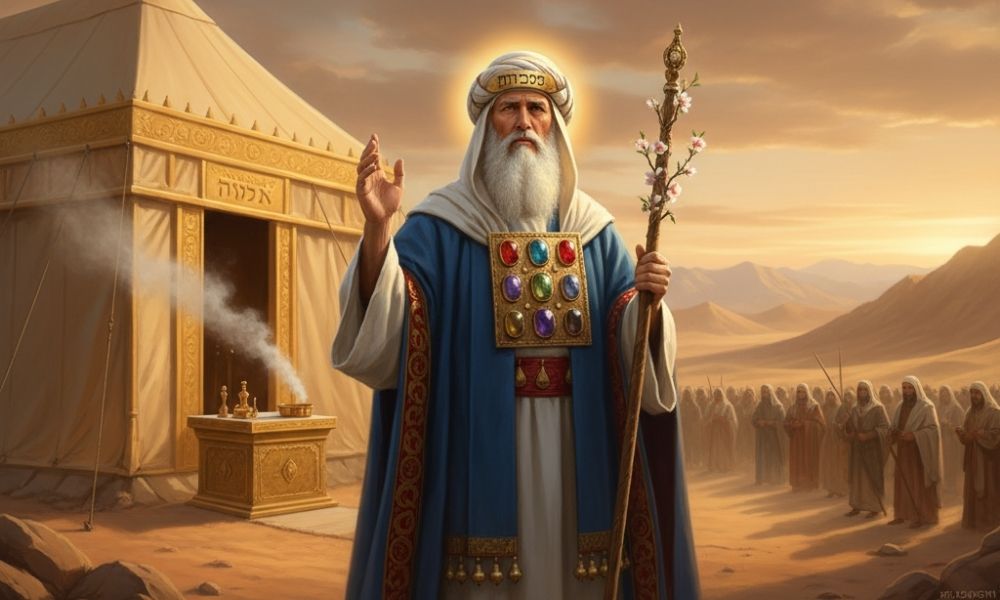
Aaron, the elder brother of Moses, was chosen by God to serve as Israel’s first high priest and the founder of the Aaronic priesthood. Acting as Moses’ spokesman before Pharaoh and mediator for the people, Aaron played a key role in the Exodus and in establishing the system of worship that would define Israel’s covenant relationship with God. Though he struggled at times with weakness and compromise, his priestly ministry points to the greater High Priest, Jesus Christ.
Quick Facts
Name: Aaron (Hebrew: Aharon, meaning “exalted,” “mountain of strength,” or “light-bringer”)
Tribe: Levi
Father: Amram
Mother: Jochebed
Siblings: Moses (younger brother), Miriam (sister)
Wife: Elisheba (daughter of Amminadab, of the tribe of Judah)
Children: Nadab, Abihu, Eleazar, Ithamar
Occupation: High priest, prophet, and mediator
Era: Exodus and wilderness period (~15th–13th century BCE)
Known For: First high priest; spokesman for Moses; leading in the priestly line of Israel
Key Verses: Exodus 4:14–16; Exodus 28–29; Leviticus 10
Symbol: The priestly garments and rod that budded
Name Meaning
The name Aaron (Aharon) likely means “exalted one” or “mountain of strength.” It reflects his elevated position as Israel’s first high priest and his role as a spiritual pillar among God’s people.
Lineage / Family Background
- Tribe: Levi, the tribe later chosen for priestly service
- Parents: Amram and Jochebed (Exodus 6:20)
- Siblings: Moses and Miriam
- Wife: Elisheba of the tribe of Judah (Exodus 6:23)
- Children: Nadab, Abihu, Eleazar, and Ithamar — all priests, though Nadab and Abihu died for offering unauthorized fire (Leviticus 10:1–2)
Biblical Era / Timeline
- Historical Context: Egyptian slavery, the Exodus, and the 40-year wilderness journey
- Religious Context: God established Aaron’s family as the priestly line responsible for sacrifices, worship, and mediation between God and Israel.
Major Roles / Identity
- Spokesman for Moses (Exodus 4:14–16):
God appointed Aaron to assist Moses in communicating His message to Pharaoh and Israel. - Performer of Signs and Wonders (Exodus 7:9–12):
Aaron’s rod became a serpent before Pharaoh, demonstrating God’s power. - First High Priest (Exodus 28–29):
Consecrated by Moses to offer sacrifices and intercede for Israel. - Leader During the Exodus:
Served as spiritual leader alongside Moses during Israel’s journey through the wilderness. - Mediator and Intercessor:
Represented the people before God through offerings, prayers, and atonement rituals (Leviticus 16).
Key Character Traits
Strengths:
- Faithful servant and supporter of Moses’ leadership
- Chosen by God for a sacred calling
- Skilled in ritual and priestly responsibility
Weaknesses:
- Compromised under pressure (made the golden calf, Exodus 32)
- At times lacked firmness in leadership
- Like Moses, disobeyed God at Meribah (Numbers 20:24–29)
Main Life Events
- Call to Serve (Exodus 4):
God called Aaron to assist Moses as his spokesman. - Confronting Pharaoh (Exodus 7–12):
Aaron spoke on Moses’ behalf and stretched forth his rod during the plagues. - Golden Calf Incident (Exodus 32):
While Moses was on Mount Sinai, Aaron yielded to the people’s demands and made an idol, for which God judged Israel. - Consecration as High Priest (Exodus 28–29):
God ordained Aaron and his sons to serve in the priesthood, marking the start of the Aaronic line. - Death of Nadab and Abihu (Leviticus 10):
Aaron’s sons offered unauthorized fire before the Lord and were consumed, teaching the seriousness of holy service. - Rebellion of Korah (Numbers 16–17):
Aaron’s priesthood was confirmed by God when his rod miraculously budded, blossomed, and produced almonds. - Sin at Meribah (Numbers 20):
Aaron joined Moses in striking the rock instead of speaking to it, and as a result, neither entered the Promised Land. - Death on Mount Hor (Numbers 20:22–29):
Aaron died peacefully; his priestly garments were passed to his son Eleazar.
Major Relationships
- God: Chosen and consecrated for priestly service.
- Moses: Brother, partner, and at times co-leader; their relationship reflected both cooperation and tension.
- Miriam: Sister and prophetess.
- Pharaoh: Opponent during the plagues.
- Eleazar: Son and priestly successor.
Notable Stories / Passages
- Aaron’s Rod Becomes a Serpent (Exodus 7:9–12) — Symbol of God’s supremacy.
- The Golden Calf (Exodus 32) — Failure in leadership and idolatry.
- The High Priest’s Consecration (Exodus 28–29) — Establishment of priestly office.
- The Day of Atonement (Leviticus 16) — Aaron’s role as intercessor for all Israel.
- Aaron’s Death (Numbers 20:22–29) — Peaceful transfer of priesthood to Eleazar.
Legacy & Impact
- Founder of the Aaronic Priesthood: His descendants served as priests throughout Israel’s history.
- Symbol of Intercession: His priestly role pointed forward to Christ’s perfect mediation (Hebrews 9).
- Lesson in Leadership: His failures highlight the need for integrity and steadfast faith.
- Revered by Israel: Remembered for his sacred office and for bearing the people’s sins before God.
“Aaron shall make atonement for himself and for the people of Israel.” — Leviticus 16:17
Symbolism / Typology
- Type of Christ: Aaron’s priestly ministry foreshadows Jesus as the eternal High Priest (Hebrews 5:4–10).
- The Priesthood: Represents the bridge between a holy God and sinful humanity.
- The Rod That B budded (Numbers 17): Symbolizes divine election, life from death, and God’s chosen mediator.
- The Breastplate of Judgment: Bearing the twelve tribes over his heart symbolizes intercession and compassion.
Extra-Biblical / Cultural Notes
- Aaron is highly regarded in Judaism, Christianity, and Islam as a prophet and priest.
- The “Aaronic Blessing” (Numbers 6:24–26) is still recited in Jewish and Christian worship today: “The Lord bless you and keep you;
The Lord make His face shine upon you and be gracious to you;
The Lord lift up His countenance upon you and give you peace.”
Summary
Aaron was the first high priest of Israel and a devoted though imperfect servant of God, chosen to intercede for the people and establish the priestly line. His life reveals both human weakness and divine grace — pointing to Jesus Christ, the perfect High Priest who mediates a better covenant.







Leave a Reply