
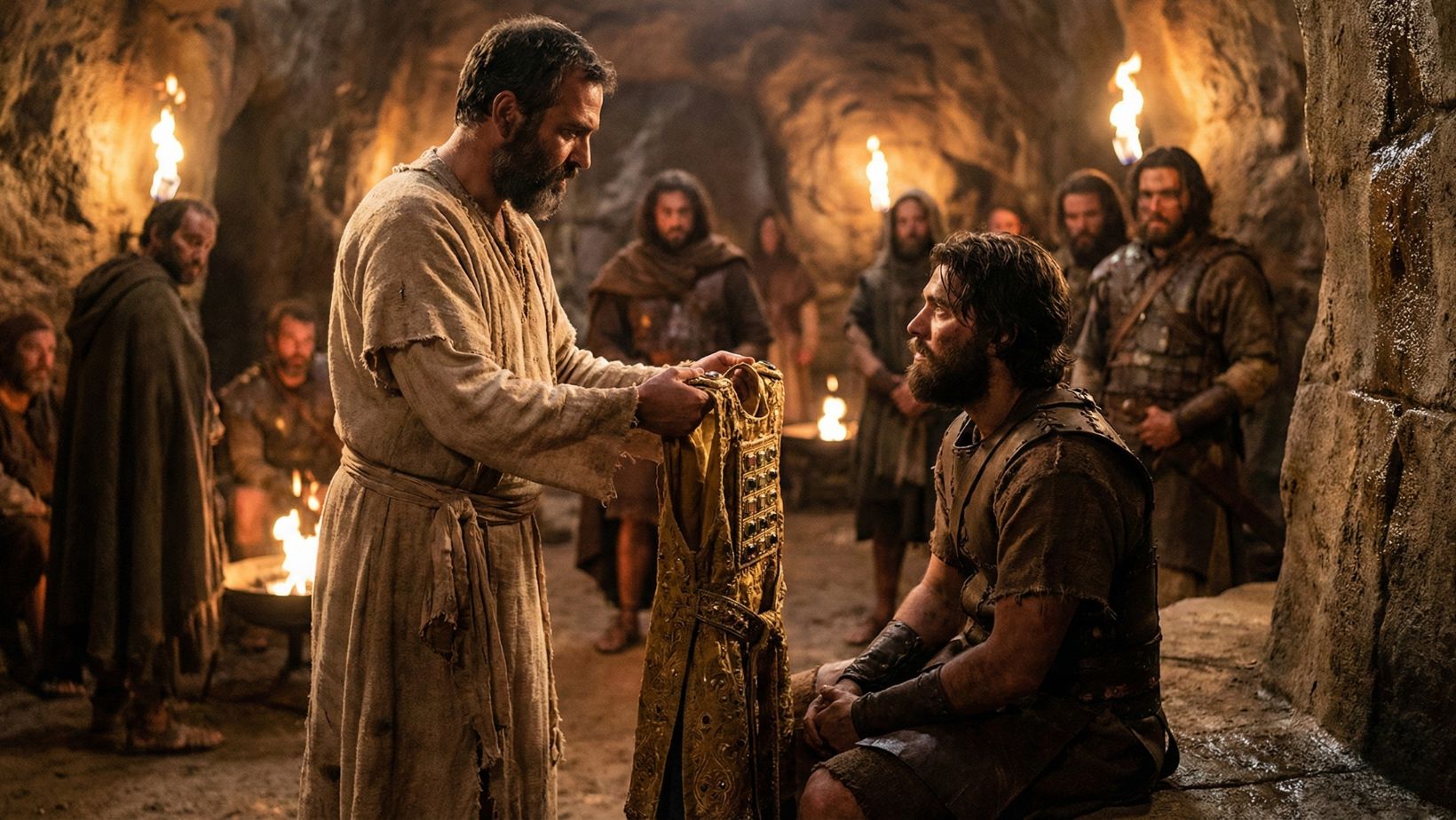
Abiathar is a tragic and pivotal figure in the history of Israel’s priesthood, serving as the High Priest during the reign of King David. He is the sole survivor of the brutal massacre of the priests at Nob ordered by King Saul. Fleeing to David with the priestly ephod, Abiathar became David’s companion in exile and the spiritual voice for the future king. His life spans the rise of Israel’s monarchy, marked by intense loyalty, political intrigue, and the ultimate fulfillment of a generational curse. While he served faithfully for decades, his final decision to support Adonijah over Solomon led to his banishment, effectively ending the priesthood of the house of Eli.
Quick Facts
- Name: Abiathar (Hebrew: Evyatar, meaning “Father of Excellence” or “Father of Abundance”)
- Tribe: Levi (House of Aaron, line of Ithamar)
- Father: Ahimelech (High Priest at Nob)
- Era: United Monarchy (Reigns of Saul, David, and Solomon)
- Home: Nob (originally), later Jerusalem, banished to Anathoth
- Title: High Priest (shared role with Zadok)
- Key Artifact: The Ephod (used to inquire of the Lord)
- Legacy: The last High Priest of the house of Eli; ancestor of the priests of Anathoth (potentially Jeremiah’s line)
Name Meaning
“Abiathar” translates to “Father of Excellence” or “The Father is Preeminent.” The name reflects high status, fitting for a High Priest, though his life ended in a loss of status. It ironically contrasts with the tragedy that befell his father’s house.
Lineage / Family Background
Origin: Born into the priestly city of Nob.
Father: Ahimelech, the High Priest who gave David the showbread and Goliath’s sword.
Ancestry: A direct descendant of Eli, the priest who trained Samuel. He represents the fourth generation from Eli (Eli → Phinehas → Ahitub → Ahimelech → Abiathar).
Sons: Jonathan and Ahimelech (named after his grandfather).
Biblical Era / Context
Time: 11th–10th Century BCE.
Setting: The transition from the chaotic period of Saul’s pursuit of David to the establishment of the Davidic dynasty and the succession crisis of Solomon.
Political Context: A time of civil war, consolidation of power, and shifting alliances within the royal court. The priesthood was central to political legitimacy.
Major Roles / Identity
The Survivor: The only one to escape Doeg the Edomite’s slaughter of the 85 priests at Nob.
The King’s Priest: Served as David’s personal chaplain during his years as a fugitive, using the ephod to receive divine direction.
Joint High Priest: Served alongside Zadok during David’s reign in Jerusalem.
Political Partisan: A key supporter of David during Absalom’s rebellion, but later a supporter of Adonijah’s failed bid for the throne.
Key Character Traits
Resilience: Survived the massacre of his entire family and immediately sought refuge and purpose.
Loyalty to David: Remained steadfast by David’s side in the wilderness and during the rebellion of Absalom.
Spiritual Sensitivity: Managed the Urim and Thummim, facilitating direct communication between God and David.
Political Miscalculation: Failed to discern the shift in divine and royal favor toward Solomon in his old age.
Main Life Events
Escape from Nob: When Saul ordered the death of the priests for helping David, Abiathar escaped with the ephod and joined David at Keilah (1 Samuel 22:20–23).
Inquiring for David: Throughout David’s exile, Abiathar used the ephod to ask God for military strategy, playing a crucial role in David’s survival (1 Samuel 23, 30).
Bringing the Ark: Assisted in bringing the Ark of the Covenant to Jerusalem, establishing the center of worship (1 Chronicles 15:11).
Loyalty during Absalom’s Revolt: Along with Zadok, he carried the Ark out of Jerusalem with fleeing David but was sent back as a spy and loyalist (2 Samuel 15:24–29).
The Adonijah Conspiracy: In his old age, he aligned with Adonijah (David’s oldest surviving son) to make him king, opposing God’s choice of Solomon (1 Kings 1:7).
Banishment: King Solomon spared his life out of respect for his service to David but stripped him of his office and banished him to his fields in Anathoth (1 Kings 2:26–27).
Major Relationships
David: A bond forged in tragedy and exile. David felt responsible for the death of Abiathar’s father and swore to protect him.
Ahimelech: His father, whose murder defined Abiathar’s early life.
Zadok: The other High Priest. Initially, they served together, but Zadok ultimately replaced him, shifting the priesthood to the line of Eleazar.
Adonijah: The prince Abiathar supported, leading to his downfall.
Solomon: The king who removed him from office, ending his family’s high priestly line.
Notable Passages
1 Samuel 22:23: David’s promise to Abiathar — “Stay with me; do not be afraid, for he who seeks my life seeks your life. With me you shall be in safekeeping.”
1 Samuel 23:9–10: Abiathar bringing the ephod so David could inquire of the Lord regarding Saul’s pursuit.
1 Kings 2:26–27: Solomon’s judgment — “Go to Anathoth, to your own fields, for you deserve to die, but I will not at this time put you to death… So Solomon expelled Abiathar from being priest to the LORD, thus fulfilling the word of the LORD that he had spoken concerning the house of Eli in Shiloh.”
Legacy & Impact
Fulfillment of Prophecy: His banishment fulfilled the curse spoken against Eli in 1 Samuel 2:30–36, which predicted that Eli’s house would be cut off from the high priesthood.
Shift in Priesthood: His removal marked the transition of the high priesthood from the line of Ithamar to the line of Eleazar (via Zadok), which continued until the destruction of the Temple.
Ancestry of Jeremiah: Abiathar was banished to Anathoth. Decades later, the prophet Jeremiah emerged from a priestly family in Anathoth, suggesting he may be a descendant of Abiathar.
Symbolism / Typology
The End of the Old Order: Abiathar represents the old priestly order that, while faithful for a time, is ultimately set aside for a new order (Zadok), similar to the transition from the Mosaic covenant to the New Covenant.
The Consequence of Association: His life illustrates that past faithfulness does not guarantee future immunity; his alignment with Adonijah (worldly power) cost him his spiritual position.
Suffering and Service: He typifies the suffering servant who shares in the king’s rejection (David’s exile) before sharing in his glory.
Extra-Biblical References
Rabbinic Tradition: Some Jewish commentaries suggest Abiathar lost the power of the Urim and Thummim later in David’s reign as the Holy Spirit moved more toward Zadok.
Mark 2:26: Jesus mentions Abiathar (“In the days of Abiathar the high priest”) when discussing David eating the showbread. While Ahimelech was the priest in action, Abiathar was the notable High Priest of that era and the preserver of the history, making him the reference point for the narrative.







Leave a Reply