
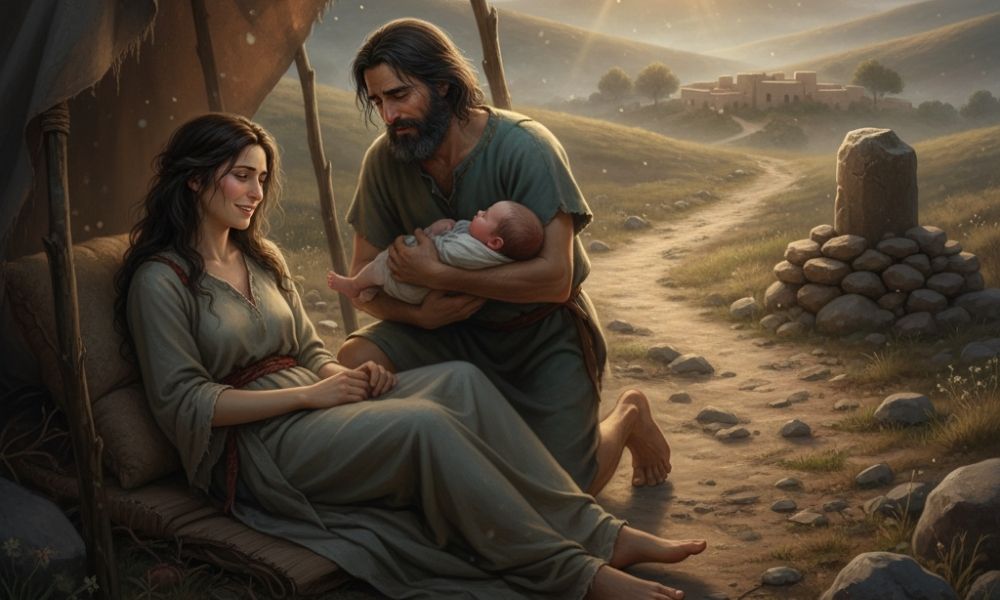
Benjamin was the youngest son of Jacob and Rachel — the twelfth and final son born to the patriarch. His life began in both joy and tragedy, as his birth cost his mother Rachel her life. Deeply loved by his father, Benjamin became the head of one of Israel’s most prominent tribes, known for courage and skill in battle. His story represents both tender affection and strength, showing how God can bring blessing even out of sorrow.
Name: Benjamin (Hebrew: Binyamin, meaning “Son of the Right Hand”)
Tribe/Nation: Israel (Tribe of Benjamin)
Era: Patriarchal Period (~18th century BCE)
Father: Jacob (Israel)
Mother: Rachel
Full Brother: Joseph
Half-Brothers: Reuben, Simeon, Levi, Judah, Dan, Naphtali, Gad, Asher, Issachar, Zebulun
Home: Canaan → Egypt (during the famine)
Book: Genesis (Chapters 35–50)
Key Virtues: Innocence, faithfulness, favor
Legacy: Founder of the Tribe of Benjamin — known for bravery and loyalty
Symbol: Wolf — symbolizing strength, courage, and fierceness (Genesis 49:27)
Name Meaning
Benjamin means “Son of the Right Hand,” symbolizing honor, strength, and favor. His mother Rachel named him Ben-Oni (“Son of my sorrow”) as she died giving birth, but Jacob renamed him Benjamin — turning sorrow into hope and blessing.
Lineage / Family Background
Benjamin was the youngest child of Jacob and Rachel and the only one of Jacob’s sons born in the land of Canaan. He was Joseph’s full brother and Jacob’s last link to his beloved Rachel.
- Grandfather: Isaac
- Great-grandfather: Abraham
- Father: Jacob
- Mother: Rachel
- Full Brother: Joseph
- Tribe: Benjamin — one of the twelve tribes of Israel
Major Roles / Identity
- Youngest and most beloved son of Jacob
- Full brother to Joseph
- Founder of the tribe of Benjamin
- Symbol of strength and divine favor
Key Character Traits
- Innocent: Protected by his father, he was not involved in his brothers’ betrayal of Joseph.
- Favored: Jacob’s deep affection for him showed his cherished place in the family.
- Faithful: Loyal and blameless in his dealings, even under testing.
- Strong: His tribe later became renowned for bravery and skilled warriors.
Main Life Events
- Birth and Rachel’s Death: Rachel gave birth to Benjamin near Bethlehem and died soon after (Genesis 35:16–19).
- Jacob’s Affection: Jacob’s heart was tied to Benjamin after losing Joseph; he feared sending him away (Genesis 42:38).
- Journey to Egypt: During the famine, Benjamin traveled with his brothers to Egypt, where Joseph tested them by placing his silver cup in Benjamin’s sack (Genesis 44).
- Joseph’s Revelation: Joseph wept upon seeing Benjamin, his only full brother, and revealed his identity to all the brothers (Genesis 45:14).
- Tribal Blessings: Jacob blessed Benjamin before his death, calling him “a ravenous wolf” — symbolizing strength and valor (Genesis 49:27).
Major Relationships
- Rachel: His mother, who died giving him life — her love and sacrifice marked his destiny.
- Jacob: His father, who cherished him as a precious reminder of Rachel.
- Joseph: His full brother, who showed him great kindness and affection in Egypt.
- Brothers: The ten older brothers who once betrayed Joseph later risked their lives to protect Benjamin, showing their repentance and unity.
Notable Passages
- Genesis 35:18: “As she breathed her last—for she was dying—she named her son Ben-Oni. But his father named him Benjamin.”
- Genesis 42:38: “My son shall not go down with you; his brother is dead and he alone is left.”
- Genesis 45:14: “Then Joseph threw his arms around his brother Benjamin and wept, and Benjamin embraced him, weeping.”
- Genesis 49:27: “Benjamin is a ravenous wolf; in the morning he devours the prey, in the evening he divides the plunder.”
Legacy & Impact
The Tribe of Benjamin became one of the most respected in Israel — small but powerful, known for bravery and loyalty. From this tribe came several key figures in Scripture:
- King Saul, Israel’s first king (1 Samuel 9:1–2)
- Mordecai and Queen Esther, who saved their people in Persia (Esther 2:5–7)
- The Apostle Paul (Saul of Tarsus), a Benjamite (Philippians 3:5)
Benjamin’s descendants stood for strength, courage, and faithfulness, showing that God’s blessing rested even on those born through pain.
Symbolism / Typology
- “Son of the Right Hand”: Symbol of divine favor and strength; parallels Christ seated at God’s right hand.
- Rachel’s Death and New Life: Illustrates how God brings blessing out of sorrow.
- Tribe’s Valor: Represents steadfastness and spiritual courage in defending truth.
Extra-Biblical References
- In Jewish tradition, Benjamin is revered as innocent of the brothers’ sin against Joseph.
- His descendants’ heroism is celebrated in texts describing Israel’s early wars (Judges 20).
- Christian commentators see Benjamin as a type of the believer — born out of sorrow but destined for glory.







Leave a Reply