
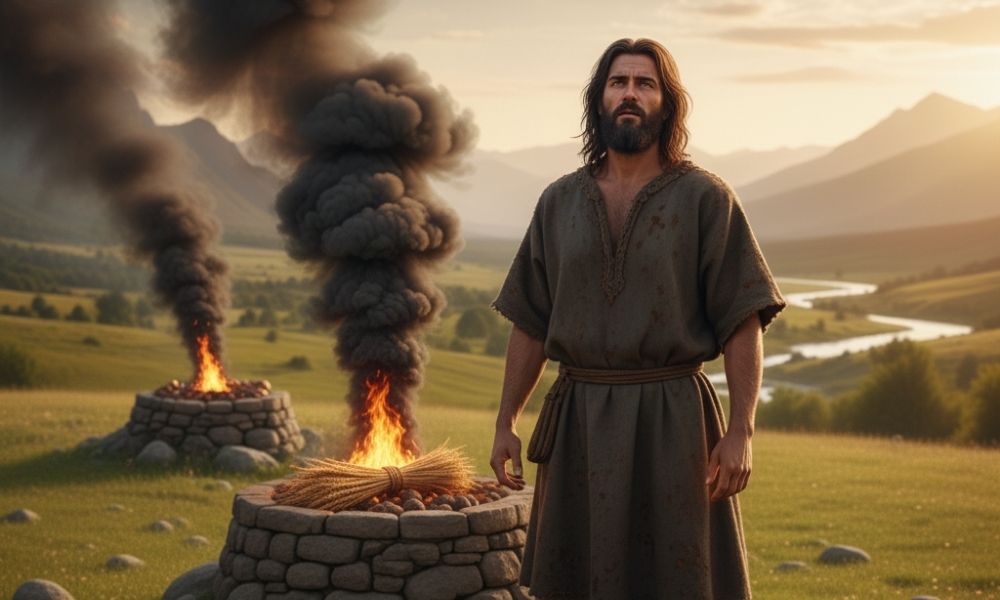
Cain is a pivotal figure in early biblical history — the firstborn son of Adam and Eve, and the first murderer recorded in Scripture. His story, found in Genesis 4, serves as a profound lesson about jealousy, sin, and the consequences of disobedience to God. Though cursed and exiled, Cain’s life also reveals God’s justice tempered by mercy.
Quick Facts
Name: Cain (Hebrew: Qayin, meaning “acquired” or “possession”)
Parents: Adam and Eve
Siblings: Abel, Seth, and others (Genesis 5:4)
Occupation: Farmer, tiller of the ground
Known For: Killing his brother Abel — the first murder in history (Genesis 4:8)
Place of Exile: Land of Nod, east of Eden
Children: Enoch (Genesis 4:17)
Symbol: The Mark of Cain — a sign of both judgment and divine protection
Era: Antediluvian (before the Great Flood)
Key Verse: “Am I my brother’s keeper?” — Genesis 4:9
Name Meaning
The name Cain (Qayin) means “acquired” or “gotten.”
When Eve gave birth to him, she said:
“I have gotten a man from the LORD.” — Genesis 4:1
This statement reflects Eve’s hope that Cain might be the promised “seed” who would overcome evil (Genesis 3:15). Ironically, he became the opposite — a tragic symbol of sin’s dominion over the human heart.
Family Background
- Father: Adam — the first man, formed from the dust (Genesis 2:7)
- Mother: Eve — the first woman, created from Adam’s rib (Genesis 2:22)
- Brother: Abel — a righteous shepherd whose offering pleased God
- Later Brother: Seth — born after Abel’s death; through him came the godly lineage leading to Noah (Genesis 4:25–26)
- Wife: An unnamed woman, likely a sister or close relative
- Son: Enoch (Genesis 4:17) — Cain built a city and named it after him
Biblical Context / Era
- Timeframe: Early post-Edenic period, the dawn of human civilization
- World Setting: Humanity was beginning to multiply and form occupations — farmers and shepherds (Genesis 4:2).
- Cultural Note: Worship and sacrifice to God had already begun, marking the rise of early spiritual practice.
- Historical Importance: Cain’s story introduces key themes — sin, judgment, repentance, and mercy — that echo throughout Scripture.
Major Roles / Identity
- Firstborn of the human race
- Farmer and city builder
- First murderer / first cursed wanderer
- Founder of the Cainite civilization
- Symbol of jealousy, rebellion, and godless human culture
Character Traits
Strengths:
- Hardworking and capable in agriculture
- Determined, ambitious, and productive — builder of the first city
Weaknesses:
- Envious, prideful, impulsive, and unrepentant
- Resistant to correction from God
- Symbolic of self-righteousness and unbridled anger
God’s warning to Cain captures his internal struggle:
“Sin is crouching at your door; it desires to have you, but you must rule over it.” — Genesis 4:7
Cain failed this test, allowing jealousy to rule him.
Main Life Events
1. Birth and Early Life (Genesis 4:1–2)
Cain was the first child born to Adam and Eve, marking the continuation of life after the Fall. He worked the soil as a farmer, while his brother Abel became a shepherd.
2. Offerings to God (Genesis 4:3–5)
Both brothers presented offerings to the LORD:
- Abel: Offered the firstborn of his flock, a blood sacrifice.
- Cain: Offered fruits of the ground from his harvest.
God accepted Abel’s offering but rejected Cain’s, not because of the material itself, but because of the heart attitude behind it (Hebrews 11:4).
3. Jealousy and Murder (Genesis 4:6–8)
Instead of repenting, Cain grew bitter.
When God asked him why he was angry, Cain ignored the warning. Overcome with envy, he lured Abel into a field and killed him, committing the first murder.
4. Confrontation and Curse (Genesis 4:9–12)
God confronted Cain with the haunting question:
“Where is Abel your brother?”
Cain lied:
“I do not know; am I my brother’s keeper?”
The LORD declared judgment:
- The ground would no longer yield crops for him.
- He would become a fugitive and wanderer on the earth.
5. The Mark of Cain (Genesis 4:13–15)
Cain feared being killed for his crime. God, showing mercy even in judgment, placed a mark on Cain — a sign to protect him from vengeance.
The nature of the mark is unknown, but it represented God’s restraint of human retribution.
6. Exile and Descendants (Genesis 4:16–24)
Cain settled in the land of Nod (“wandering”), east of Eden.
He had a son named Enoch and built a city named after him — the first mention of urban life.
His descendants became founders of arts, music, metallurgy, and nomadic living:
- Jabal: Father of tent-dwellers and herdsmen
- Jubal: Father of musicians (lyre and pipe)
- Tubal-Cain: Forger of bronze and iron tools
- Naamah: Mentioned as Lamech’s wife, possibly a symbol of culture and beauty
His line continued until the Flood, which ended the Cainite civilization.
Major Relationships
- God: Confrontational and distant — Cain resisted divine correction.
- Abel: Victim of Cain’s jealousy; symbol of righteousness and faith.
- Adam and Eve: His actions brought deep grief to his parents.
- Descendants: Became early cultural innovators but lived apart from God.
Notable Verses / Passages
“The voice of your brother’s blood cries out to Me from the ground.” — Genesis 4:10
“My punishment is greater than I can bear.” — Genesis 4:13
“Then Cain went out from the presence of the LORD.” — Genesis 4:16
Legacy & Impact
- Symbol of Sin and Rebellion: Cain’s act demonstrates the power of sin and the importance of controlling it before it controls us.
- Moral Question: His defiant question, “Am I my brother’s keeper?”, challenges every generation about responsibility toward others.
- The Mark of Cain: Represents both divine justice and mercy — a balance between punishment and protection.
- Contrast with Abel: Abel represents faith and righteousness; Cain represents unbelief and self-will (Hebrews 11:4; 1 John 3:12).
- Foreshadowing: Cain’s story prefigures later biblical themes — the danger of unchecked sin, the necessity of repentance, and the justice of God.
Symbolism / Typology
| Symbol | Meaning |
|---|---|
| Cain | The natural, sinful man governed by pride and self-righteousness |
| Abel | The spiritual man whose faith pleases God |
| The Mark of Cain | A paradoxical sign — protection and judgment intertwined |
| The Ground’s Curse | The result of sin separating man from divine blessing |
| The Land of Nod | Symbolic of spiritual exile and wandering apart from God |
Cain in Later Scripture
- Hebrews 11:4: Contrasts Abel’s faithful offering with Cain’s rejection.
- 1 John 3:12: Warns believers not to “be like Cain, who belonged to the evil one.”
- Jude 1:11: Lists Cain’s rebellion among examples of godlessness.
Through these references, Cain’s story endures as a moral warning and a call to repentance and faith.







Leave a Reply